Iran says Indian ships can cross Strait of Hormuz as tensions with US escalate
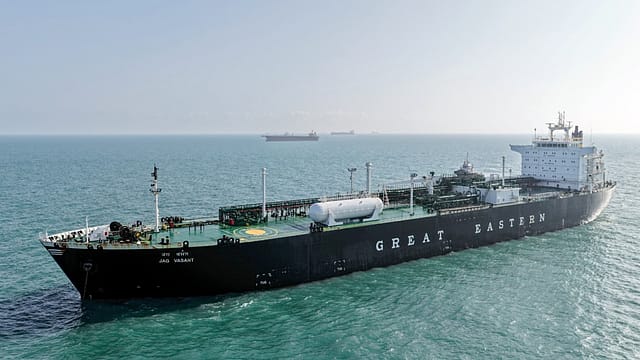
For India, the Strait of Hormuz is more than a narrow passage connecting the Persian Gulf to the Gulf of Oman. It is a critical route for energy supplies and commercial shipping. Now, as tensions between Iran and the United States threaten to escalate again, Tehran says Indian vessels are among a select group allowed to transit the waterway without the restrictions imposed on other ships.
A senior Iranian lawmaker, Ahmad Hayat-Moghaddam, said on Tuesday that India, China, Iraq and Qatar had been exempted from the restrictions. Speaking at a meeting on economic and security developments, he described the exemptions as decisions based on Tehran’s interests. Anadolu Agency reported that Indian and Chinese vessels would still be charged transit fees, while Qatari ships could pass without charge.

The Era of Forever Wars
30 Oct 2026 - Vol 05 | Issue 44
Coping with an explosive Middle East
Why Iran is allowing Indian ships through the Strait of Hormuz
Hayat-Moghaddam said the exemption for Indian vessels was intended to facilitate imports of medicines from India. China’s exemption, he added, was linked to Tehran’s interest in securing political support from Beijing.
The remarks suggest that Iran is using access to one of the world's most important shipping routes as a diplomatic and economic bargaining tool. However, the statement came from an Iranian lawmaker; it does not, by itself, establish that every Indian vessel can safely or automatically pass through the strait. India has not publicly confirmed a change to its maritime safety position.
US strikes and fresh shipping attacks raise fears of escalation
The announcement comes against a backdrop of renewed military tension. Reuters reported on November 4 that Iran’s Revolutionary Guard claimed four oil tankers had been destroyed after hitting naval mines while attempting to cross a route it described as prohibited south of the Strait of Hormuz. The Guard also said it had seized two other vessels. These claims have not been independently verified.
Earlier, US forces carried out what American officials described as limited defensive strikes on Iran’s Qeshm Island, targeting Iranian air-defence capabilities. Reuters reported that Washington said the strikes did not amount to a resumption of major combat operations.
The risks are not confined to foreign vessels. India’s Ministry of External Affairs condemned an attack on the commercial vessel MSV Al Jusufi near Oman on November 2. One Indian national died and 13 others were rescued. The ministry called for immediate de-escalation and the restoration of free and unimpeded navigation through international waterways.
Can Qatar prevent another US-Iran conflict?
Even as military tensions rise, diplomatic efforts are continuing. Qatar has been mediating between Tehran and Washington, with Iranian officials discussing a proposal that could reopen the Strait of Hormuz within two days of an agreement, according to Foreign Minister Abbas Araghchi, as reported by Reuters.
But a breakthrough remains uncertain. Reuters reported on November 3, citing a senior Iranian official, that Tehran and Washington remained far from a deal. Al Arabiya, citing sources, has also reported that President Masoud Pezeshkian, Parliament Speaker Mohammad Bagher Ghalibaf and Araghchi are urging Iran’s military leadership to consider the Qatari proposal, even as internal assessments reportedly view renewed war as a likely outcome.
For India, the exemption is a significant diplomatic signal, but not a guarantee of safe passage. With shipping attacks continuing and negotiations still fragile, the security of the Strait of Hormuz remains a concern for global trade, energy supplies and Indian seafarers.
(With inputs from ANI)