The Disease Has Japan’s Name. Its Next Vaccine May Carry India’s Scale
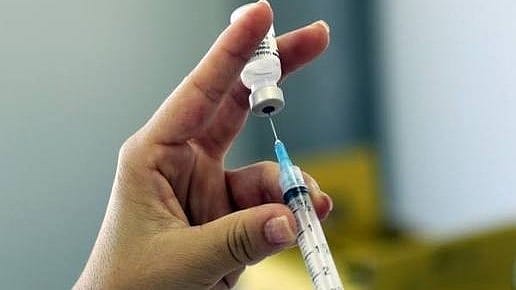
Japanese Encephalitis carries the name of the country where it was first documented. Its next chapter may be manufactured in Pune.
Japanese drugmaker Meiji Seika Pharma is working with Serum Institute of India to develop and manufacture a Japanese encephalitis vaccine using technology from its subsidiary, KM Biologics. Serum is expected to seek Indian regulatory approval as early as 2027, after which the vaccine could be produced domestically and made available to children.
The partnership draws a striking map of pharmaceutical power. Japan has the vaccine technology and decades of experience controlling a disease that once infected more than 1,000 of its people annually. India has enormous vaccine factories, lower production costs and an immunisation network capable of carrying a scientific breakthrough to millions of children.

Zeroing In on ECI
09 Oct 2026 - Vol 05 | Issue 41
Constitutional legitimacy versus political opportunism
One country subdued the disease. The other still lives with it.
India officially recorded 1,472 Japanese encephalitis cases and 105 deaths in 2024. In 2025, cases fell to 975, but deaths increased to 110. Assam alone accounted for 423 cases and 79 deaths, giving the national burden a frightening geographic concentration.
This is why the Meiji-Serum partnership is more than another technology-transfer agreement. It connects the scientific memory of a country that controlled Japanese encephalitis with the manufacturing capacity of a country that must still protect children from it. Japan knows how to make the vaccine. India knows how to make enough of it, affordably enough, to reach populations that remain exposed.
What is Japan Transferring to India?
The vaccine is understood to be ENCEVAC, manufactured and marketed in Japan by KM Biologics, a subsidiary of Meiji Seika Pharma.
It is an inactivated, Vero cell-derived vaccine. The Japanese encephalitis virus is cultivated in a controlled line of laboratory cells, rendered incapable of causing the disease using formalin, purified and then introduced to the body to train the immune system to recognise the virus. KM Biologics says ENCEVAC uses the Beijing strain of the virus. The vaccine is freeze-dried and contains neither thimerosal nor other preservatives. Cell-culture technology marked an advance over older Japanese encephalitis vaccines produced using mouse brain tissue. It offers a more standardised production platform and avoids concerns associated with residual animal-brain material.
The collaboration will involve much more than sending finished Japanese doses to India. Serum must learn, reproduce and validate the manufacturing process at its own facilities. Technical officials from the company have already visited Japan to study the underlying technology. The two companies announced in April 2026 that they had completed the first milestone under the agreement and that Serum would begin development work in India. They now intend to establish domestic manufacturing and supply, subject to regulatory approval. Serum Institute of India. That qualification matters. A technology transfer is a significant beginning. It is not yet an approved vaccine, a confirmed government order or a dose in a child’s arm.
Why is Japanese Encephalitis so Dangerous?
Japanese encephalitis is a mosquito-borne viral infection related to dengue, Zika, yellow fever and West Nile virus. It circulates largely between Culex mosquitoes, pigs and water birds. Humans become infected when bitten, but generally do not develop enough virus in their blood to transmit it back to mosquitoes.
Most infections produce no symptoms or only mild fever and headache. That apparent mildness conceals the real danger. Approximately one in every 250 infections develops into severe disease. Japanese encephalitis can cause high fever, seizures, disorientation, paralysis, coma and death. There is no specific antiviral treatment. Among patients who develop encephalitis, the fatality rate can reach 30 per cent. Between 30 and 50 per cent of survivors may experience lasting neurological, cognitive or behavioural damage. Children below 15 carry most of the burden.
The World Health Organization estimates that Japanese encephalitis causes around 100,000 clinical cases and 25,000 deaths globally each year. Twenty-four countries across Asia and the Western Pacific have endemic transmission, exposing more than three billion people to the risk of infection.
The disease is predominantly rural. Rice fields and standing water provide breeding grounds for mosquitoes, while proximity to pigs and water birds sustains the transmission cycle. In India, cases often rise during the monsoon and post-monsoon seasons. The communities facing the greatest risk frequently have the least access to advanced diagnostics, intensive care and long-term rehabilitation. The vaccine, therefore, must reach a child before the virus does.
Does India Not Already Have JE Vaccines?
It does. India’s Universal Immunisation Programme provides two Japanese encephalitis vaccine doses to children in endemic districts. The first is administered between nine and 12 months and the second between 16 and 24 months. Routine JE vaccination has been introduced in 343 of the 357 districts classified as endemic. Adult vaccination has also begun in high-prevalence areas of Assam, Uttar Pradesh and West Bengal.
Different types of JE vaccines have been developed and used, including live attenuated products and inactivated vaccines grown in cell cultures. Hyderabad-based Biological E launched its Vero cell-derived vaccine, JEEV, in India in 2012.
The Meiji-Serum collaboration, therefore, will not introduce India’s first protection against Japanese encephalitis. Its importance lies elsewhere. Another established technology could expand domestic manufacturing, strengthen supply security and reduce dependence on a small pool of suppliers. It may also create greater competition around price and procurement. A vaccine can be scientifically effective and still fail as a public-health instrument if tenders falter, supplies arrive late, healthcare workers cannot reach remote communities or children miss the second dose. UNICEF has previously warned that although global JE vaccine supply is broadly sufficient, procurement lead times can stretch to nine months.
That delay becomes particularly serious when outbreaks follow seasonal patterns. The value of an additional vaccine will consequently depend on much more than its approval. It must be affordable, available in sufficient quantities and suitable for India’s immunisation system.
How Did Japan Control the Disease?
Vaccination transformed Japan’s experience of Japanese encephalitis. The country introduced a vaccine in 1954. Until the 1960s, Japan reported more than 1,000 cases every year. Expanded immunisation and environmental management helped push annual cases below 50 during the 1980s and to approximately 10 from the early 1990s.
India presents a vastly more complicated operating environment. Japanese encephalitis and the broader category of acute encephalitis syndrome have been reported across 357 districts in 24 states and Union territories. Transmission patterns differ sharply by region, and the burden has increasingly concentrated in parts of the Northeast.
Official figures show considerable improvement over time. India reported 2,545 JE cases and 266 deaths in 2019, compared with 975 cases and 110 deaths in 2025. But the annual movement remains volatile. Cases stood at 1,107 in 2023, jumped to 1,472 in 2024 and declined again the following year. Rainfall, mosquito density, vaccination coverage and the strength of surveillance can all alter the picture.
The official figures may also understate the burden. Confirming JE requires laboratory testing, while many patients initially enter the health system under the broader diagnosis of acute encephalitis syndrome. People in remote areas may never reach a hospital equipped to identify the virus. Vaccination has reduced the threat. It has not erased it.
Why Does Japan Need Serum Institute?
The answer can be compressed into one word: scale. KM Biologics possesses an established vaccine and the knowledge behind its production. Serum possesses huge manufacturing facilities, experience with public-health contracts and an operating model built around reducing per-dose costs through volume.
Serum says it can manufacture approximately four billion vaccine doses annually and supplies products to more than 170 countries. Its role during Covid-19 demonstrated its ability to take licensed technology and produce vast quantities of vaccine at prices accessible to lower-income markets.
For Meiji, the partnership provides entry into India’s immunisation market and the possibility of reaching other endemic countries across Asia and the Global South. The Japanese company already has a manufacturing presence in India through Bengaluru-based Medreich, which supplies generic medicines to the UK, Canada, Europe and Africa.
For Serum, the agreement fits a larger strategy.
The company has repeatedly partnered with universities, biotechnology companies and pharmaceutical groups that possess promising technologies but need a manufacturer capable of producing them at population scale. Its recent collaborations extend across prospective vaccines for tuberculosis, malaria, Nipah, chikungunya and diarrhoeal diseases.
The model is becoming increasingly clear: the science can originate elsewhere, but its affordable scale may come from India. Japan is not handing over its technology as charity. It gains manufacturing economics, geographic reach and access to large emerging markets. India gains technical knowledge, another vaccine platform and the opportunity to supply domestic as well as international programmes. A public-health need sits at the centre of a commercial partnership.
What Could Derail the Plan?
The first uncertainty is regulatory. Serum must demonstrate that the transferred process can consistently manufacture a vaccine meeting Indian standards. Depending on the regulator’s requirements, it may need to submit clinical or bridging data establishing safety and immune response in the intended population.
Meiji wants the approval process accelerated. But the vaccine is meant primarily for children. Administrative urgency cannot replace scientific scrutiny. Then comes price. Meiji expects Serum’s manufacturing economics to make the vaccine affordable, but neither company has disclosed the planned investment, production capacity or likely cost per dose. Regulatory clearance would also not guarantee inclusion in the Universal Immunisation Programme. Government procurement will depend on price, supply reliability, storage requirements, dosing schedules and how the product compares with vaccines already available.
Finally comes the hardest challenge: delivery. A vaccine produced in Pune does not protect a child in rural Assam merely by existing. The dose must be purchased, transported, stored and administered on time. Families must return for the prescribed schedule. Healthcare workers must reach communities where floods, distance, difficult terrain and limited infrastructure can defeat the best technology. That is the real promise and test of the Meiji-Serum partnership. The disease may have Japan’s name. Japan may provide the science. India may manufacture the doses. Its success, however, will be measured in a much smaller place: the distance between a vaccine and a child’s arm.
(With inputs from ANI)