Telangana's ₹26,000-crore Paddy Procurement: A High-Stakes Agricultural Standoff
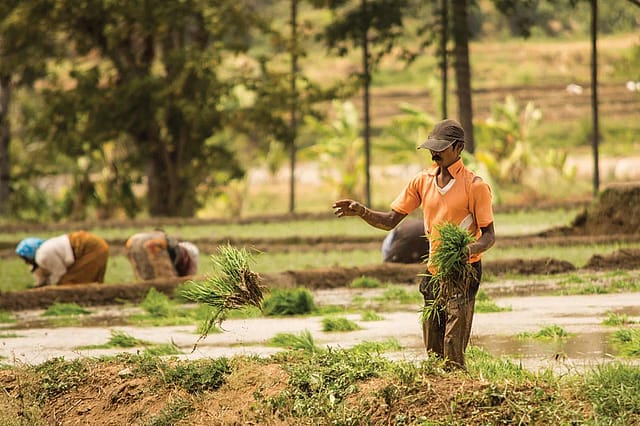
Telangana is making an unprecedented agricultural bet. The state government is pushing to procure a national record of 80 lakh metric tonnes of paddy this Kharif season, a target that would cost upwards of ₹26,000 crore.
This massive ambition is driven by a projected bumper harvest of 148.30 lakh metric tonnes, the highest yield by any Indian state.
However, the Centre has approved only 53.73 lakh metric tonnes for paddy procurement in Telangana, leaving a yawning gap of over 26 lakh tonnes. This mismatch is creating a serious crisis: with weakened open market demand due to low international rice prices, a failure to meet the target will force lakhs of farmers into distress sales. As of mid-December 2025, the state has already procured over 51.86 lakh metric tonnes, rapidly nearing the central quota.
The standoff is compounded by farmers’ protests over strict moisture norms, procurement delays, and the non-payment of ₹1,160 crore in fine paddy bonuses from the previous season, highlighting the severe on-ground impact of the policy conflict.
What Is Paddy Procurement and Why Is It a Big Deal?
Paddy procurement is the government's purchase of rice from farmers at a Minimum Support Price (MSP), which currently stands at ₹2,389 per quintal for Grade A paddy (Kharif Marketing Season 2025-26).
This system serves the dual purpose of Farmer Protection, by shielding producers from volatile market prices, and Food Security, by securing grains for the Public Distribution System (PDS).
The MissOil Strike
03 Apr 2026 - Vol 04 | Issue 65
The War on Energy Security
It is a complex, large-scale operation involving 8,342 procurement centres, millers, and FCI godowns, demanding vast financial and logistical coordination.
Why Is Telangana Targeting Such an Aggressive Procurement Number?
The paddy procurement in Telangana has an aggressive target; which is driven by two key factors. First, a bumper harvest resulting from favorable monsoons and expanded cultivation (66.8 lakh acres) has led to a historic production of 148.30 lakh metric tonnes.
Second, market pressure from low global rice prices means farmers cannot secure fair prices openly, making the government's Minimum Support Price operations the only viable path to prevent widespread farmer distress. Procurement volume is currently more than double that of the same period last year.
What is Behind the Centre-State Procurement Standoff?
The conflict highlights deep tensions in India's agricultural federalism. The Centre's approval of only 53.73 lakh metric tonnes of paddy (equivalent to 36 lakh metric tonnes of rice) is far below Telangana's request for 80 lakh metric tonnes.
The Centre's hesitation stems from concerns over storage capacity, fiscal pressures on the food subsidy system, and fear of setting a precedent for other states like Punjab, Haryana, and Andhra Pradesh.
Telangana is also battling backlogs, pointing to 21 lakh tonnes in limbo from the previous Rabi season, where the state procured 74 lakh tonnes but the Centre approved only 53 lakh tonnes. The state is also seeking clearance for pending subsidies worth over ₹1,800 crore.
How Serious Is the Storage Crisis Facing Telangana?
The storage logistics for 80 lakh metric tonnes of paddy are dire. Food Corporation of India (FCI) godowns in Telangana have a total capacity of 22.61 lakh metric tonnes, with 21.72 lakh metric tonnes already occupied, leaving minimal free space.
This crunch is intensified by undelivered Custom Milled Rice (CMR) stocks from Kharif 2024-25 (5.44 lakh tonnes) and Rabi 2024-25 (14.92 lakh tonnes). The backlog has already forced millers to halt operations, creating cascading economic distress.
What Are Farmers Actually Experiencing on the Ground?
While policy is debated, farmers are facing immediate hardships. Protests have erupted across major districts. Farmers are encountering load rejections due to strict central moisture norms (capped at 17%), which is compounded by unseasonal rains.
Furthermore, bonus payments of ₹1,160 crore for fine paddy from the previous season remain unpaid, impacting over four lakh farmers and eroding confidence in the paddy procurement in Telangana system.
Why Does Paddy Procurement in Telangana Matter to the Rest of India?
Telangana's aggressive push has national implications. If the Centre agrees to the 80 lakh metric tonne target, it validates large-scale state agricultural expansion but risks straining central finances and infrastructure.
Conversely, if the Centre holds firm and farmers face distress sales, it undermines the reliability of MSP guarantees nationwide. At current MSP rates, procuring 80 lakh metric tonnes would cost approximately ₹20,000 crore, rising to ₹24,000-26,000 crore after factoring in bonuses and transport.
Why This Matters to the People and Policymakers?
This conflict between Telangana and the Centre over the 80 LMT paddy procurement target has significant national implications.
If the Centre concedes, it risks setting a fiscal precedent, encouraging states like Punjab and Haryana to demand similar increases, which would severely strain the national food subsidy budget.
The deadlock also exposes deep-seated structural issues in agricultural federalism, including disputes over storage, pending subsidies and technical differences.
Ultimately, the resolution of this issue will test the reliability and long-term sustainability of India's entire food security architecture and the national Minimum Support Price (MSP) guarantee.
What Happens Next?
The immediate future hinges on the Centre's response to Telangana's demands for an enhanced procurement target, clearance of past dues, and additional boiled rice racks to resolve the storage crisis.
Telangana faces a difficult choice: either use state funds to procure the entire 80 LMT target, risking significant fiscal strain, or reduce purchases and face severe farmer backlash.
The ultimate resolution of this high-stakes agricultural conflict will set a critical policy precedent for India's food crop procurement architecture in 2026, defining the precise roles and responsibilities of states and the Centre, and determining the long-term reliability of the MSP guarantee.
(yMedia is the agency partner for this story)