Telangana Caste Survey Finds Inter-Caste Marriage Remains Rare
The Telangana caste survey replaces categories with a scale. It assigns each of 242 castes a single score of relative backwardness, derived from 42 indicators—education, occupation, housing, assets, access to credit and others. The results run from 116 at the top end of deprivation to 12 at the other. The state average is 81. By that measure, 135 castes, or about two-thirds of the population, fall below the average.
In 2024, the Telangana government undertook a door-to-door enumeration of households across the state, collecting data on roughly 3.55 crore people. Enumerators recorded 75 fields of information for each individual, covering demographic details, education, employment, income, assets, and access to welfare. Respondents were asked to identify themselves from a list of 242 caste groups, with additional options for “Other” and “No Caste”. The exercise covered about 97 percent of the state’s population. In 2025, an independent expert group was tasked with analysing the data and constructing a Composite Backwardness Index, or CBI, which translates a wide range of indicators into a single comparative score.

Flood and Fury
04 Sep 2026 - Vol 05 | Issue 36
Devighat, Nepal, August 29, 2026
Public policy in India is organised around broad groups like Scheduled Castes, Scheduled Tribes, Backward Classes, and General Castes. The survey shows that these groups contain wide internal differences. Among Backward Classes, 69 castes are more backward than the state average and 64 are less. Within a single administrative category, some groups approach the outcomes of General Castes, while others are closer to the bottom of the scale.
The same pattern holds among Scheduled Castes and Scheduled Tribes. As groups, they rank as the most disadvantaged: their average scores are in the mid-90s, well above the state average. But the range within them is not narrow. Some sub-castes have higher levels of land ownership or schooling than others; some have made limited shifts into non-manual work. Others remain concentrated in daily wage labour. Nearly half of Scheduled Caste workers are daily wage earners; among General Castes, the share is much lower. Scheduled Tribes show relatively high land ownership, but the land is often dry and poorly connected to markets, which limits its economic value.
Education and occupation follow the same uneven pattern. Among Backward Class communities, the differences are not subtle. In castes such as Padmasali and Goldsmith, close to three-quarters of young people are educated in English-medium schools. In Mudiraj, Valmiki, and Pichakuntla communities, the figure drops below 30 percent. The gap carries forward into employment. Groups with higher levels of English education are more visible in salaried and professional work; others remain concentrated in manual and low-paid occupations. Across the state, nearly half of Scheduled Caste workers are daily wage labourers. Among General Castes, the share is closer to one in ten. In the private sector, representation shows a similar skew: General Castes account for a disproportionately large share of professionals, while Scheduled Tribes—despite a comparable population share—make up only a small fraction. The survey does not attempt to explain these outcomes, but the distribution is consistent: communities with earlier access to schooling and less dependence on caste-bound occupations have moved further up the scale, while those tied to itinerant, service, or stigmatised work have not.
At the bottom of the scale sit communities that have moved little across generations. The Dakkali caste records the highest backwardness score in the state, at 116, placing it at the extreme end of deprivation across nearly every indicator the survey tracks—education, occupation, housing, and assets. Traditionally, Dakkalis occupied a position even below other Dalit communities, especially the Madigas, to whom they were historically tied in a system of ritual and economic dependence. They were itinerant genealogists and storytellers, moving from village to village, reciting the lineages and origin myths of Madiga families. In return, they received grain, leftover food, or small payments. They did not own land, were rarely settled in one place, and were excluded from stable occupations. Their role was caste-bound and hereditary and it kept them outside both agrarian economies and formal labour markets.
The survey includes a small group of respondents who identify as having “No Caste”. They account for roughly four percent of the population and have an average score of 48, well below the state average. On several indicators, they are better placed than the overall population: they are more likely to be in professional employment, more likely to be taxpayers, and less likely to rely on agricultural or distress loans. The report notes that this group is disproportionately concentrated in urban and peri-urban areas, where anonymity, occupational mobility and weaker dependence on caste-based networks make disassociation more feasible.
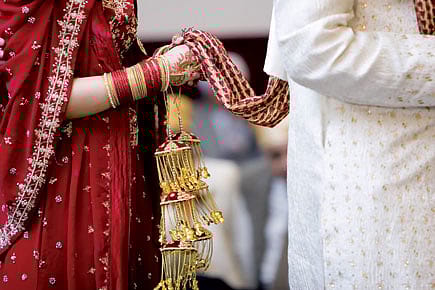
One of the most stable indicators in the survey concerns marriage. Only about 5.6 percent of households report an inter-caste marriage. More than 95 percent marry within caste. The variation across social groups is small. Education, occupation, and residence have changed for many families. Marriage patterns have not changed at the same pace. The variation across social groups is narrow. Among General Castes, the share is 5.8 percent; among Scheduled Castes, 4.9 percent; among Backward Classes, 4.7 percent; and among Scheduled Tribes, just 3.2 percent. The differences are measurable but not large enough to suggest any group has meaningfully broken from endogamy. Overall, if the data makes one point clearly, it is that inequality in India is not just inherited, but continually reproduced—through institutions that have changed, and through social practices, like marriage, that largely have not.