Tamil Nadu migrant assault, Dehradun student killing highlight identity-linked violence

A 20-year-old migrant worker from Odisha was left critically injured after being attacked with sickles in Tiruvallur district, Tamil Nadu, earlier this month. Police have now arrested four youths in connection with the assault, which had been filmed and circulated on social media. There was no prior dispute between the victim and the attackers, according to investigators.
The case has drawn attention not only for its brutality but for the moment in which it arrives. Only recently, in Dehradun, another assault had unsettled the country. Anjel Chakma, a 24-year-old MBA student from Tripura, and his brother Michael were attacked after being subjected to racial slurs while out shopping. Both were stabbed, and Anjel later died of his injuries. In his final moments, he reportedly tried to correct his attackers: “We are not Chinese, we are Indians.” His death triggered protests and candlelight vigils across India, sharpening a long-running conversation about racism and everyday prejudice faced by people from the Northeast.
That conversation has now entered the legal arena. A public interest litigation filed in the Supreme Court has sought a formal hate-crime classification for racially motivated violence against people from India’s Northeast, arguing that such attacks are not isolated acts of delinquency but part of a broader pattern that requires explicit legal recognition. The petition contends that the absence of a hate-crime framework often obscures motive and weakens accountability in cases where race or ethnicity plays a role.
The Tiruvallur assault and the Dehradun killing are not identical in cause or context. In Tamil Nadu, the victim was a migrant labourer—young, alone, and without the buffer of local networks. In Uttarakhand, the brothers were students whose identity was directly invoked through racial slurs before the violence escalated. But the distinction narrows when viewed through the lens of vulnerability. In both cases, difference—of origin, appearance, or language—preceded harm.
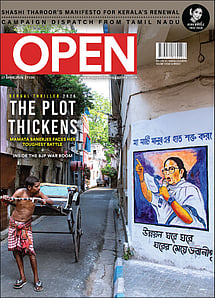
Bengal Thriller 2026: The Plot Thickens
17 Apr 2026 - Vol 04 | Issue 67
Mamata Banerjee faces her toughest battle
What links these incidents is a social reflex, the ease with which certain bodies are marked as expendable in moments of aggression. Migrant workers and students from peripheral regions move across India every day to build lives that are often economically and socially indispensable to the places they inhabit. Most do so without incident. But when violence does occur, it tends to surface at points of isolation where power briefly tilts in favour of the many against the few.
Institutional responses are now underway in both cases. Police investigations have led to arrests and courts will determine guilt and punishment. Yet the unease these incidents generate cannot be resolved by legal process alone. They raise harder questions about how belonging is negotiated in everyday life, and how quickly prejudice can turn physical when restraint collapses. These are not only stories of crime but of recognition—of who is seen as protected, and who is noticed only after harm has been done.