Supreme Court Takes On WhatsApp–Meta Over Data Sharing, Flags ‘Forced Consent’
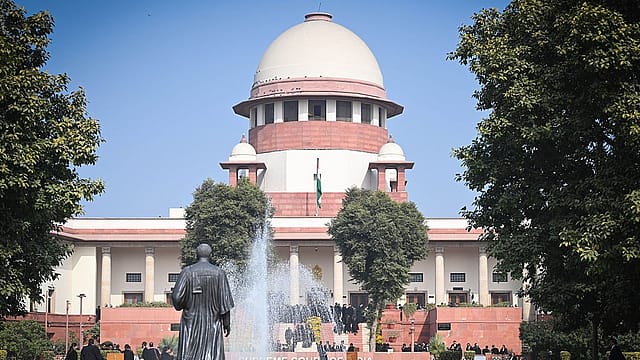
In one of its strongest interventions on digital privacy, the Supreme Court has sharply criticised WhatsApp and its parent company Meta, warning that user data cannot be harvested through coercive consent or opaque privacy policies.
Here’s an explainer on the matter:
What Is the Case About?
The Supreme Court was hearing a batch of appeals linked to a ₹213.14 crore penalty imposed by the Competition Commission of India (CCI) on Meta over WhatsApp’s 2021 “take it or leave it” privacy policy. The policy required users to accept expanded data-sharing terms with Meta or lose access to WhatsApp, raising concerns that consent was forced rather than freely given.
How Did the Case Reach the Supreme Court?
November 4, 2025:
The National Company Law Appellate Tribunal (NCLAT) upheld the CCI’s penalty but allowed limited data sharing for advertising, reversing a five-year ban imposed by the regulator.
December 15, 2025:
A clarification stated that while advertising-related data sharing could continue, all data sharing. advertising and non-advertising, must offer clear opt-out rights to users.
WhatsApp and Meta challenged these rulings, while the CCI separately appealed against parts of the NCLAT decision.

Exclusive: To the Heavens and Back
19 Jun 2026 - Vol 04 | Issue 76
Shubhanshu Shukla relives the space odyssey that put India into orbit
What the Supreme Court said?
A Bench led by Chief Justice of India Surya Kant took a hard line on user privacy.
“We will not allow to share a single piece of information. You can’t play with the right to privacy in this country.”
Calling the practice a “mockery of constitutionalism,” the Court questioned how consent could be valid when users were forced to accept the policy on a “take it or leave it” basis.
Justice Joymalya Bagchi noted that the consent obtained by WhatsApp amounted to “manufactured consent.”
Concerns Over Opt-Out Clauses
The Bench raised serious doubts about the effectiveness of opt-out mechanisms, observing that:
a) Users in rural or remote areas may not understand complex and “crafty” privacy language
b) Consumers are being commercially exploited
c) Silent users become victims with no real voice
The Court remarked that users have been made “addicted” to such platforms, leaving them with no meaningful choice.
Strong Warning on Privacy
Emphasising that privacy is a fundamental right, the Court said it would not permit any dilution of constitutional protections.
“This is a decent way of committing theft on the privacy of the country. The right to privacy is zealously protected, and we will not allow its violation,” the CJI said.
What Happens Next?
The case has been posted for February 9, when the Court may issue interim directions. The Union of India has been impleaded as a respondent and may file a counter affidavit.
(With inputs from ANI)