Supreme Court slams medicine markups: Why patients pay far more than drugs cost
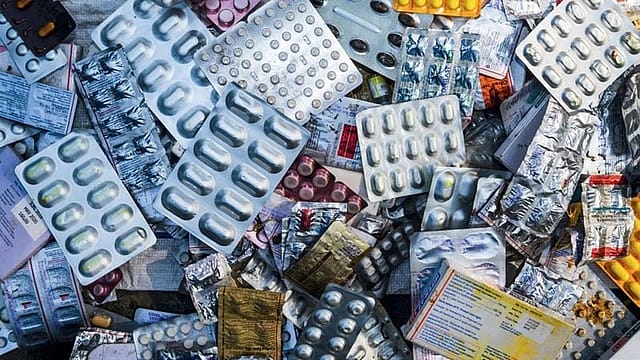
A medicine supplied to a retailer for a few hundred rupees can carry an MRP running into thousands. For patients buying drugs during a hospital stay, that difference can translate into a hefty bill with little room to negotiate. The Supreme Court is now asking why such markups persist, and whether India’s medicine-pricing safeguards are doing enough.
On October 27, a bench of Justices Vikram Nath and Sandeep Mehta questioned the Centre over the gap between medicine prices and what patients are charged. Criticising the functioning of the National Pharmaceutical Pricing Authority (NPPA), the bench said it appeared “totally defunct” and warned that hospitals could not justify excessive medicine markups by citing operational costs. The Court reserved its order on petitions seeking tighter price regulation.

Look Who's Talking Regime Change
23 Oct 2026 - Vol 05 | Issue 43
Why has the Supreme Court questioned medicine prices?
The dispute centres on the difference between the price to retailer (PTR), at which a medicine is supplied to a retailer, and its maximum retail price (MRP), the printed price ceiling for consumers.
During the hearing, the bench questioned how a price could rise from around Rs 11,000 to Rs 1.3 lakh. It also cited a drip line reportedly bought for Rs 15 but sold for Rs 250. The Court’s concern is whether such gaps can be justified and why existing rules have not adequately protected patients.
How does India regulate medicine prices?
Under the Drugs (Prices Control) Order, 2013, the government regulates prices through the NPPA. Medicines listed under the National List of Essential Medicines are classified as scheduled formulations and are subject to government-fixed ceiling prices. The pricing formula generally uses the average price to retailers of qualifying brands, with a 16% retailer margin.
Non-scheduled medicines do not face the same routine ceiling-price system. Manufacturers can set their initial MRPs, although annual price increases are restricted under the DPCO. Petitioner Kishan Chand Jain has argued that around 82% of medicines fall outside the scheduled category, leaving many without upfront price fixation.
What has the Centre done about cancer drug markups?
The Centre informed the Supreme Court in October that it had decided to cap trade margins on specified anti-cancer medicines at 30% of their MRP. The list of covered medicines is to be updated periodically. Reports by LiveLaw said the government estimated that the measure could save patients around Rs 2,500 crore annually.
However, the bench questioned why the intervention was limited to cancer drugs when concerns about steep markups extended to other medicines and medical consumables. The Centre has maintained that pricing policy must balance affordability with the availability of medicines and the functioning of the supply chain.
Why are hospitals also under scrutiny?
The dispute is not limited to pharmaceutical manufacturers. Hospitals may procure medicines and consumables at prices substantially below the amounts charged to patients.
Senior advocate Mukul Rohatgi, representing hospitals, argued that private institutions must maintain round-the-clock infrastructure and cannot always ask patients to source medicines externally, partly because of concerns about spurious drugs. The bench rejected excessive markups as a sufficient justification, saying hospitals could not survive through “dacoity”.
The Centre has also acknowledged concerns about patients’ limited bargaining power against hospitals, according to recent media reports on its submissions to the Court.
Will the Supreme Court ruling make medicines cheaper?
The petitions seek regulation of initial prices for non-scheduled medicines, mandatory generic prescriptions and price caps on medical devices. The Court has reserved its order, so no universal markup cap has yet been imposed.
For patients, the key question is whether stronger oversight can make medicine bills more transparent and affordable without disrupting supplies. The Centre’s cancer-drug measure is already a policy step; broader controls remain under consideration. The Court’s eventual order could shape how India balances healthcare costs with patients’ ability to afford essential treatment.
(With inputs from ANI)