Sheikh Hasina Wants to Return to Bangladesh. What Happens If She Does?
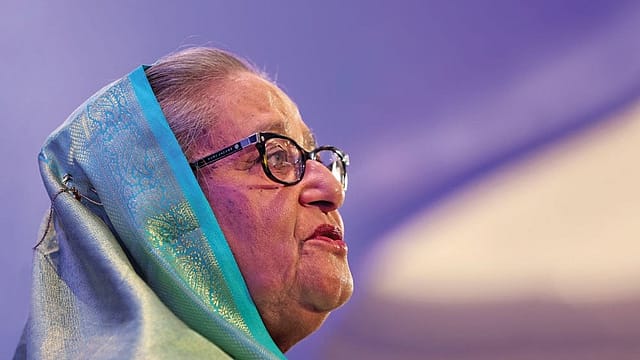
More than a year after she was forced out of power, Sheikh Hasina says she is ready to go back. Not quietly. Not after securing guarantees. But knowing she could be arrested the moment she lands.
"They may kill me. They may put me in jail," Bangladesh's former Prime Minister said during her first virtual press interaction from New Delhi since leaving the country in 2024. "Fear cannot decide my duty to the people."
With those words, Hasina may have thrown Bangladesh's politics into its biggest uncertainty since her government collapsed.
The former Prime Minister announced that she plans to return to Bangladesh in December, insisting she cannot remain abroad while her supporters continue to face what she described as persecution. She also demanded that authorities lift the ban on the Awami League, release its leaders and withdraw cases filed against party workers.

The Age of Anger
31 Jul 2026 - Vol 05 | Issue 31
A raging generation makes the government relent. What's next?
Her proposed return comes at a politically charged moment.
Bangladesh has a new government led by Prime Minister Tarique Rahman after the BNP won the February 2026 elections. The Awami League was barred from contesting those polls, leaving Hasina's party outside the formal political process.
Her return, if it happens, could therefore become far more than a personal decision. It could become the biggest political test for the new administration.
Will she be arrested? Will she be allowed to campaign? Or will her return trigger fresh political confrontation?
Those questions remain unanswered.
Adding to the political messaging, senior Awami League leader and former Education Minister Mohibul Hassan Chowdhury Nowfel said the party has survived bans before and intends to resume political activity despite existing restrictions.
"Awami League has faced worse challenges than this," he said, adding that the party would continue campaigning, organising supporters and building public opinion to facilitate Hasina's return.
He also sought to reassure New Delhi that India-Bangladesh relations transcend whichever party is in power.
"Whether the Prime Minister is Sheikh Hasina or Tarique Rahman, the relationship will continue," he said, describing the ties as rooted in shared history, culture and people-to-people connections.
The announcement also places India in a delicate diplomatic position.
Ahead of Hasina's address, the Ministry of External Affairs distanced itself from the event, saying the Government of India had no role in organising or endorsing the press interaction.
MEA spokesperson Randhir Jaiswal reiterated that while India had granted Hasina asylum, New Delhi's policy does not permit political activity directed against another sovereign country from Indian soil.
Even so, Dhaka has reportedly expressed concern over Hasina's continued political messaging from India, raising the possibility of renewed diplomatic friction.
The rhetoric surrounding the event also reflected the wider geopolitical contest unfolding in Bangladesh.
Hasina's son, Sajeeb Wazed, warned that Bangladesh was becoming "another Pakistan" on India's eastern border and alleged that Pakistan's ISI had gained significant influence in the country, remarks likely to further sharpen political debate.
For now, December remains months away. But Hasina's announcement has already shifted the conversation. The story is no longer about a former Prime Minister living in exile. It is about whether one of South Asia's most influential political leaders can walk back into her country, reclaim political space and force Bangladesh into its next defining confrontation.
(With inputs from ANI)