Assam now faces a health crisis in flood-hit areas
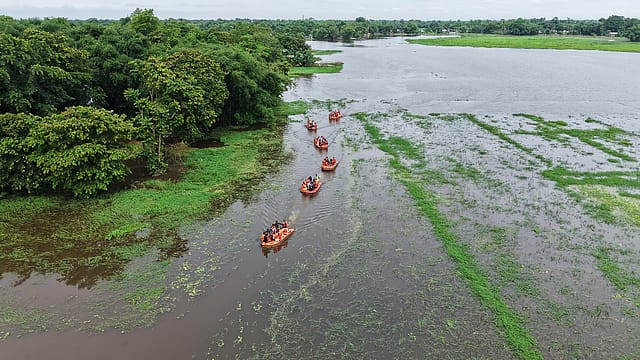
What flood-hit areas of Assam, especially Jorhat, Sivasagar and Charaideo -- where residents didn’t expect the floods because they have typically never reported a monsoon emergency in the past -- need the most is sustained post-flood care, including medical supplies, especially for people who depend on medicines for life-threatening diseases and those reliant on drugs to control diabetes and high blood pressure.
Dr Papu Kumar Ngatey, sociologist and NSS Programme Officer of Swahid Peoli Phukan College at Namti, some 20-35 kilometres away from the epicentre of the devastation, comprising areas like Nepali Khuti and Bihubar, says that he and several other members of the public have travelled to the affected areas in SUVs, while others have gone by boat, to deliver essential supplies even as several of the worst-affected parts remain submerged and the death toll continues to rise.

Losing Memory
16 Oct 2026 - Vol 05 | Issue 42
The making of a medical and social emergency
Ngatey, an alumnus of Dibrugarh University who has been teaching sociology at Namti for the past eight years, said survivors in Sivasagar, Jorhat and Charaideo are enduring a severe post-flood crisis, with diseases spreading rapidly. As is well known, communicable diseases often surge after such disasters because of overflowing drainage, poor sanitation, lack of access to health care, non-availability of safe drinking water, exposure to the elements and a raft of other reasons. People with chronic medical conditions or those who have to consume medicines daily end up suffering because of medicine shortages. Epidemic diseases are common in the affected areas primarily because of the living conditions of the displaced population. The risks rise with overcrowding, dead bodies and poor nutrition. Ngatey says he came to know of five deaths due to fever in an area that he and other volunteers had visited in Sivasagar.
Sivasagar, situated along the Dikhow River, a tributary of the Brahmaputra, is known for tea processing. Formerly known as Rangpur, it served as the capital of the Ahom Kingdom from 1699 to 1788. An ethnic Assamese-majority district, it has a population of more than 11 lakh. Quoting her book, Pre-Ahom Assam: Studies in The Inscriptions of Assam Between the Fifth and the Thirteenth Centuries AD, Nayanjot Lahiri of Ashoka University says, “There are two 8th century inscriptions on two sculptures that find mention in my book. Composite Hari-Hara and Shankara-Narayana images from Deopani in Sibsagar district. These show that Vishnu and Shiva were worshipped together. The Shankara-Narayana image inscription says ‘in the beginning (there was) the chanting of the names of Shankara and Narayana’.”
Overflowing waters from the Dikhow River have submerged large parts of this district in Upper Assam, leaving homes and fields buried under feet of sand and silt, according to reports. Assam is the worst-affected state this monsoon season, with the death toll touching 89 as of August 4 and more than three lakh people impacted across seven districts, where hundreds of villages remain inundated. Besides, extensive damage to agriculture has been reported across thousands of hectares of vital farmland.
Open had earlier reported, quoting officials and geologists, that illegal coal and stone mining were among the major causes of the floods that have devastated the region. Dr Pranjit Kalita, assistant professor at the Department of Applied Geology, Dibrugarh University, Assam, who has conducted surveys and studies in Upper Assam, said coal mining along the Assam–Nagaland border, especially in Nagaland’s Mon district and adjoining areas, has contributed to the crisis. Dr Kalita also said the Bihubar region in Sivasagar district has witnessed extensive illegal stone extraction, compounding the flood devastation this time. He emphasises that rampant mining has led to the formation of man-made lakes, many of which overflowed following the heavy rains. As of now, the Indian Army is leading rescue operations across multiple districts under Operation Jal Rahat, alongside local authorities, residents and state forces. The flood situation in Assam remains critical, amidst forecasts of overnight rains.