Delhi HC Orders Audit of Menstrual Hygiene Facilities Across Police Stations
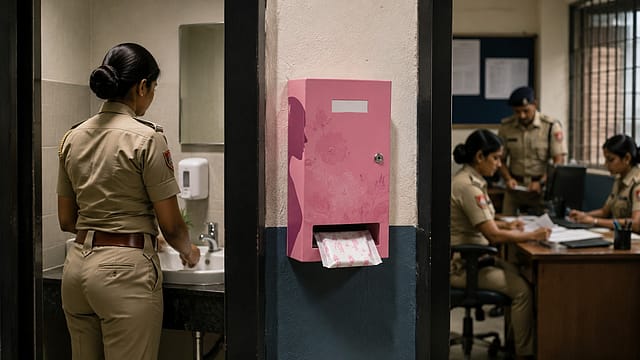
The Delhi High Court on Wednesday ordered a comprehensive audit of menstrual hygiene facilities across police stations in the national capital, directing the Delhi Police to assess the availability of sanitary pad vending machines and exclusive washrooms for women personnel.
A Division Bench comprising Chief Justice D.K. Upadhyaya and Justice Tejas Karia directed the Delhi Police to complete the survey within six weeks and submit its findings before the court.
The Bench also issued notices to the Union Ministry of Home Affairs, the Delhi Police and the Delhi government, seeking their responses to a Public Interest Litigation (PIL) alleging the absence of basic menstrual hygiene infrastructure for women police personnel.
The petition, filed by the NGO Justice for Rights Foundation, seeks the installation of sanitary pad vending machines, sanitary waste disposal incinerators and dedicated hygienic washrooms across all Delhi Police stations and police units.

The Age of Anger
31 Jul 2026 - Vol 05 | Issue 31
A raging generation makes the government relent. What's next?
According to the petition, women police personnel deployed on long law-and-order, investigation and emergency duties often struggle to access menstrual hygiene products because they cannot easily leave their posts. It argues that the lack of such facilities affects their dignity, health, privacy and working conditions.
The PIL also contends that women complainants, victims and witnesses visiting police stations face similar difficulties due to inadequate sanitation facilities.
Filed through advocates Karnika Bahuguna, Pooja Kushwah and Adarsh Singh, the petition relies on a series of RTI responses received from all 18 Delhi Police districts and units. It alleges that sanitary pad vending machines are available in only a small number of police stations despite thousands of women serving in the force.
The petition further claims that the RTI replies revealed no dedicated budget, policy, standard operating procedure or institutional mechanism for providing or maintaining menstrual hygiene infrastructure.
Invoking Articles 14, 15, 21, 42 and 47 of the Constitution, the petition argues that access to menstrual hygiene products, safe disposal facilities and hygienic sanitation is integral to the rights to dignity, health, privacy and humane working conditions.
It also cites similar initiatives undertaken by the Central Reserve Police Force (CRPF), Mumbai Police and Ladakh Police to argue that such facilities can be implemented across Delhi Police establishments.
Among the reliefs sought are time-bound installation of sanitary pad vending machines and sanitary waste disposal incinerators in every police station, exclusive hygienic washrooms for women personnel, dedicated budgetary allocations, standard operating procedures for maintenance, and an institutional mechanism to ensure the facilities remain functional.