Post-Summit India-Russia Reset: Trade, Defense, and Climate Cooperation Amid New Global Pressure
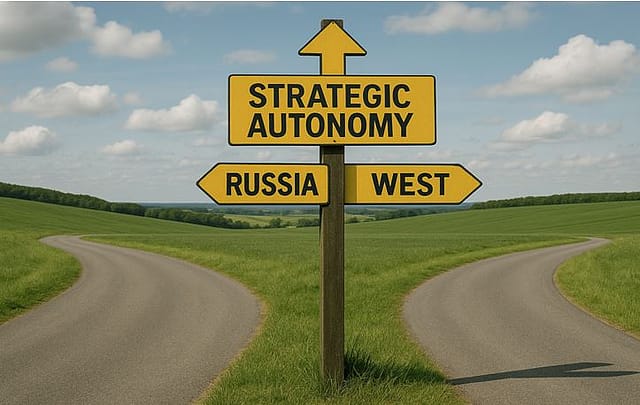
When Vladimir Putin arrived in New Delhi for the 23rd India-Russia Annual Summit on December 4-5, 2025, it was more than simply a nostalgic return to a "time-tested" friendship. This was a stress test. With the Ukraine conflict raging, Western sanctions increasing, and Washington imposing heavy tariffs on Indian exports in exchange for discounted Russian oil, New Delhi was forced to demonstrate whether its renowned "strategic autonomy" was still more than a slogan. The outcome was what can only be described as a post-summit reset: not a rupture with the past, but a harsh recalibration of trade, defense, and climate connections under unprecedented strain.
Trade: From Cheap Oil to a $100 Billion Bet
The most important effect was on the economy. Modi and Putin came to an agreement on an economic cooperation agenda that aims to raise trade between the two countries to $100 billion a year by 2030, which is about half of what it is now. A proposed free trade agreement between India and the Eurasian Economic Union (EAEU), the expansion of the International North-South Transport Corridor, and a network of sectoral deals in agriculture, shipping, labor mobility, and fertilizer are all ways to get to that number.
But the real story is behind the total number. India's trade with Russia has become very unbalanced since 2022. Crude oil is the most important export, but the rupee-ruble settlement has been hard to work out. The results of the summit try to fix the difference. India wants to be more than just a buyer of cheap hydrocarbons. It wants to be a major exporter as well. To do this, it is forming joint partnerships with Russia in the areas of fertilizers and transportation, making it easier for Indian goods to reach new markets, and pushing for more Indian goods to be sold in Russia in industries like medicines and machinery.

Assembly Elections 2026: Race of the Warhorses
20 Mar 2026 - Vol 04 | Issue 63
The making of a summer thriller
The problem is geopolitical. Washington has already turned trade policy into a weapon by putting high taxes on Indian goods and making it clear that they are linked to New Delhi's ongoing purchases of Russian oil. If India really wants a preferential trade deal with the EAEU, that challenge will only get bigger. The trade reset has less to do with numbers and more to do with India's willingness to pay an economic price for strategic space.
Defense: From Buyer to Co-Producer.
The partnership has been based on defense cooperation for a long time. The focus of this conference changed, but not the industry. India no longer wants to be seen as just a captive customer of Russian hardware. The joint statement and public messaging always stressed working together on research, development, and production, which fits with India's goal of being "self-reliant" in defense.
In practice, this implies three things. First, current large-scale systems such as the S-400 and legacy platforms will continue, but with a greater emphasis on local manufacturing of parts and components. Second, future projects are expected to be organized as joint platforms based in India, shielding New Delhi from supply chain disruptions and sanctions risk. Third, Russia remains an important hedge as India seeks to expand into the United States, France, and other markets without becoming overly reliant on a single supply.
This is when the balancing act becomes more tricky. An apparent increase in defense production with Moscow will be closely monitored in Western capitals already concerned over India's refusal to join sanctions. For New Delhi, the summit's defense tone serves as a message to the West that India has options, and any attempt at coerced linkage—between Ukraine votes, defense transfers, and trade access—will not go unanswered.
A Reset Under Pressure, Not Against It
You might think that the conference was India "choosing" Russia over the West. The details do not say that. New Delhi knows that its economy is closely tied to Western finance, markets, and technology, even though Moscow is still its main source of energy security and defense. The reset after the summit is an effort to stabilize the Russian side of this triangle at a time when the relationship is getting a lot of outside attention.
This duality was shown in the personalized messages. Modi called the India-Russia alliance a "guiding star" from the podium. At the same time, he talked about how worried he was about the situation in Ukraine and how important it was to talk and make peace. Putin, on the other hand, made it clear that India's cooperation with Russia is "not against anyone." This shows that Moscow understands India's need to keep doors open in Washington, Brussels, and Tokyo as well.
The Road Ahead
This meeting doesn't lead to a romantic renewal of a friendship from the Cold War; instead, it leads to a tougher, more practical agreement that is better suited to 2025. To lower the risk of sanctions, trade is becoming more varied. India's defense is being changed to better fit its industrial goals. Climate change talk focuses on justice and sovereignty, while energy ties are getting stronger on both the fossil and nuclear sides of the spectrum.
There will be three real tests of this reset, not in press releases or photo ops. If the $100 billion trade goal can be reached without facing huge penalties. Secondly, defense co-production with Russia can happen at the same time as agreements with the US and Europe. Lastly, India can use Russian oil and gas and nuclear technology to speed up its own transition to a low-carbon economy instead of slowing it down. New Delhi has made it clear that, for now, it will not let Washington or Brussels make decisions about Russia policy. The summit set a red line for energy, defense, and strategic autonomy principles. We still don't know how much India is willing to pay in terms of money and diplomacy to keep that line.