KN Panikkar (1936 - 2026): Sentinel of Indian Marxist Historiography
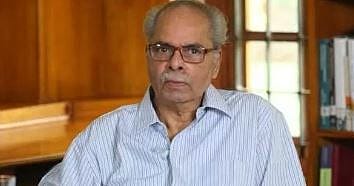
The Moplah rebellion of 1921 in Kerala was primarily by Muslims. It was targeted against the British but accompanied by forced conversions, leading to the assumption that it was driven by religion. KN Panikkar changed that narrative through his extensively researched work, 'Against Lord and State: Religion and Peasant Uprisings in Malabar, 1836-1921'. He showed that it was not a sudden communal event, but part of a continuum of resistance against feudal oppression. Religion was present, no doubt, but only the medium through which the resistance found expression in 1921.
Panikkar, who passed away on March 9, at the age of 89, was born in Guruvayur, Kerala, in 1936. It was a state at the peak of Communist fervour just as Panikkar was coming of age. Starting off at the University of Rajasthan as a lecturer in 1962, he moved to Jawaharlal Nehru University (JNU) later. There he became identified with the Indian school of Marxist historiography, which contends that history is fundamentally driven by the forces of class dynamics, production, etc. In India, it became current post-independence with historians like DD Kosambi and dominant in academia. Panikkar would go on to become one of its figureheads. As the Dean of the School of Social Sciences at JNU, he was right at the epicentre of an academic ideology that spilled over into the real world and politics.
From the mid-1990s onwards, Indian history became increasingly contested with the ascendancy of Hindutva. Into his 60s by then, he became a voice of argument against it with books that had titles like ‘Communal Threat, Secular Challenge'. A hiatus under the UPA rule once again saw his corner of the ideological strand coming centre stage but after the 2014 Bharatiya Janata Party victory, it was a losing battle.
But Panikkar never went out of currency. He continued writing against what he saw as the mainstreaming of religious distortions of history. He was still working right to the end. In Kerala, where the Communist Party ruled, he remained an influential figure, at the centre of cultural debates. He was the chairman of the Kerala State Higher Education Council at the time of his death, just a month short of 90 years. When Kerala's chief minister Pinarayi Vijayan posted on X after Panikkar's passing away, he encapsulated his life: 'A towering intellectual who served as a sentinel of scientific and Marxist historiography, he tirelessly defended India’s secular and plural fabric against communal distortions. His leadership and scholarship are guiding lights for the left and democratic movement. His demise is an irreparable loss to our academic and cultural spheres. Adieu.'

I.N.D.I.A. Falling
12 Jun 2026 - Vol 04 | Issue 75
The Unravelling of an Alliance