Explained: What the Harish Rana Case Means for Passive Euthanasia Laws in India
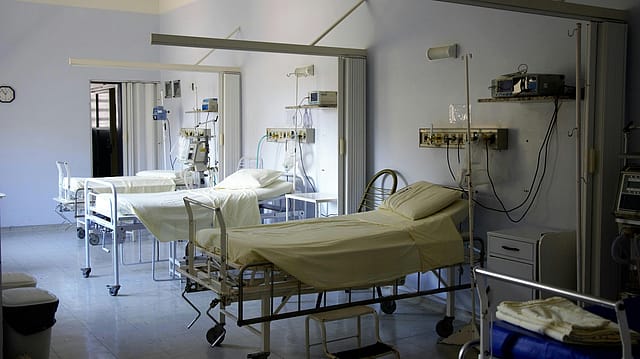
In August 2013, Harish Rana - a B.Tech student at Panjab University - fell from a fourth-floor balcony. For over 13 years, he lay in a permanent vegetative state, kept alive by feeding tubes and breathing support, with no signs of recovery.
On March 11, 2026, the Supreme Court of India gave his parents permission to let him go - the first real application of India's passive euthanasia guidelines.
It forced a nation to ask: what does it actually mean to be alive?
What is euthanasia?
Euthanasia - commonly called "mercy killing" - is the deliberate act of ending a person's life to relieve persistent, incurable suffering. The word traces back to the Greek "eu" (good) and "thanatos" (death). Simply put: a good death.
What are the types of euthanasia?
By method: active euthanasia involves a direct act to end life; passive euthanasia means withdrawing life-sustaining treatment. By consent: voluntary is requested by the patient; non-voluntary applies when the patient cannot consent; and involuntary - the most contested - occurs against a person's wishes and is widely treated as equivalent to murder.
What is a permanent vegetative state?
According to the NHS, patients in this condition may open their eyes or move reflexively but show no conscious awareness. They are alive biologically - but unreachable. Harish Rana had been in this state for 13 years, surviving solely on feeding tubes and a tracheostomy for breathing, with 100% quadriplegic disability.
Survival Instinct
22 May 2026 - Vol 04 | Issue 72
India navigates global economic turmoil with austerity and smart diplomacy
What happened in the Harish Rana case?
Rana fell from a fourth-floor balcony in 2013 as a college student. His parents spent years fighting legal battles to secure his right to die with dignity. After multiple rejections, the Supreme Court finally intervened in 2026 following a fresh petition as his condition reportedly worsened.
What did the courts decide?
According to Bar and Bench, the Delhi High Court rejected the family's plea in July 2024, saying Rana was not on a ventilator and didn't qualify as "terminally ill." The Supreme Court also initially declined in November 2024.
But after reviewing fresh medical board reports and personally meeting the parents, a bench of Justices J.B. Pardiwala and K.V. Viswanathan authorised withdrawal of life-sustaining treatment on March 11, 2026, directing it be carried out at AIIMS New Delhi's palliative care unit.
What made this ruling legally significant?
The Court ruled that feeding tubes - clinically administered nutrition and hydration - constitute "medical treatment," not basic care, meaning they can be legally withdrawn. The bench also reframed the question: not whether death was in Rana's best interest, but whether continuing treatment was.
Is euthanasia legal in India?
Passive euthanasia is legal under conditions set by the Supreme Court's 2018 Common Cause judgment. Active euthanasia remains illegal. The Harish Rana case is reportedly its first real individual application. The Court has also urged Parliament to enact a dedicated law, noting judicial guidelines alone are insufficient.
Where else is euthanasia legal?
Active euthanasia is legal in the Netherlands, Belgium, Canada, and a few other countries. Passive euthanasia is permitted more widely - including in the UK, the US, and now demonstrably in India - under strict medical and legal oversight.
Based on data from 2024 and early 2025, the number of recorded euthanasia and assisted suicide deaths worldwide is on a consistent upward trend, with annual cases surpassing 30,000.
Is it murder or mercy?
Supporters argue that mechanically prolonging life with no hope of recovery is cruelty disguised as care. Opponents warn of a slippery slope - that expanding euthanasia criteria gradually devalues human life. The Harish Rana case doesn't fit neatly into either camp. There was no lethal injection, no rushed decision. Just a family, 13 years on, asking to stop.
What comes next for India?
The ruling sets a legal precedent, but larger questions - about living wills, patient rights, and end-of-life legislation - remain unanswered. As the Supreme Court acknowledged, Parliament now needs to act. Because as medicine gets better at keeping bodies alive, the law must get better at protecting what makes life worth living.
(With inputs from yMedia)