‘Our Lifeblood Has Been Drained’: Omar Abdullah Says Indus Waters Treaty Should Stay Suspended
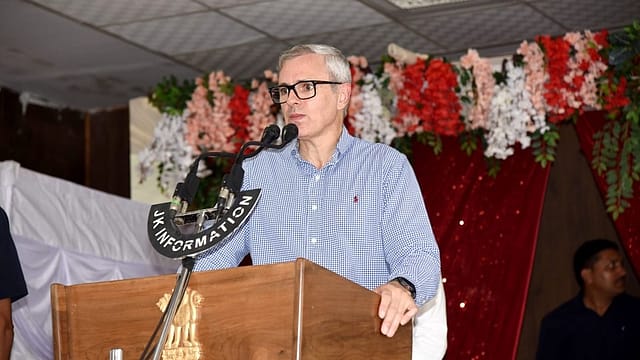
“Our lifeblood has been drained.” Jammu and Kashmir Chief Minister Omar Abdullah used those words on Friday to make one of his strongest interventions yet on the Indus Waters Treaty, arguing that India should keep the six-decade-old water-sharing agreement with Pakistan suspended.
His argument was rooted firmly in Kashmir. “These are our rivers, and we had the primary right to them,” Abdullah told reporters in Srinagar, accusing Pakistan of displaying selective sympathy towards the people of Jammu and Kashmir. “Pakistan claims to be a great sympathiser of the Kashmiris, but when it comes to the issue of water, that sympathy vanishes,” he said.
Then came the question he wanted Islamabad to answer. “Where was this sympathy when we were stripped of the right to utilise our own rivers?”
Abdullah said Jammu and Kashmir had been “bearing the brunt” of the Indus Waters Treaty for years and should now be allowed to make greater use of its water resources. “The Indus Waters Treaty is suspended, and it should remain suspended so that we can make proper use of this water,” he said.

The Age of Anger
31 Jul 2026 - Vol 05 | Issue 31
A raging generation makes the government relent. What's next?
Why is the Indus Waters Treaty suspended?
India put the 1960 treaty in abeyance following the Pahalgam terror attack. New Delhi said the agreement would remain in abeyance until Pakistan “credibly and irrevocably abjures its support for cross-border terrorism”. The decision marked an extraordinary rupture in an agreement that had survived wars, military confrontations and decades of hostility between the two countries.
The treaty governs the sharing of the waters of the Indus river system between India and Pakistan. Its suspension has major implications for Pakistan, which is heavily dependent on the river system. Around 80% of the country's irrigated agricultural land relies on the Indus basin, while the system accounts for the overwhelming majority of Pakistan's water use.
Why does Omar Abdullah want the suspension to continue?
Abdullah's argument is that Jammu and Kashmir itself has historically been constrained in how it can exploit the rivers running through the region. Under the treaty, Pakistan received rights over the western rivers, the Indus, Jhelum and Chenab, while India received control over the eastern rivers, the Ravi, Beas and Sutlej, subject to treaty provisions governing India's permitted uses of the western rivers. For Jammu and Kashmir, the debate has long included the extent to which those restrictions have limited its ability to harness its own hydropower and water resources.
Abdullah is now arguing that the treaty's suspension creates an opportunity to revisit that equation. His choice of words was telling. “Our lifeblood has been drained.”
What has Pakistan said?
Pakistan has reacted sharply to India's decision to put the treaty in abeyance. Prime Minister Shehbaz Sharif again warned New Delhi on Thursday, saying that if India “does not come to the right path, we will give it a direct response”. Water has increasingly become another flashpoint in already strained India-Pakistan relations.
For Islamabad, the stakes are enormous because the Indus system underpins agriculture, livelihoods and food security across much of Pakistan. For New Delhi, however, the argument since the Pahalgam attack has been that cooperation under the treaty cannot be insulated indefinitely from cross-border terrorism.
Omar Abdullah has now added another dimension to that debate. His question is no longer simply what suspending the treaty means for Pakistan. It is what continuing the treaty has meant for Kashmir. And his answer could hardly have been sharper: The rivers flow through Kashmir. He believes Kashmir should finally be able to make greater use of them.
(With inputs from ANI)