No Complete Ban on Metro, Trains: Supreme Court Flags Delhi Protest Restrictions
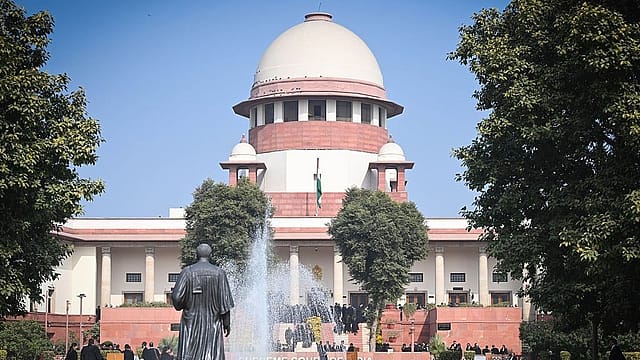
The Supreme Court on Friday said Delhi Metro and train services could not be completely stopped ahead of the October 10 protests and asked authorities to reconsider restrictions, keeping the needs of ordinary commuters in mind.
A bench led by Chief Justice of India Surya Kant, comprising Justices Joymalya Bagchi and V Mohana, said measures to maintain law and order must be proportionate and should not unnecessarily disrupt people’s daily lives.
“We have serious concerns about this. Our concern is not about the protesters, or about the authorities, but about hundreds and thousands of commuters in Delhi for their livelihood, children and senior citizens,” the CJI said.
“We are talking about common citizenry. They should not be disturbed. Everybody doesn’t have a car or facilities.”
The Modi Years
02 Oct 2026 - Vol 05 | Issue 40
A Nation Rebuilt
SERVICES CAN BE REGULATED, NOT COMPLETELY STOPPED
The bench said regulating train frequency could be justified, but a complete prohibition on movement could not be imposed.
“We make it clear that no complete prohibition of movement of Metro should be imposed,” it said.
Solicitor General Tushar Mehta, appearing for the Centre, agreed to ask the authorities to reconsider the restrictions and allow Metro and other trains to operate in a regulated manner that would avoid inconvenience to Delhi residents.
The court stressed that authorities must exercise “abundant precaution” to protect citizens while ensuring that restrictions do not create unnecessary hardship.
PUBLICISE BARRICADES AND ALTERNATIVE ROUTES
The bench also asked authorities to revisit road barricading across Delhi. It directed that restrictions, barricades and alternative routes be widely publicised through newspapers, official websites and other platforms.
Commuters should receive advance information about closures and be guided towards alternative routes, the court said.
Genuine and reasonable law-and-order concerns could justify restrictions, it observed. Curbs imposed without such justification would be unreasonable.
WHAT THE PETITION CHALLENGES
The plea, filed by CPI(M) general secretary M.A. Baby, challenged the proposed closure of 57 Delhi Metro stations and cancellation of Mail and Express trains scheduled to reach New Delhi and Hazrat Nizamuddin on October 10.
It also alleged that people travelling to Delhi to participate in the protests were being intercepted and detained.
The petition sought to quash an October 8 police communication directing the Metro station closures, restore transport services and permit a regulated peaceful assembly at Jantar Mantar.
It argued that the measures were arbitrary, disproportionate and without legal authority, infringing constitutional rights to speech, peaceful assembly and movement, among other protections.
According to the plea, the Metro closure communication cited only the “likelihood of unruly mob movement”, without specifying a statutory power or an end date.
CENTRE CITES PREVIOUS PROTEST VIOLATIONS
Mehta told the court that organisers had previously sought permission for a protest on July 20 and received approval the same day, along with conditions they agreed in writing to follow.
He said permission had been granted for one day, but the demonstration continued for 17 days. He alleged that penal violations occurred and that protesters entered Parliament premises without permission.
“Parliament is not just a political institution. It represents the sovereignty of India,” he said.
Mehta also alleged that more than 200 police personnel had been “molested” during those protests, including women officers who faced harassment. He argued that law-and-order arrangements were necessary to protect citizens.
The bench clarified that Friday’s directions primarily concerned public transport and the movement of ordinary citizens. It asked organisers and protesters with grievances about restrictions on demonstrations to urgently place those concerns before the court in appropriate petitions.
Senior advocate Kapil Sibal said the petitioners would put their concerns on record. The bench said those questions could be considered later on Friday or at a hearing on Saturday.
With inputs from ANI