Indian-Origin Judge Navi Pillay Wins 2026 Nobel Peace Prize
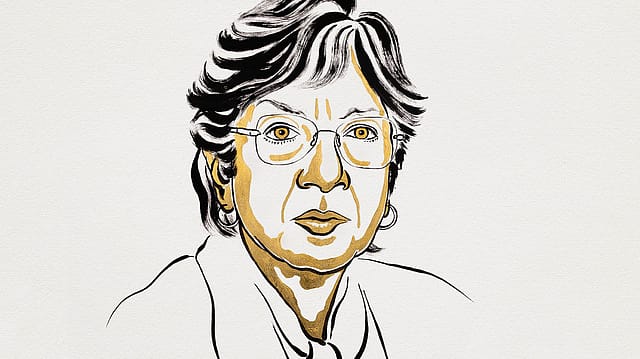
South African judge Navanethem “Navi” Pillay has won the 2026 Nobel Peace Prize “for her efforts to promote peace and international law.” The Norwegian Nobel Committee announced the award in Oslo on Friday. Pillay, 85, is a former UN human rights chief and a sitting judge of the International Court of Justice.
The prize is worth 12 million Swedish crowns, about $1.2 million, and will be presented in Oslo on December 10. It is the fifth Nobel of the week, after literature, chemistry, physics and medicine, and marks the 125th year of the peace prize.
FROM APARTHEID DURBAN TO THE WORLD’S COURTS
Pillay was born in Durban into a family of Indian Tamil origin under apartheid. She became a lawyer and a legal pioneer in a system built on structural discrimination, segregation and exclusion. Her early work included defending Nelson Mandela and others who stood up against apartheid.
The Modi Years
02 Oct 2026 - Vol 05 | Issue 40
A Nation Rebuilt
That thread runs through a career in some of the key international court cases of our time. She has served as a judge on the High Court in South Africa, the International Criminal Tribunal for Rwanda and the International Criminal Court.
She went on to become the UN High Commissioner for Human Rights, and until recently chaired the UN Independent International Commission of Inquiry on the Occupied Palestinian Territory. She now sits on the International Court of Justice in the case in which Myanmar stands accused of genocide.
THE RWANDA BREAKTHROUGHS
Pillay’s most lasting legal mark came at the Rwanda tribunal. When it established that rape and sexual violence could constitute a crime against humanity, as well as genocide, her influence was a significant factor. In the same case, she was instrumental in a separate breakthrough: for the first time, a defendant faced charges of incitement to commit genocide purely on the basis of spreading propaganda.
Her rulings helped define the norms and principles now used to prosecute war crimes, crimes against humanity and genocide, and showed that legal measures can help prevent acts of war and violence.
WHY THE LAW, AND WHY NOW
The first Nobel Peace Prize was awarded 125 years ago, and resolving conflicts through international law has been a theme of the prize ever since. The reach of that law widened after the Second World War with the creation of the UN, built on the idea that lasting peace must rest on legal principles and not on the will of the strong or a fragile balance of power. It picked up pace again after the Cold War.
The system has never been perfect. The greatest powers have often evaded responsibility, and cases have produced different results depending on who is the perpetrator and who is the victim. Yet more and more conflicts are being addressed through diplomacy, treaties and legal mechanisms and not through threats and warfare.
The committee received nominations for 287 candidates this year, just over a quarter of them organisations. Last year’s prize went to Venezuelan opposition leader Maria Corina Machado. In 125 years, the prize has gone to 112 individuals and 28 organisations.