Netaji Subhas Chandra Bose: Facts, Findings and Unanswered Questions
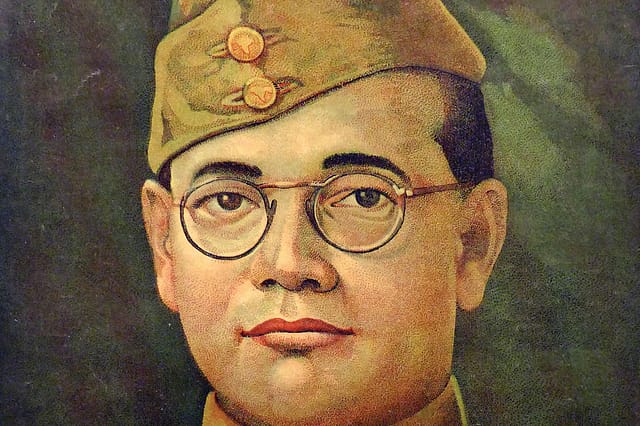
Nearly eight decades after his reported death, Netaji Subhas Chandra Bose remains one of modern India’s greatest enigmas. Conflicting accounts, missing evidence and official secrecy continue to fuel debates over his final fate.
Here’s an explainer on his life and key moments:
From Indian Civil Service to Congress President
Subhas Chandra Bose was one of India’s most charismatic nationalist leaders, born on January 23, 1897, in Cuttack, Orissa. He cleared the Indian Civil Service examination but resigned to join the freedom struggle and later served as Congress president in 1938 and 1939.

What Rahul Gandhi Wants
28 Aug 2026 - Vol 05 | Issue 35
He is desperately courting the angry youth. That won't be enough to credibly challenge Modi
What was the Indian National Army?
Bose founded and led the Indian National Army (INA) during World War II. After escaping British surveillance in 1941, he reached Japanese-controlled Southeast Asia in 1943 and led military campaigns against British forces in Burma and northeast India.
What is the official version of Netaji’s death?
According to official accounts, Bose died on August 18, 1945, from severe burns after his overloaded aircraft crashed shortly after take-off from Taihoku airfield in Taipei. His ashes were later placed at Tokyo’s Renkoji Temple.
Why do conspiracy theories persist?
Skepticism stems from the absence of a conclusively identified body, contradictory eyewitness accounts and long-standing government secrecy around classified files. Together, these gaps have sustained alternative theories for decades.
What is the Gumnami Baba theory?
One of the most enduring theories links Netaji to Gumnami Baba, a reclusive ascetic who lived in Faizabad until 1985. Supporters claim documents, photographs and personal items found after his death suggest he was Bose living in disguise.
Did Netaji survive and live in Soviet Russia?
Another theory claims Bose survived and was taken to the Soviet Union, possibly detained by Stalin as a political asset. Russian authorities, however, have consistently denied any records of Bose being in Soviet custody.
What is the Japanese conspiracy theory?
This hypothesis suggests Bose died in Japanese-controlled territory and that the plane crash narrative was fabricated to avoid diplomatic fallout, with both Tokyo and New Delhi allegedly suppressing the truth.
How is Pranab Mukherjee linked to these claims?
Journalist Anuj Dhar’s book India’s Biggest Cover-up alleges that Pranab Mukherjee, as External Affairs Minister, opposed declassifying Netaji-related files. Mukherjee did not publicly respond in detail to these allegations.
How many official inquiries examined Netaji’s death?
Three major commissions investigated the case. The Shah Nawaz Committee (1956) and the Khosla Commission (1970) upheld the plane crash theory, while the Mukherjee Commission took a different view.
What did the Mukherjee Commission conclude?
In 2005, the Mukherjee Commission concluded that Bose did not die in the 1945 plane crash. The government rejected its findings and reaffirmed the official version of events.
What changed after the declassification of files in 2016?
While several Netaji-related files were made public, researchers argue key documents remain classified. The disclosures failed to settle the mystery, ensuring Bose’s fate remains unresolved.
(With inputs from yMedia)