Modi's message on terror
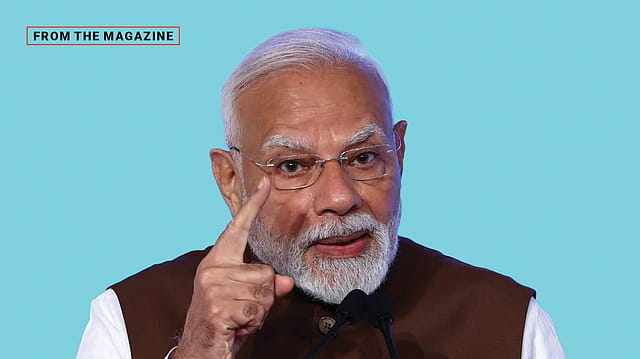
Prime Minister Narendra Modi’s engagements at the Shanghai Cooperation Organisation summit in Bishkek saw him emphasise close linkages between security, connectivity and opportunity and making the need to dismantle terrorist networks as central to the task. Modi’s stress on targeting the terror “ecosystem” that includes safe havens, radicalisation and finance may seem a reiteration but it was made to a gathering that included the leaders of Russia and China who have a role to play in India’s regional security. Modi called out “state-supported terrorism”—an unambiguous reference to Pakistan— and said terrorism should not be regarded as a strategic asset. Referring to Afghanistan, he called for continued development and humanitarian support to the Afghan people which stood in contrast to Pakistan’s use of military force against the Taliban regime. The SCO summit was an important precursor to the BRICS meeting scheduled for mid-September.
Bhagwat’s Charm

RSS chief Mohan Bhagwat’s event in New York flummoxed critics as his comments celebrated India’s diversity rather than conveying any note of majoritarianism. Opponents back home claimed this to be doublespeak but Bhagwat’s visit to Canada that followed was not only in the same vein but also saw moderate Muslim leader and podcast host Tahir Gora welcoming the RSS chief to Toronto. Bhagwat’s public engagement went off smoothly and denied the usual suspects a chance to berate RSS.

Zeroing In on ECI
09 Oct 2026 - Vol 05 | Issue 41
Constitutional legitimacy versus political opportunism
No Count Is Good News
Manipur Chief Minister Yumnam Singh will be relieved with the state being excluded from Census operations as things are far from settled. Clashes between Kuki and Naga groups continue and the security situation is tense. Kuki groups, aided by cross-border links with insurgents in Myanmar, are unwilling to halt the violence, with Nagas being their latest target. In the past, Assam and Jammu & Kashmir have been exempted from a population count. It may be months before peace prevails with state polls due early next year.
Gurugram Metro
Amid waterlogging in Gurugram, there was good news from the city’s Metro project which achieved a milestone with the successful installation of the first 160 tonne U girder near Cyber Park on August 28. The massive girders were lifted by giant cranes and have been manufactured locally in Sector 33. These will form the superstructure of the Metro viaduct over which tracks will be laid. Each girder is made of around 16 tonnes of reinforced steel and 60 cubic metres of M-60 grade concrete.
Himalayan Caution
The disaster in Nepal has again put the focus on hydro electric projects in the Himalayas. In India’s case, the government took a decision sometime ago to not start any new project in the upper reaches of the Ganga. India is developing projects downstream Brahmaputra to contain flood risks from China’s Medog project.
Unyielding Big Brother
The bad blood between CPM and CPI in Kerala over the ’junior’ party demanding the deputy leader of opposition post is one fallout of defeat that the Marxists are dealing with. CPM maintains the post is traditionally its turf along with the LOP. CPI’s bid to reset the equation may be an attempt to increase its influence but does not square with its reduced circumstances.
A Hint From Wangchuk
Ladakh activist Sonam Wangchuk’s remarks that Cockroach Janta Party (CJP) leaders entering politics would not be surprising or wrong is more than just an observation. Wangchuk’s caveat is that CJP should keep political parties at a distance. It is clear that CJP is exploring issues that might resonate with the public and provide a platform for wider mobilisation. Wangchuk’s hint is not just about CJP’s likely political plans but possibly about the need to place such a scheme before the public.