Strait of Hormuz crisis: How global LNG shortage could hit India’s power bills and gas supply
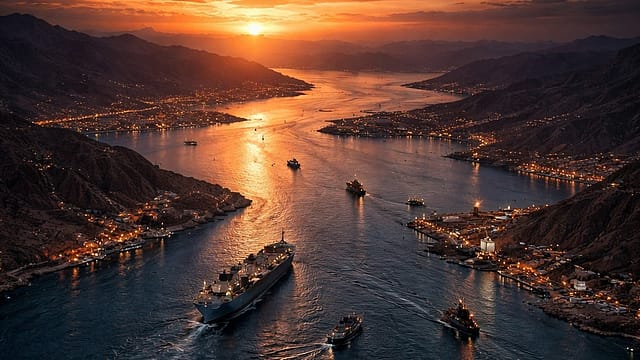
A ship carrying liquefied natural gas may seem a distant concern for most Indian households. But when that ship cannot pass through the Strait of Hormuz, the consequences can travel much further than the Persian Gulf. They can affect the fuel available to factories, the cost of producing fertilisers and the economics of generating electricity.
That is the warning behind the International Energy Agency’s latest Global Gas Security Review 2026, released on November 3. The IEA says disruptions to LNG shipments from Qatar and the United Arab Emirates have created an unprecedented supply shock, with the possibility of tighter markets through the 2026–27 winter.

The Era of Forever Wars
30 Oct 2026 - Vol 05 | Issue 44
Coping with an explosive Middle East
For India, which imports a substantial share of its natural gas, the question is no longer simply whether supplies will arrive, but how much they will cost.
Why is the Strait of Hormuz so important to India’s gas supply?
The Strait of Hormuz is a narrow maritime passage connecting the Persian Gulf with the Gulf of Oman and the Arabian Sea. It is a crucial route for energy exports from the Gulf, including LNG shipments from Qatar, one of India's biggest suppliers.
The IEA estimates that LNG loadings from Qatar and the UAE fell by more than 60 billion cubic metres year-on-year between March and October 2026. Global LNG production declined by around 20 bcm over the same period, despite additional output from North America and Africa. The agency says the disruption could continue to affect supplies during winter.
Its outlook presents two scenarios: if the Strait begins progressively reopening in January 2027, global LNG supply could fall by around 9 bcm year-on-year during the winter period. If restrictions persist until the end of March, the decline could reach around 20 bcm.
How exposed is India to the LNG supply shock?
India imports roughly half of the natural gas it consumes, and the Strait of Hormuz has been a major transit route for those imports. An October analysis by The Indian Express, citing Kpler data, estimated that around 60 per cent of India's LNG imports had come through the Strait, primarily from Qatar and the UAE.
The disruption has already changed India's import patterns. According to The Times of India, India's LNG imports reached a record 2.7 million tonnes in October, up 17.4 per cent year-on-year, with higher shipments from Qatar and the UAE contributing to the increase. But domestic production has declined, pushing import dependence to nearly 52 per cent.
The apparent recovery in imports does not mean the risk has disappeared. Cargoes are being sourced from a wider range of countries, while competition for available shipments remains intense.
Could gas shortages affect fertilisers, electricity and Indian industries?
Natural gas is an important input for fertiliser manufacturing, particularly urea. A prolonged supply squeeze could therefore put pressure on production costs and the availability of domestic fertiliser supplies. That matters for Indian agriculture, where timely fertiliser availability is important ahead of sowing seasons.
City gas distribution companies also depend on natural gas to supply piped cooking gas (PNG) and compressed natural gas (CNG). Gas-fired power plants and industries such as ceramics and chemicals could face higher fuel costs or pressure to switch to alternatives.
The impact will not necessarily be uniform. Industries that can switch fuels may do so, while sectors with fewer alternatives could face higher operating costs. Expensive LNG can also make gas-fired electricity less competitive.
What is India doing to reduce its dependence on Gulf gas?
India has been looking beyond traditional suppliers. Imports from the United States, Oman, Nigeria, Angola and Australia have helped diversify its supply basket.
There is also a longer-term shift under discussion. Reuters reported on November 3 that Petronet LNG is talking to Qatar about sourcing some US-produced LNG under its renewed 20-year supply agreement, which begins in 2028. Qatar currently has a contract to supply Petronet with 7.5 million tonnes annually. The proposal could help diversify the origin of supplies, although no final arrangement has been announced.
The government has also used priority-based allocation to protect essential consumers during the disruption. In a parliamentary statement earlier this year, Petroleum Minister Hardeep Singh Puri said domestic PNG and CNG supplies were being prioritised, alongside fertiliser requirements.
Will Indian consumers see higher gas prices?
That depends on how long the disruption lasts, the cost of replacement cargoes and how much of the increase suppliers pass on to consumers. The IEA has already reported that Asian spot LNG prices rose sharply between March and October, reaching levels last seen during the 2022–23 energy crisis.
India has buffers, including domestic production, alternative suppliers and priority allocation. But these cannot fully insulate the economy from a prolonged global shortage. The biggest risk is not necessarily an immediate nationwide shortage; it is a longer period of expensive energy that raises costs for industry, agriculture and electricity.
For India, the Hormuz crisis is a reminder that energy security is not only about buying enough gas. It is also about having enough suppliers, routes and alternatives when a vital shipping lane becomes unreliable.
(With inputs from ANI)