Rajnath Singh calls Agniveer extension a ‘Diwali gift’, stresses soldiers’ role in border security
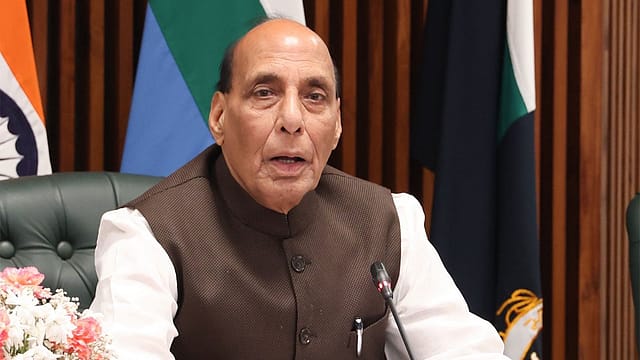
A longer route to a career in the armed forces, stronger ties with border communities and soldiers trained for a changing battlefield: Defence Minister Rajnath Singh brought all three themes into focus during his interaction with troops at Bagdogra in West Bengal on November 7, ahead of Diwali.
Calling the Centre’s recent decision to extend the service of the remaining 75 per cent of Agniveers a major festive gift, Singh said the additional opportunity would allow willing recruits to continue serving the country. But his message to soldiers went beyond the Agnipath scheme. In a region where geography makes security especially important, he said, the conduct of troops and their relationship with civilians could be as consequential as their military preparedness.
Agnipath scheme: What changes for the remaining 75% of Agniveers?
The biggest announcement in Singh’s address followed the Union Cabinet’s November 4 approval of a revised engagement structure under the Agnipath scheme. Under the new arrangement, the 25 per cent of Agniveers selected on merit will continue to be offered regular employment after their initial four-year tenure. The remaining 75 per cent will be offered a second engagement period of two years, depending on their willingness and the armed forces’ requirements.

The Era of Forever Wars
30 Oct 2026 - Vol 05 | Issue 44
Coping with an explosive Middle East
After completing six years of service, those who wish to continue and meet the prescribed selection criteria will have an opportunity to enter the regular cadre. Singh described the move as a “major gift” for Agniveers, saying it would give them another chance to serve.
The Defence Ministry said the second engagement would carry higher remuneration, an enhanced Seva Nidhi package and cumulative seniority benefits. Chief of Defence Staff General NS Raja Subramani said the extended period would offer monthly remuneration of approximately Rs 43,500 in its first year and Rs 47,500 in the second.
Why the Agnipath decision matters as the first batch nears exit
Introduced in June 2022, Agnipath originally brought recruits into the Army, Navy and Air Force for four years. Only up to 25 per cent of each batch could be retained in regular service, leaving the rest to exit after completing their tenure.
The revised framework follows a four-year assessment of the scheme. In its November 4 announcement, the government cited Agniveers’ physical fitness, motivation, discipline, skills and technological adaptability as positive outcomes. The change creates a longer pathway to regular service, although enrolment is not automatic: willingness and selection standards remain essential.
Rajnath Singh says local trust is crucial in sensitive border areas
At Bagdogra, Singh also urged soldiers to maintain strong relationships with residents, saying their behaviour, language, discipline and restraint shaped public perceptions of the armed forces. “The more you connect with local people, the weaker the enemy's plots will become,” he said.
The location adds significance to the message. Bagdogra lies near the Siliguri Corridor, the narrow stretch of northern West Bengal connecting mainland India with the Northeast. Its strategic importance makes local confidence and security coordination particularly relevant.
Drones, cybersecurity and Indian defence technology take centre stage
Singh said the armed forces must become more technology-driven, pointing to soldiers learning to operate drones and understand cybersecurity. He also praised Indian start-ups and industries for developing drones, anti-drone systems and equipment for troops.
Yet he cautioned that technology alone could not determine military effectiveness. Discipline, courage and morale, he said, remained fundamental to a soldier’s strength.
The Defence Minister also congratulated Air Chief Marshal Ashutosh Dixit on taking charge as Chief of the Air Staff, invoking the qualities associated with Lord Shiva while warning adversaries against provoking the Air Chief’s “fierce form”.
Singh is scheduled to spend Diwali with troops in Sikkim on November 8, visiting the Sherathang War Memorial and meeting personnel deployed in the region. His Bagdogra address brought together the government’s latest recruitment-policy change and a broader message: a future-ready military needs not only better technology and longer service pathways, but also disciplined soldiers, high morale and the trust of the people living alongside them.
(With inputs from ANI)