Mapping Bengaluru’s Civic Memory
Earlier this month, the Greater Bengaluru Authority approved plans for a unified GIS platform. It will hold roads, utilities, streetlights, proposed works and road histories. Agencies are to upload their plans so that a newly asphalted road is not opened soon after by another department. Citizens will be able to report potholes and track the complaint.
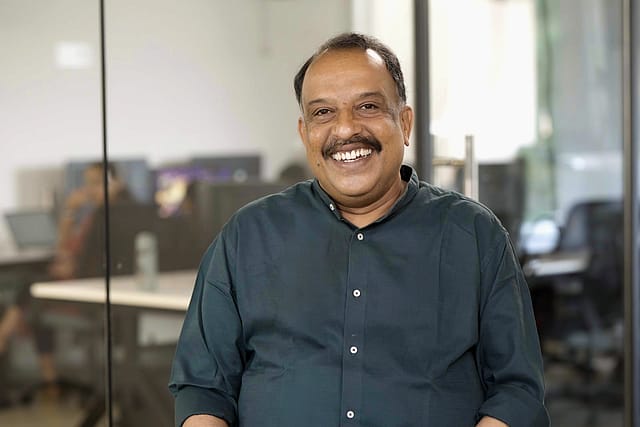
But Bengaluru had built a road-history system back in 2014, says G Manjunath Raju, 55, who represented Kadu Malleshwara in the Bengaluru municipal corporation for two terms, from 2010 to 2020, and chaired the BBMP's standing committee for taxation and finance in 2011-12 and its health committee in 2019-20. A geo-enabled road-network dashboard for Bengaluru incorporating road history in fact won an award in Chengdu in 2014. Raju is an unassuming BJP man who talks about Malleswaram, his home ground, with deep fondness—for his old haunts, for a ground where he played cricket, and for streets held together by people who noticed what was happening outside their doors and took it to be their business. He is also a successful entrepreneur, running a network of Arena Animation franchises across the state. Trained as a mechanical engineer, Raju treats the city as a system whose failures are traceable to a part. “This government hasn’t utilised the city’s road history, which was very much available. Now elections are coming and the Government is talking about it again. It should also give a reason why it has not used road history effectively,” he says.
The Identity Project
11 Sep 2026 - Vol 05 | Issue 37
Amit Shah leads the mission for a national demographic correction
Bengaluru has had no elected council since September 2020. For almost six years its civic government has been conducted by officials and state politicians. None of the five corporations—Central, East, West, North and South—that were constituted in September 2025 under the Greater Bengaluru Governance Act, dividing 369 wards between them, has yet had an elected member. A resident could once reach a corporator about a blocked drain, a dead streetlight or civic work abandoned half-done. Reaching an MLA or a senior bureaucrat is an effort of a different order. The Supreme Court, which had set a June deadline for conducting elections to the corporations, and then an August one, last week gave the state until December 31, citing the Special Intensive Revision of the rolls. The corporations that will finally be elected will inherit a tax base that Raju helped extend and map.
As taxation committee chairman, Raju helped advance the citywide rollout of GIS-linked Property Identification Numbers and the expansion of online collection. Each property could be fixed within a ward and street and attached to a map. “Although online filing already existed, many taxpayers still paid in cash at municipal counters,” Raju recalls. With PID, tax records finally began to correspond to the physical city, allowing the corporation to expand the tax base and identify discrepancies between its records and the physical city. Between 2007-08 and 2012-13, as GIS-based assessment expanded, the number of properties in the system rose from about 7.4 lakh to 16.2 lakh. Collections rose from Rs 448 crore to Rs 1,350 crore. Once a property had a durable identity, other information such as land use, water supply, commercial activity and civic permissions could be attached to it. What Raju aspired to build, within his limited capacity as a corporator, was a city with a searchable memory.
The system was recognised by the World e-Governments Organization in Barcelona in 2012. The awards belonged to the systems and the teams that built them. Raju was simply an elected member who could move an idea through a committee, secure cover for it, and describe its purpose in a foreign city. His argument—and it’s a dangerous one for a politician to make—remains that technology should expose the relationship between public money and the place where it was spent.
Roads in India often have short official memories. A road is laid, cut and laid again, and each new surface conceals the last contract. The utility that opens it may know nothing of the agency that resurfaced it. The citizen standing over the broken asphalt has no account of either. Road History addresses this issue. Every road receives a permanent identity. Length and width, drains and coordinates, works done, contractor, cost and period of liability. “We mapped 13,000 kilometres, at an accuracy of 99 per cent,” says Raju. A citizen or an official would, in principle, be able to see how often a road had been repaired, what had been spent, and who was answerable when it failed. But the system was never sustained or fully implemented as a live public record. “The corporations, the BWSSB and BESCOM should work from common and current data,” says Raju, who wants the three amalgamated, or at least their systems, permissions and public accounts integrated.
When Raju asked the BWSSB, in the council, how much of the Cauvery water entering Bengaluru was actually accounted for, the answer took its time coming: less than 50 per cent. Those were the city’s tanker years. Property records were overlaid with water connections. Officials could locate the connection that was missing, unauthorised or wrongly recorded. In Malleswaram, Raju says, a third of connections were illegal. By 2015 the PID-linked survey had assessed about 23,500 of the area’s estimated 26,000 connections and was being considered for use across the city. A drop in pressure could indicate a leak or an unauthorised tap. He credits the unaccounted-for-water programme with raising efficiency to around 73 per cent. The BWSSB's new AI-enabled command centre, with its GIS maps and real-time pressure data, continues along a line drawn by that exercise.
In fact the central move under the GBA Act is to coordinate and supervise the parastatals BWSSB, BESCOM, BMTC and BMRCL under one authority. It makes the ward committee the basic unit of urban governance, chaired by the councillor, with 14 other members including at least two from resident welfare associations, a 20-month term, and responsibility for preparing the ward development plan. The GBA is chaired by the Chief Minister and includes ministers and Bengaluru MPs, MLAs and MLCs alongside the five mayors. The executive committee is headed by the Bengaluru Development Minister.
Raju remains sceptical of the division of Bengaluru into five corporations. “This is a failed model,” he says. A boundary can be redrawn on paper while the water main and the power line continue across it. Revenue will not divide evenly: one corporation inherits a commercial tax base, another begins with peripheral layouts, insufficient drains and an infrastructure burden it cannot fund. “Technologists can only make the city capable of noticing itself,” says Raju. What it does with the knowledge is anybody’s guess.