Jaishankar Slams Selective Targeting, Recalibrates India–Poland Partnership
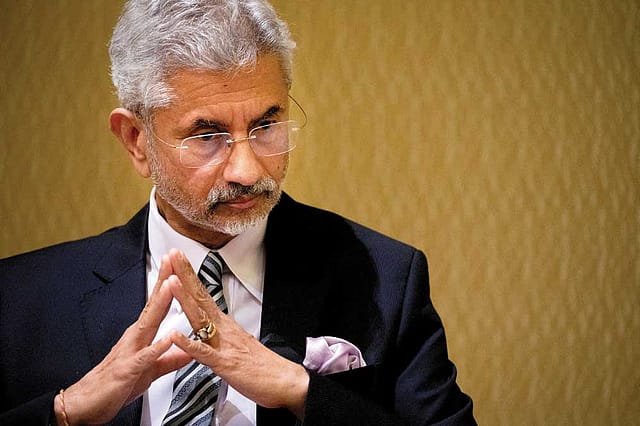
External Affairs Minister S Jaishankar used talks with Poland’s Deputy Prime Minister and Foreign Minister Radoslaw Sikorski to deliver a blunt message on India’s global positioning: selective targeting of New Delhi—whether over Ukraine or through tariffs—is both unfair and unjustified.
Speaking during delegation-level talks in New Delhi, Jaishankar said India has repeatedly and candidly articulated its position on the Russia–Ukraine conflict, including in New York and Paris, but continues to face disproportionate criticism. “I underline again today that the selective targeting of India is both unfair and unjustified,” he said, setting a firm tone for the discussions.
The remarks came at a moment of what Jaishankar described as “considerable global churn”—a world marked by wars, tariffs, and deepening distrust. Against this backdrop, he argued, closer engagement between India and Poland was not just useful, but necessary.
That broader recalibration formed the second pillar of the meeting.
The talks marked the first high-level engagement since India and Poland elevated their relationship to a strategic partnership following Prime Minister Narendra Modi’s visit to Warsaw in August 2024. Both sides reviewed progress under the Action Plan for 2024–28, aimed at translating intent into execution across sectors.
Jaishankar outlined an expanding bilateral agenda that now spans trade, technology, defence, mining, clean energy, digital innovation, people-to-people ties and multilateral cooperation, positioning Poland as one of India’s most important partners in Central Europe.

India's Action Hero
27 Mar 2026 - Vol 04 | Issue 64
Riding the Dhurandhar Wave
The numbers underscore the shift. Bilateral trade has reached $7 billion, growing nearly 200% over the past decade, while Indian investments in Poland have crossed $3 billion, creating local employment. India’s growth trajectory and pro-investment policies, Jaishankar said, offer significant opportunities for Polish businesses.
But economics was only part of the conversation.
Jaishankar urged Poland to maintain zero tolerance towards terrorism, stressing that cross-border terrorism remains a persistent challenge in India’s neighbourhood. Sikorski responded with rare alignment, agreeing on the need to counter transnational and cross-border terrorism and citing recent arson attacks and attempted sabotage of Polish infrastructure as evidence that such threats are no longer distant abstractions.
Trade tensions also surfaced. Sikorski echoed Jaishankar’s concerns about tariffs, noting that US-imposed trade measures risk triggering global trade turbulence. He acknowledged Europe’s own experience with selective targeting and welcomed India’s growing diplomatic engagement across the continent, including the expansion of Indian embassies—signals, he said, of New Delhi’s seriousness about the European Union.
The geopolitical subtext was unmistakable. Trump has imposed 50% tariffs on India over Russian oil purchases and announced 10% tariffs on several European countries opposing his bid for Greenland though Poland has so far avoided the list.
Beyond geopolitics, the meeting also touched on history and culture. Jaishankar recalled the legacy of the Jam Saheb of Nawanagar, who sheltered Polish refugees during World War II—a reminder that the relationship between the two countries runs deeper than contemporary alignments.
As the talks concluded, the picture that emerged was of two countries from different regions, navigating shared uncertainty with a common instinct: dialogue over dogma, engagement over escalation.
(yMedia and ANI are the content partners for this story)