Is This the End of Entry-Level Jobs? Inside the Gen Z Employment Crisis
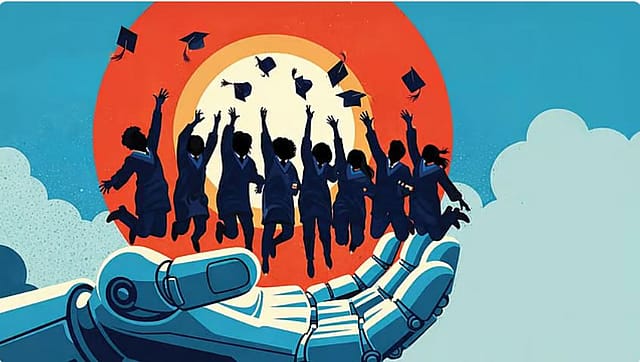
For decades, college was sold as a safe bridge to stable careers. For Gen Z, that bridge is collapsing. Entry-level jobs are vanishing, hiring pipelines are frozen, and AI is absorbing roles once meant for fresh graduates, leaving millions overqualified, indebted, and unemployed.
Q: How serious is the Gen Z unemployment problem?
It’s severe and worsening. In the US, youth unemployment reached 10.8%, more than double the overall jobless rate of 4.3%. Recent graduates face 5.8% unemployment, significantly above the national average. In the UK, 1.2 million graduates competed for fewer than 17,000 entry-level roles in 2024. Globally, the numbers point to a structural breakdown, not a temporary slowdown.

The Modi Years
02 Oct 2026 - Vol 05 | Issue 40
A Nation Rebuilt
Is this just a Western problem?
No. The crisis is global. Youth unemployment stands at 17% in India, 16.5% in China, 27% in Spain, and a staggering 36% in Morocco. In many Asian economies, youth joblessness runs two to three times higher than national averages, underscoring how widespread the challenge has become.
Why are even STEM graduates struggling to find jobs?
This is one of the most striking reversals. Computer engineering graduates face 7.5% unemployment, while computer science graduates are at 6.1%—both higher than liberal arts majors. According to New York Fed analysis cited in the report, STEM graduates now have higher unemployment than the workforce overall, overturning decades of assumptions about “safe” degrees.
What role is AI playing in this collapse?
AI is reshaping the bottom rung of the job market. About 70% of hiring managers believe AI can do the work typically assigned to interns, and 57% trust AI more than recent graduates. Anthropic’s CEO has warned that AI could eliminate half of all entry-level jobs, while the World Economic Forum says 41% of companies expect workforce reductions by 2030 due to automation.
Has hiring completely frozen?
Not entirely but it has slowed dramatically. Central bankers describe the market as “low hire, low fire”: layoffs are limited, but opportunities are scarce. Entry-level job postings are down 15%, while applications are up 30%, creating intense competition for fewer openings. In October 2025 alone, US companies announced 153,000 job cuts, the highest since 2003.
Are trade and vocational jobs becoming better bets?
Increasingly, yes. Governments and employers are pivoting toward skilled trades and apprenticeships. The UK has announced nearly $1 billion in funding for apprenticeships across hospitality, retail and AI-linked roles. Randstad’s CEO argues that learning a craft may now offer better security than chasing passion-driven degrees, with trades often delivering faster pay growth than white-collar entry roles.
Is college still worth it for Gen Z?
The value proposition is under pressure. Only 35% of Americans now say college is “very important,” down sharply from 75% in 2010. Meanwhile, 82% of jobs no longer require a degree, up from 79% five years ago. With student debt rising and entry-level roles shrinking, many young people are questioning whether traditional degrees justify their cost.
What advice is emerging for struggling graduates?
The message is pragmatic, not pessimistic. Employers and labour experts emphasise practical, adaptable skills over credentials alone. For those already in college, STEM remains relatively resilient but no longer guaranteed. For others, pivoting to trades or applied skills is framed as adaptation, not failure.
(yMedia is the content partner for this story)