Is rural India finally turning the corner? NABARD report provides an emphatic answer
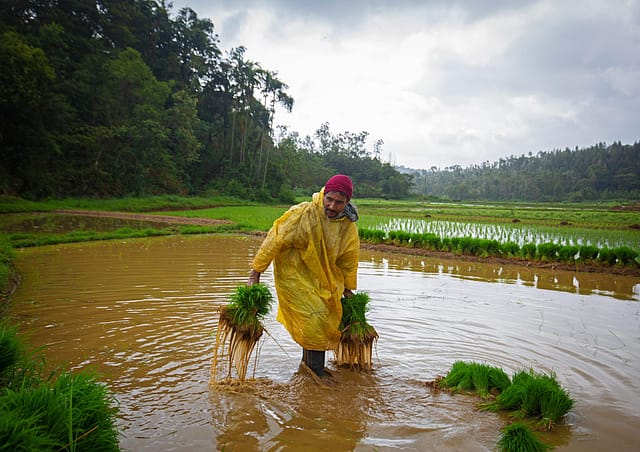
Rural India is quietly rebounding, and the numbers are stronger than anyone expected. For a year now, economists have been asking the same question: Is rural India finally turning the corner? NABARD’s latest Rural Economic Conditions and Sentiments Survey (RECSS) delivers the clearest answer yet. Across 12 months of high-frequency data, the survey finds a broad-based revival: rising consumption, improving incomes, stronger financial behaviour, and sharply higher optimism. This isn’t a blip. It’s a trend.
Nearly 80% of rural households reported higher consumption through the past year, the strongest and most consistent reading since the survey began. Crucially, this isn’t demand driven by inflation. It is powered by improved real purchasing power. Households now spend 67.3% of their monthly income on consumption—the highest share ever captured by RECSS—aided in part by GST rate rationalisation. The Ministry of Finance calls this “strong, broad-based demand not sporadic or concentrated in pockets.”
Zeroing In on ECI
09 Oct 2026 - Vol 05 | Issue 41
Constitutional legitimacy versus political opportunism
Incomes Are Rising Faster
The income picture is even more striking: Around 42.2% of households saw income growth, the highest across all RECSS rounds. Only 15.7% reported any decline, the lowest recorded. And a remarkable 75.9% expect income to rise next year--peak optimism since September 2024. For a sector often labelled sluggish, this is a decisive shift.
Rural India is investing again, and this time it’s out of confidence. Look at the data. Investment activity has surged: 29.3% of households increased capital investment, the highest of all survey rounds. NABARD highlights the key insight: This investment is driven by income gains, not credit stress. It signals renewed asset creation across both farm and non-farm sectors, which is a structural positive.
On another front, formal credit access has hit its strongest level yet. Around 58.3% of rural households now depend solely on formal lenders, which is up from 48.7% in September 2024. Informal credit still accounts for about 20%, showing progress but also the need for deeper financial inclusion.
The NABARD survey also noted that the government transfers continue to support demand without creating dependency. Government transfers supplement 10% of average monthly income, cushioning household budgets through food, electricity, water, LPG, fertilisers, school support, pensions and transport benefits. For some families, transfers exceed 20%, providing essential consumption support and helping stabilise rural demand. Yet RECSS finds no sign of dependency as consumption and investment behaviour remain robust and self-driven.
Inflation fears have collapsed, and it’s changing sentiments. Inflation perceptions have dropped to 3.77% — the lowest in a year and below 4% for the first time since survey inception. While 84.2% perceive inflation at or below 5%, nearly 90% expect near-term inflation to stay low. "This disinflation has enhanced real income, improved purchasing power, and boosted overall welfare," the finance ministry said. Rural India is feeling the improvements on the ground. Households reported high satisfaction with roads, education, electricity, drinking water, and health services.
Loan repayment and capital investment conditions were also found to have improved. "With lower inflation and interest rate moderation, the share of income allocated for loan repayment has declined compared to earlier rounds. 29.3 per cent of rural households have undertaken increased capital investment during the last year, which is the highest level among all rounds of the survey," the finance ministry said.