Is Maharashtra Turning Cybercrime Into Cinema? The Story Behind ‘Digital Arrest’, Samay Raina and the 1930 Anthem
Cybercrime campaigns don't usually look like movie premieres.
There are no actors walking the red carpet. No comedians cracking jokes. No film trailers featuring some of India's most recognisable faces.
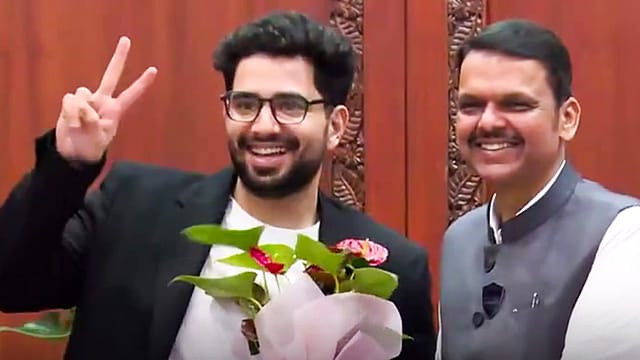
Yet that's exactly what unfolded in Mumbai this week when Maharashtra Cyber launched Digital Arrest, a cyber-awareness short film, along with the 1930 Maharashtra Cyber Anthem. Actors Pankaj Tripathi, Sonali Bendre, Sharad Kelkar, Ashish Vidyarthi, Javed Jaffrey, singer Sunidhi Chauhan and comedian Samay Raina joined Maharashtra Chief Minister Devendra Fadnavis at the event.
At first glance, it looked like another celebrity campaign.
Look closer, and it reveals something more interesting: governments are increasingly borrowing Bollywood's storytelling playbook to fight a crime wave that traditional warnings have struggled to stop.
So what exactly is "Digital Arrest"? Why are celebrities involved? And why is the number 1930 suddenly everywhere?
The Modi Years
02 Oct 2026 - Vol 05 | Issue 40
A Nation Rebuilt
What Is the ‘Digital Arrest’ Film Launched by Maharashtra Cyber?
The short film is part of Maharashtra Cyber's latest public awareness drive against online fraud.
The campaign focuses on one of India's fastest-growing cyber scams: criminals impersonating police officers, CBI officials, ED officers or judges and convincing victims that they are under "digital arrest". Victims are often isolated, threatened and pressured into transferring money to avoid supposed legal action.
The film aims to explain a simple but crucial fact: There is no such thing as a digital arrest under Indian law.
Speaking at the launch, Chief Minister Devendra Fadnavis urged citizens not to panic when fraudsters claim to represent law-enforcement agencies and reminded them to immediately report cyber fraud through the national cyber helpline, 1930.
Why Is Maharashtra Using Celebrities to Fight Cybercrime?
Because cybercrime is no longer a niche issue.
It has become a mass problem.
Fadnavis said awareness remains the most effective weapon against online fraud and argued that actors, singers and public personalities can communicate safety messages far more effectively than official advisories.
It's a strategy that mirrors public-health campaigns, election drives and road-safety initiatives, where governments increasingly rely on familiar faces to reach audiences who may never read an official circular.
In other words, Maharashtra Cyber is trying to make cyber awareness behave like popular culture.
Why Is Everyone Talking About Samay Raina at the Event?
Because he may have been the most unexpected face on stage.
Samay Raina was felicitated alongside the campaign's contributors, but the comedian quickly became a talking point after joking about his own history with Maharashtra Cyber.
Last year, Maharashtra Cyber had investigated complaints linked to Raina's controversial show India's Got Latent, bringing him into the public spotlight for reasons very different from cyber awareness. Several reports noted the irony of Raina being honoured by the same agency that had once scrutinised him.
At the event, Raina leaned into the humour.
According to The Times of India, he joked that his relationship with Maharashtra Cyber goes back a long way and even quipped about the 1930 helpline number being "a great number".
The joke landed because everyone in the room understood the reference.
What Is the 1930 Cyber Helpline and Why Is Maharashtra Promoting It So Aggressively?
If the film is the campaign's face, 1930 is its central message.
The number is India's national cybercrime helpline for reporting financial and online fraud. Authorities have repeatedly stressed that victims should contact the helpline as quickly as possible after a scam occurs.
Fadnavis described the period immediately after a cyber fraud as a "golden hour", arguing that rapid reporting significantly improves the chances of freezing suspicious transactions and recovering stolen money.
The campaign's anthem is designed to make the number memorable in the same way public-service jingles once taught people emergency numbers.
What Exactly Is a Digital Arrest Scam?
Imagine receiving a call from someone claiming to be a police officer.
They know your name.
They may know your Aadhaar number.
They claim your bank account is linked to money laundering, narcotics trafficking or an international crime syndicate.
Then they tell you that you are under investigation and must stay on a video call while the matter is "verified".
That is the basic structure of a digital arrest scam.
According to cybercrime authorities, victims are often intimidated into transferring large sums of money into so-called verification accounts. Many remain on video calls for hours, believing they are participating in an official legal process. In reality, they are being defrauded.
The scam has become so widespread that multiple state police forces and central agencies have issued repeated warnings over the past two years.
Why Are Authorities Suddenly So Concerned About Cybercrime?
Because cyber fraud is growing faster than public awareness.
Across India, police departments have reported increasing cases involving investment scams, impersonation fraud, fake law-enforcement calls, phishing attacks and digital arrest schemes.
What makes these crimes particularly difficult is that they often target ordinary people who have never considered themselves vulnerable.
Retirees.
Students.
Working professionals.
Business owners.
People who would never hand cash to a stranger but may panic when someone claiming to be a police officer threatens arrest over a video call.
That fear is the scammer's biggest weapon.
What Is Maharashtra Really Trying to Do With This Campaign?
The obvious answer is cyber awareness.
The more interesting answer is behavioural change.
For years, governments have responded to fraud by publishing warnings and advisories.
Maharashtra Cyber appears to be trying something different: replacing official language with storytelling.
A film instead of a circular.
An anthem instead of a PDF.
Actors instead of anonymous officials.
The campaign recognises a simple reality of modern India.
People may ignore a government notice.
They are less likely to ignore Pankaj Tripathi.
The Bigger Question: Can a Movie Stop a Scam?
That may sound like an odd question.
But it sits at the heart of the entire campaign.
Cybercriminals succeed because they understand psychology. They create urgency, fear and confusion.
The Maharashtra Cyber campaign is attempting to fight psychology with psychology.
Its message is straightforward: if criminals can use stories to deceive people, authorities can use stories to protect them.
Whether Digital Arrest becomes a hit is almost beside the point.
If it helps even a few people recognise a scam call before they transfer their savings, Maharashtra Cyber may consider it one of the most successful films released this year.
(With inputs from ANI)