Inside Shivalik: The Giant LPG Tanker Supplying India’s Cooking Gas
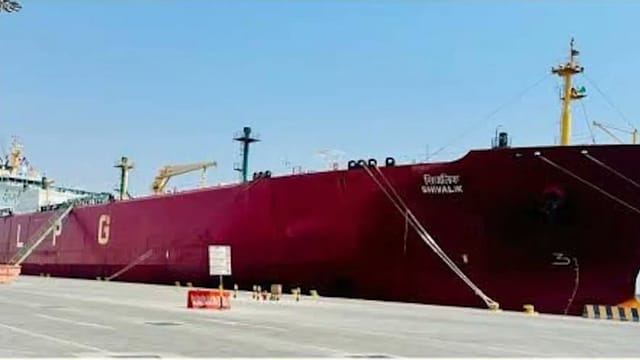
The name Shivalik (LPG Carrier) has suddenly entered the news cycle amid rising tensions in the Gulf.
The massive liquefied petroleum gas (LPG) tanker recently crossed the volatile Strait of Hormuz, carrying more than 40,000 tonnes of cooking gas bound for India. Its journey, under the watch of the Indian Navy and after diplomatic engagement with Iran, has highlighted how crucial such vessels are to India’s everyday energy supply.
But beyond the headlines, what exactly is Shivalik, and why does its arrival matter so much?
What Exactly Is the LPG Carrier Shivalik?
The Shivalik LPG Carrier is a Very Large Gas Carrier (VLGC), a specialised ship designed to transport liquefied petroleum gas across oceans.
Operated by the Shipping Corporation of India, the vessel was inducted into India’s fleet on September 10, 2025 as part of a strategy to strengthen domestic control over energy transportation.
VLGCs like Shivalik are among the largest LPG tankers in the world. They are engineered to carry enormous quantities of gas that has been cooled and pressurised into liquid form, allowing it to be transported safely over long distances.

Global By Design
29 May 2026 - Vol 04 | Issue 73
Is the future of fashion Indian?
How Big and Capable Is the Ship?
The scale of Shivalik reflects the magnitude of the energy trade it supports.
The ship stretches roughly 225 metres in length and has a beam of about 36 metres. Its cargo tanks can hold nearly 82,000 cubic metres of LPG, with a typical voyage carrying between 40,000 and 46,000 tonnes of liquefied petroleum gas.
Built in South Korea, the tanker is equipped with segregated cargo tanks and temperature-controlled systems designed to maintain the gas in liquid form while ensuring international safety standards are met.
Why Has Shivalik Suddenly Become a Talking Point?
The ship gained attention after navigating the Strait of Hormuz, one of the world’s most sensitive maritime corridors.
Roughly 20 per cent of global oil and gas shipments pass through this narrow channel linking the Persian Gulf to international waters. Any disruption in the region quickly raises alarms in global energy markets.
In the midst of heightened tensions in the Gulf, the safe passage of Shivalik became a symbol of India’s efforts to protect its energy lifelines.
How Does Shivalik Fit Into India’s Energy Security Strategy?
India relies heavily on LPG imports from the Middle East to meet the cooking gas needs of millions of households. Ships like Shivalik make it possible to move these supplies efficiently from Gulf producers to Indian ports.
Expanding the fleet of Indian-flagged LPG carriers is also part of the government’s broader push to reduce reliance on foreign shipping companies. Having more domestic vessels ensures greater control over supply chains during geopolitical crises.
Cargo delivered by vessels such as Shivalik typically reaches major ports including Visakhapatnam Port, Haldia Dock Complex, Kandla Port, and New Mangalore Port, before being distributed across the country.