India’s E-Passport Explained: How the RFID Chip Will Transform International Travel
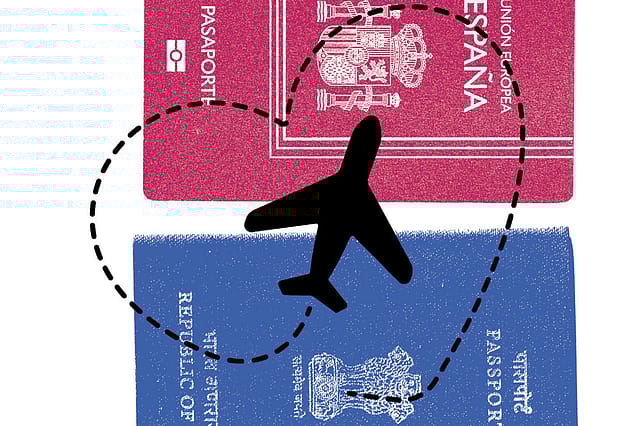
India’s e-passport marks a quiet but powerful upgrade, embedding biometric security into the familiar blue booklet to deliver faster immigration, tougher fraud protection, and seamless global travel without raising costs for citizens.
What exactly is India’s new e-passport?
India’s e-passport looks like the familiar blue booklet but carries a tiny gold chip symbol on the cover. Embedded inside is an RFID chip that securely stores biometric and personal data in encrypted form.
What information does the chip store?
The chip contains your photograph, fingerprints, and key personal details. All data is encrypted and can only be accessed by authorised immigration systems using specialised readers.
When did India roll out e-passports?
The nationwide rollout began in September 2025, following pilot projects launched in April 2024. Since May 2025, over 80 lakh e-passports have already been issued.
Why did India introduce e-passports now?
Three reasons drove the shift. First, rising international travel post-pandemic. Second, global standards set by the International Civil Aviation Organisation (ICAO). Third, growing concerns around identity theft and passport fraud. India needed to align with more than 120 countries already using biometric passports.
How does the RFID chip work at immigration?
Immigration officers scan the passport wirelessly. The chip communicates using secure RFID technology protected by PKI, Basic Access Control, and Passive Authentication, making cloning or tampering nearly impossible.
Survival Instinct
22 May 2026 - Vol 04 | Issue 72
India navigates global economic turmoil with austerity and smart diplomacy
Will e-passports really speed up immigration?
Yes. Automated e-gates in countries like the US, UK, UAE, and Singapore can process Indian travellers far quicker, cutting down queues and manual checks significantly.
What are the biggest benefits beyond faster lines?
First, stronger protection against forged or stolen passports. Second, faster visa processing in countries that read chip data directly. Third, quicker passport issuance through the upgraded Passport Seva System (PSP 2.0). Tatkal passports are now issued in about three working days.
Who is eligible to get an e-passport?
Any Indian citizen eligible for a regular passport automatically receives an e-passport when applying for a fresh passport or renewal. There is no separate application process.
Has the cost of passports increased?
No. Fees remain unchanged. It’s ₹1,500 for a 36-page booklet, ₹2,000 for a 60-page booklet, and Tatkal service adds ₹2,000. Existing passports remain valid until expiry.
How do you apply for an e-passport?
Apply through the Passport Seva Portal, book an appointment at a Passport Seva Kendra, submit documents, and provide biometrics. Police verification has been digitised in many states, speeding up approvals.
Are there precautions travellers should take?
Avoid strong magnets that may damage the chip. While risks are minimal, RFID-blocking covers offer extra protection. The passport is slightly thicker due to the embedded chip.
What’s next for India’s passport system?
India plans to expand e-gates at major airports by March 2026 and is exploring smartphone-based digital passports. Full transition to e-passports is targeted by 2035.
(yMedia is the content partner for this story)