India steps around the Venezuelan “trap” to safeguard its interests
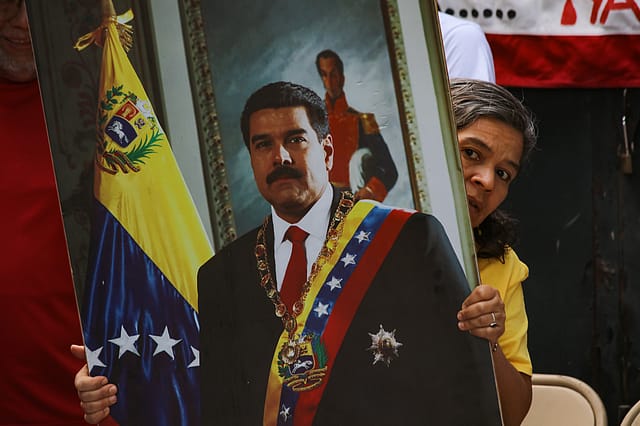
The snatching of Venezuelan leader Nicolas Maduro and his wife Cilia Flores in the wee hours of January 3 from his heavily guarded fortress residence by US forces sent shock waves through south America and raised fresh concerns across the world about the unpredictability of President Donald Trump’s actions and the reliability of the United States as a security partner.
India’s careful reaction where it stopped well short of criticizing the US action and merely expressed “deep concern” over the development, calling for dialogue to address issues affecting the well-being of Venezuelan people and ensure the stability of the region should be read in the light of a wariness about Trump’s volatile decision-making. The European Union too, while referring to principles of international law, did not chastise Trump.
India’s unfinished business with US
A comparison of India’s mild statement to the stronger responses of other BRICS nations is misplaced. For one, none of them are “allies.” Russia is the closest fit but is more of a partner, than an ally, and it is currently wedded at the hip with China which is a direct rival of US and was close to Maduro. Brazil and South African leaderships are at bitter odds with Trump with the US leader unilaterally “disinviting” the African nation from the G 20 group of nations.
There is no doubt unease and anger over the US action in countries of the global south, a grouping where India seeks to play a leading role. Yet, many nations of the global south which essentially comprises the developing world are engaged in settling trade and other issues with the Trump administration. Even when it comes to terrorism – the Pahalgam atrocity is an example – not all members of the global south were emphatic in condemning the incident or supporting India’s right to respond.
The MissOil Strike
03 Apr 2026 - Vol 04 | Issue 65
The War on Energy Security
In the circumstances, even though India cannot support the abduction of Maduro, its brief statement reflects the larger interests at stake in the India-US relationship. For one, the additional 25% “penalty” tariff imposed on India remains in place taking the total duty on Indian exports to the US to 50%. The bilateral trade agreement still awaits Trump’s green signal. And fresh differences between India and the US could encourage Pakistan’s military to consider reckless actions and will weaken New Delhi’s hand in its discussions with China. Interestingly, while Pakistan referred to “international law” in the context of Maduro, it has also, much like India, called for “restraint and de-escalation.”
Venezuela and Ukraine
The Ukraine situation and the developments in Venezuela are different. While India did not directly condemn the Russian invasion of Ukraine, it has consistently supported the eastern European nation’s sovereignty and territorial integrity. In the case of Venezuela, even though the US action is blatant and undeniably coercive, India has chosen be muted, at least for now. The reasons, as mentioned above, are linked to the unsettled nature of India-US ties and the loose ends over the trade deal and Trump’s somewhat unexpected pivot towards Pakistan.
The US action against Maduro has won Trump bragging rights but the next three months or so will indicate whether the audacious gamble has worked or not. Even if the US does not get down to day-to-day “running” of the south American nation as the latest statements indicate, instability in Venezuela will be bad news for the country and the region. There might be a case that Maduro was not well liked by many in Venezuela and that he and his predecessor Hugo Chavez presided over kleptocracies while their Left-leaning populism created severe economic crises, but a natural resentment over foreign overlordship will not be surprising.
Venezuelan vice president Delcy Rodrguez’s – now acting President – stout defence of Maduro and refutation of Trump’s claims that she will follow Washington’s dictation may be more than rhetoric. In the not too distant past, US actions aimed at regime change in Afghanistan, Iraq and Libya all ended badly. At the start of the Vietnam war, the US intended to shore up the south Vietnamese forces but soon enough found itself directly engaging the north Vietnamese forces and the Viet Cong.
The China Hand
If China were to play its cards with tact and intelligence, the kidnapping of Maduro can play to its benefit. Despite the loss of a close ally and accompanying economic costs, China could capitalize over the dismay and consternation over the US raid. It could solidify its growing presence in south America itself where it has been making gains and present itself as a reliable partner elsewhere. Beijing can cleverly exploit the doubt clouding relations between the US and countries like Japan, Korea, Singapore and India that worry about Chinese expansionism.
China could tone down the coercive note that has become more prominent under Xi Jinping in relations with its ASEAN neighbors and be less ham-handed on Taiwan. Of course, the skepticism over US commitment to the security of the India-Pacific might encourage China to sense a weakness in the opposition to its interests and flex muscles but that will be a mistake. A wiser course of action would be present a more benign and friendly face. Xi’s assertiveness on Taiwan and an instinctive unilateralism make more subtle actions harder to consider, but it for Beijing to fluff its lines.