India Made UPI Free. Now Comes the Hard Part: Who Pays to Keep It Running?
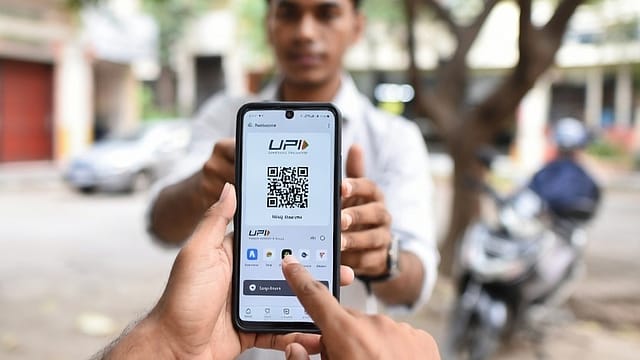
Think about the last time you paid for something in India. You probably did not pull out cash. You may not even have carried your wallet. You scanned a QR code, entered a PIN and walked away. No card machine. No cash. Usually, no visible fee.
That tiny ritual is now one of the biggest digital-payment stories in the world. And after years of making UPI effectively free, India is preparing to change one important part of the equation.
Someone may finally have to pay for the system.
The development comes after Parliament cleared changes that create a legal route for charges on a limited set of merchant transactions. But there is an important catch: this does not mean consumers will suddenly start paying for every UPI transfer.
Finance Minister Nirmala Sitharaman has said consumers will continue to use UPI free of charge and that small traders such as vegetable sellers, tea vendors and hawkers will not be covered by the proposed Merchant Discount Rate (MDR), The Times of India reported.
The Modi Years
02 Oct 2026 - Vol 05 | Issue 40
A Nation Rebuilt
So what exactly is changing — and why now?
How did UPI become so big? Launched in 2016, the Unified Payments Interface turned bank-to-bank payments into something almost invisible. Scan. Pay. Done. The scale today is extraordinary.
According to the government, 55.49 crore users were onboarded on UPI by June 2026. In the financial year 2025-26, UPI processed 24,162 crore transactions, according to the Ministry of Finance. Then came July. UPI processed 23.6 billion transactions worth about ₹29.87 lakh crore, according to official data cited by Reuters.
Monthly UPI volumes have reportedly risen from around 1 billion transactions six years ago to roughly 24 billion today, with more than 555 million users. This is no longer simply a payment app sitting on your phone. It has become part of India's everyday financial infrastructure.
But if UPI is free, who pays for it?
Here is the slightly less glamorous side of that QR code. The infrastructure needs to run. Banks and payment companies have to process transactions. Systems need to remain available. Fraud has to be detected. Cybersecurity has to be maintained. New users and merchants have to be brought onto the network. Yet UPI bank-account transactions have carried zero MDR since January 2020.
The government has instead supported the ecosystem through incentive schemes. The Centre says it has paid about ₹8,730 crore in incentives between FY2021-22 and FY2024-25 to support continuity of UPI services and digital-payment infrastructure.
That model helped UPI explode. But the industry has increasingly argued that it is difficult to build a sustainable business when billions of transactions generate no direct payment revenue. Payment companies have reportedly been pushing for a revenue model that would allow them to keep investing in infrastructure, fraud prevention and expansion.
And that is where MDR comes in.
So, will you now be charged for UPI?
Not for ordinary UPI payments, based on the government's current position. The proposal being discussed is aimed at merchant transactions, not person-to-person transfers. One proposal under consideration would impose an MDR of around 0.3% to 0.5% on transactions above ₹2,000 made to larger merchants, with an annual turnover threshold of more than ₹1.5 crore. But the exact fee structure had not been finalised when the proposal was first reported. More recent government messaging has made the distinction clearer.
Sitharaman was reported saying that small traders would not be subjected to the proposed MDR and that consumers would continue to use UPI without a charge.
So your neighbourhood vegetable seller is not suddenly expected to start handing over a percentage of every ₹200 QR payment.
Why ₹2,000 matters
There is a fascinating reason policymakers are looking at higher-value transactions. According to Jefferies, transactions above ₹2,000 account for only about 4% of merchant-payment volumes but roughly 67% of their value.
That means policymakers could potentially create a revenue stream without putting a charge on the enormous number of tiny UPI payments that helped make the system ubiquitous. The proposal could reportedly generate ₹500 crore to ₹1,000 crore in annual revenue for the payments industry, depending on the final structure.
In other words, the idea is not to put a toll booth on every UPI transaction. It is to put a relatively small toll on a narrow slice of higher-value commercial payments.
Why not charge everyone?
Because the very thing that made UPI successful was its simplicity. A tea seller could accept it. A customer could pay ₹20. A small shop did not need an expensive card terminal. The absence of MDR became a powerful incentive for merchants to put up those familiar QR codes.
A tiny fee may look insignificant to a large retailer. For a small merchant operating on thin margins, it can feel very different.
Could this slow UPI down?
That is the big unanswered question. India has spent years creating a habit: if there is a QR code, scan it. Changing the economics for merchants could alter that behaviour at the margins. But the proposed structure is designed precisely to avoid hitting the smallest transactions and smallest businesses.
And UPI now has something it did not have when the system was launched in 2016: network effects. Millions of merchants accept it because millions of customers use it. Customers use it because merchants accept it. That circle is now extraordinarily difficult to break.
What happens next?
The key point is that UPI itself is not becoming a paid service for everyone. The government has opened the legal door for merchant charges, while saying the final structure will protect ordinary users and small traders.
The move is intended to give payment companies a more sustainable revenue model after years of relying on government incentives and other businesses such as lending, insurance and financial products. That creates a delicate balancing act. India does not want to kill the habit it spent a decade building. But it also cannot ignore the cost of maintaining the infrastructure that made that habit possible.
UPI began as an experiment in making digital payments so easy that people would stop thinking about them. It worked almost too well. Today, Indians use it for everything from a roadside tea to a restaurant bill, from splitting dinner with friends to paying a large merchant. The next chapter is therefore not really about whether UPI will remain free.
It is about who pays for India's digital payments miracle — and whether the answer can be found without making people stop using it.
(With inputs from yMedia and agencies)