Delhi Police Arrest Man Over AI-Generated Video Showing Cop Misbehaving With Woman at Protest
Delhi Police have arrested a man for allegedly circulating an AI-generated video that showed a person in police uniform misbehaving with a woman during a protest in the national capital, DCP Manjeet said on Tuesday.
He said the footage began circulating on social media on October 3 and was being portrayed as CCTV footage from the protest site. The identity of the officer shown was also being revealed on social media, he added.
When police examined the video, they traced the channel running it to Nadeem Ahmed, a resident of Palwal, Haryana, and arrested him, the DCP said.
During initial questioning, Ahmed told police he was an independent journalist and had studied till Class 10, according to the DCP. He also said he used AI tools to make such videos.
The Modi Years
02 Oct 2026 - Vol 05 | Issue 40
A Nation Rebuilt
The accused told police he made the video to tarnish the police's image and stoke hatred among protesters, who could then attack police personnel, the DCP said.
"We took immediate cognisance of this and arrested him," Manjeet said. Police will seek his custody for further questioning. His source of funding and possible accomplices are under investigation, and his phone has been seized for analysis.
The DCP said Ahmed became more active during the CJP protest, and that police would examine whether the video was part of a larger conspiracy.
WHAT HAPPENED ON OCTOBER 3
The video surfaced during a week of protests in Delhi against Chief Election Commissioner Gyanesh Kumar over the Special Intensive Revision (SIR) of electoral rolls.
The agitation began on Friday, October 2, when hundreds of people were detained as they tried to reach Jantar Mantar. They included AAP leaders, RJD MP Manoj Jha, CPI Rajya Sabha MP P Sandosh and AISA national president Neha Bora. Delhi Police registered at least three FIRs over that protest, two at Parliament Street and one at Connaught Place.
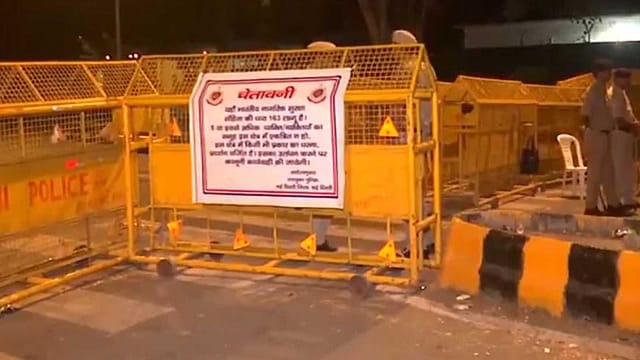
On Saturday, around 150 more people were detained, among them Rajya Sabha MP Kapil Sibal, senior advocate Prashant Bhushan and activist Yogendra Yadav. Police said the protesters had no permission to demonstrate at Jantar Mantar. DCP Neha Yadav said Section 163 of the BNSS was in force, protesters were told to leave and were detained when they refused. AISA claimed that women, journalists and lawyers were manhandled.
THE JOURNALISTS' COMPLAINT
Separately, at about 6 pm on October 3, three women who identified themselves as journalists filed a complaint alleging manhandling by Delhi Police officers and staff during their detention, DCP Neha Yadav said. A later police statement referred to "allegations of sexual harassment" by the three against police officers, and said the complaint was registered, medical examinations were done and the matter was sent to the Crime Branch.
Journalists sat at Jantar Mantar for hours demanding an FIR, and that protesters were detained outside the Parliament Street police station on Monday while asking for the status of the complaint. The police have not said whether the viral video is connected to the complaint, and the DCP did not mention it.
The protests are part of the opposition's challenge to the SIR, which has become a flashpoint over alleged irregularities and Kumar's decisions, including a dispute over a modified Form 6.
HOW INDIA REGULATES AI-GENERATED VIDEO
In February this year, the government amended the IT Rules to bring "synthetically generated information," including deepfakes, within the law. The rules, in force from February 20, define it as audio, visual or audiovisual content artificially created or altered to appear real.
They require labelling and embedded provenance data for such content. Platforms must act on government or court takedown orders within three hours, down from 36, and within two hours for categories such as non-consensual intimate imagery, law firm analyses say.
With inputs from ANI