HPV Vaccine Explained: Why India is Vaccinating Girls Before Cancer Becomes a Threat
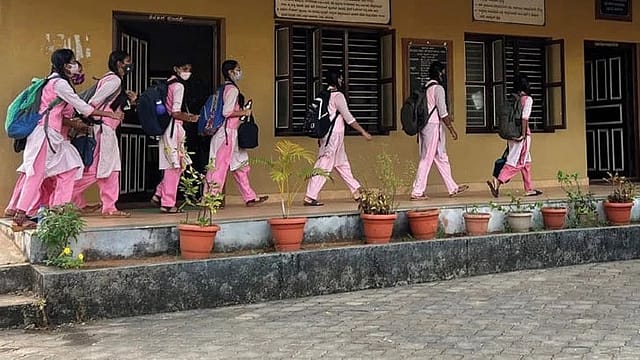
A girl is 14. Why should her family be thinking about a cancer that could develop decades later?
That question sits at the heart of India’s HPV vaccination programme. The vaccine helps protect against infections that can eventually cause cervical cancer. Giving it early allows protection to develop before exposure to the virus. Waiting until cancer becomes a concern can mean missing that opportunity.
The programme came into focus on September 10 when the Supreme Court cautioned against unsupported vaccine claims while hearing a petition questioning aspects of its implementation. According to ANI, the petitioner subsequently withdrew the plea. For families, the hearing brings several practical questions into focus: who can receive the vaccine, how consent works and what happens if a child feels unwell afterwards.

Zeroing In on ECI
09 Oct 2026 - Vol 05 | Issue 41
Constitutional legitimacy versus political opportunism
What happened in the Supreme Court?
A bench led by Chief Justice of India Surya Kant, with Justices Joymalya Bagchi and V Mohana, heard a PIL filed by Universal Health Organisation. The petitioner’s counsel said the organisation was raising implementation concerns, including informed consent, disclosure of risks, monitoring of adverse events and the absence of a specific vaccine-injury compensation mechanism.
The bench cautioned that claims without adequate scientific support could undermine a public-health programme. It also observed that existing compensation laws would apply where an adverse effect was established, ANI reported. The petitioner then sought withdrawal. The reported outcome was withdrawal of the petition following the court’s observations. It should not be read as a detailed judicial determination of every safety or implementation issue raised.
What is HPV, and how does it lead to cancer?
Human papillomavirus, or HPV, is a common infection transmitted through sexual contact. Most infections clear naturally. The concern is persistent infection with certain high-risk types, which can cause changes in cells of the cervix, the lower part of the uterus.
Those changes can develop into cancer over many years. WHO says progression from abnormal cervical cells to cancer usually takes 15–20 years, although it can be faster in people with weakened immunity. Having HPV does not automatically mean someone will develop cancer.
India’s need for prevention is substantial. The government’s launch backgrounder, citing GLOBOCAN 2022 estimates, put the country’s annual burden at more than 1.2 lakh new cervical cancer cases and nearly 80,000 deaths. These are estimates for 2022, rather than a count of cases this year.
Why vaccinate girls so young?
The vaccine’s protection is greatest before someone encounters the HPV types it targets. It prompts the immune system to produce antibodies against those types; it does not clear an existing infection or treat cancer. Its virus-like particles cannot cause HPV infection.
WHO, therefore, prioritises girls aged 9–14, before the start of sexual activity. Vaccinating at this age is about anticipating a future health risk. The recommended age is not an assumption about an individual child’s behaviour.
Who qualifies for India’s free programme?
Launched on February 28, 2026, the national programme targets eligible 14-year-old girls. The Union health ministry says it offers a single dose of Gardasil-4 free at designated government facilities, including primary and community health centres, district hospitals and government medical colleges. Availability continues on routine immunisation days after the initial three-month campaign.
Families can register through U-WIN or walk into a participating government facility. The government told Parliament that vaccination is voluntary and parental consent is mandatory. Benefits and possible side effects are also explained in U-WIN’s information for citizens. Being outside the free programme’s target group does not, by itself, establish that vaccination has no medical value. Older adolescents and adults need advice appropriate to their age, health, previous doses and the vaccine available.
Why does the programme use one dose?
WHO’s December 2022 recommendations allow a one- or two-dose schedule for girls aged 9–14 and girls and women aged 15–20. Its review found that a single-dose approach could provide protection comparable to a two-dose regimen, while reducing the cost and difficulty of follow-up visits.
That does not make one dose suitable for everyone. WHO recommends at least two doses, and where possible three, for immunocompromised people, including those living with HIV. The vaccination team should assess such circumstances.
What does the evidence say about safety?
The US Centers for Disease Control and Prevention says studies and monitoring since HPV vaccines were introduced in 2006 support a reassuring safety record. Common side effects include a sore or swollen arm, fever, headache and nausea. Fainting can occur after injections. Severe allergic reactions are very rare but require immediate care; warning signs include difficulty breathing or swelling of the face and throat.
India’s launch guidance requires observation for 30 minutes after vaccination. Families should tell the vaccination team about previous HPV doses, allergies, current illness and relevant medical history. They should also retain the vaccination certificate, which the government says includes details of the linked emergency facility and helpline.
What happens if a child feels unwell afterwards?
Parents should contact the vaccination facility or seek medical care for concerning symptoms. They do not need to decide whether the vaccine caused the problem before asking for help.
In its March 20 parliamentary reply, the health ministry said vaccination sites were linked to round-the-clock adverse-event management centres, with arrangements for reporting, investigation and causality assessment.
A reported health problem after vaccination is a signal to examine. Timing alone does not prove causation. Equally, an established safety record does not remove the need to investigate an individual report. Consent, clear information and responsive care are how a vaccination programme earns families’ confidence.
Will a vaccinated girl still need screening as an adult?
Yes. HPV vaccines do not cover every cancer-causing HPV type, so vaccination does not eliminate the need for cervical screening later in life. Screening can identify changes before they become cancer.
WHO’s elimination strategy combines vaccination, screening and treatment. A vaccination visit in adolescence starts protection that must be supported by access to preventive care through adulthood.
With inputs from ANI & agencies