How Hormuz ended up raising CNG prices in Delhi — and why there may be relief ahead
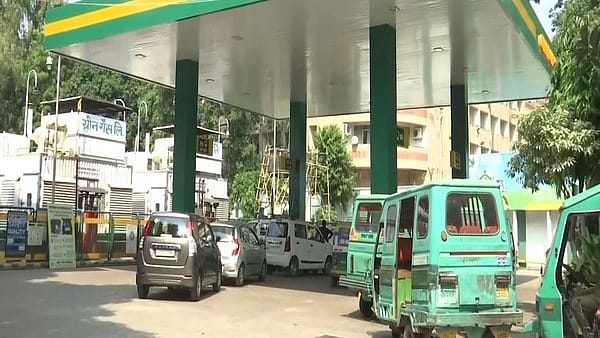
A Delhi auto driver's problem now begins in the Persian Gulf
Imagine pulling into a CNG station in Delhi this weekend and discovering that fuel has become more expensive again.
Your first instinct might be to blame a local decision.
But the journey of that price hike starts far from Delhi's roads, taxi stands and auto-rickshaw queues. It begins in one of the world's most strategically important waterways: the Strait of Hormuz.
This narrow shipping route, located between Iran and Oman, carries a significant share of the world's energy trade. When tensions in the region escalate, global oil and gas markets react almost immediately. And increasingly, so do Indian consumers. Reuters has reported that disruptions around the Strait of Hormuz continue to affect global energy flows and pricing, making it one of the most closely watched chokepoints in the world.

Zeroing In on ECI
09 Oct 2026 - Vol 05 | Issue 41
Constitutional legitimacy versus political opportunism
That chain reaction is now being felt at Delhi's CNG pumps.
Why have CNG prices gone up in Delhi?
Indraprastha Gas Limited (IGL) has increased CNG prices in Delhi by ₹3.89 per kilogram, with the revised rates taking effect from August 29. The company said the move was necessary because global liquefied natural gas (LNG) prices have surged amid disruptions linked to the West Asia crisis and difficulties in LNG cargo movement through the Strait of Hormuz.
According to IGL, international LNG prices have nearly doubled compared to pre-crisis levels. Rising European demand ahead of winter has added further pressure on supplies.
The result is a familiar economic domino effect: higher import costs eventually find their way into domestic fuel prices.
What is the biggest new update?
The most significant political response came from BJP national spokesperson Syed Shahnawaz Hussain, who linked the hike directly to the ongoing geopolitical tensions involving Iran and the United States.
Speaking to ANI, Hussain said:
"The prevailing global situation, including the closure of the Strait of Hormuz and the tensions between the US and Iran, impacts markets worldwide, and India is affected as well. Since we rely heavily on imports, a shortage of CNG creates difficulties; that is why prices have risen slightly. Once the situation normalises, prices will come down."
The statement offers something consumers have not heard much of in recent months: the possibility that the current increase may not be permanent.
Why does a conflict in West Asia affect Indian commuters?
Because India consumes more natural gas than it produces.
As the economy grows and more vehicles switch to cleaner fuels, demand for CNG has risen sharply. To bridge the gap, companies increasingly rely on imported LNG. A substantial portion of the gas used by city gas distributors now comes from international markets.
That means events taking place thousands of kilometres away can directly influence fuel costs in India.
When LNG cargoes become more expensive, city gas distributors pay more for supply. Eventually, part of that increase is passed on to consumers.
In a globalised energy market, a disruption in the Gulf can affect a commuter in Ghaziabad almost as quickly as it affects a trader in Europe.
Has Delhi been fully exposed to global price shocks?
Not according to IGL.
The company argues that consumers have actually been insulated from much of the international volatility. While global LNG benchmarks have surged by more than 100% in recent months, retail CNG prices in Delhi have risen by a far smaller margin.
IGL says Delhi continues to have one of the lowest CNG retail prices among major gas-importing regions globally. The company maintains that the latest increase was a calibrated adjustment aimed at ensuring uninterrupted supply rather than fully passing on global costs.
That may offer little comfort to daily commuters, but it provides important context for understanding why the increase is smaller than the surge seen in international markets.
Could CNG prices actually come down?
That depends largely on what happens in the Gulf.
Recent Reuters reports suggest there have been periodic discussions and diplomatic efforts aimed at easing tensions and improving energy flows through the Strait of Hormuz, though the situation remains fluid.
If shipping routes stabilise, LNG cargo movements improve and international gas prices cool, import costs could ease.
That is the scenario Hussain referred to when he said prices would fall once the US-Iran situation normalises.
For now, however, markets remain highly sensitive to developments in the region.
Why is this story bigger than a ₹3.89 hike?
Because it reveals how interconnected the world has become.
A geopolitical confrontation in West Asia.
An LNG shipment delayed in the Gulf.
A gas distributor recalculating costs in Delhi.
An auto driver paying more at the pump.
These are no longer separate stories.
They are the same story.
And that may be the most important takeaway from the latest CNG hike: the price displayed at a fuel station in Delhi increasingly reflects events unfolding far beyond India's borders.
The next time you fill up your CNG tank, you may want to keep an eye not just on local fuel prices—but also on the Strait of Hormuz. It is proving to be one of the most important roads in the world, even for people who will never drive on it.
(With inputs from ANI)