‘Good News for Made in India’: Sitharaman Welcomes India-US Trade Deal, Tariffs Cut to 18%
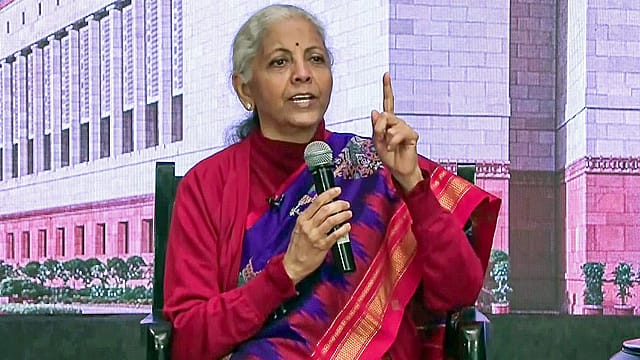
Finance Minister Nirmala Sitharaman on Tuesday welcomed the newly announced India-US trade deal, calling it “good news for Made in India products” after Washington agreed to cut reciprocal tariffs from 25% to 18%.
In a post on X, Sitharaman said the reduced tariff would directly benefit Indian manufacturers and exporters, adding that the move would serve the interests of people in both the world’s largest democracies. “Good news for Made in India products. They will now face a reduced tariff of 18%,” she wrote, thanking the leadership of Prime Minister Narendra Modi and US President Donald Trump for the breakthrough.
The announcement followed President Trump’s claim that the two countries had finalised a trade agreement “out of friendship and respect” for Prime Minister Modi. In a post on Truth Social, Trump said he had spoken to Modi earlier in the day and described him as “one of my greatest friends” and a “powerful and respected leader.”
The Modi Years
02 Oct 2026 - Vol 05 | Issue 40
A Nation Rebuilt
According to Trump, the agreement includes not just tariff reductions but also commitments by India to lower non-tariff barriers, significantly expand purchases from the US, and move toward buying more American energy, technology and agricultural products. He also claimed that India would cease purchasing Russian oil—a point that has drawn close scrutiny.
Prime Minister Modi, responding on X, confirmed the tariff reduction and described his conversation with Trump as “wonderful,” saying the deal would benefit 1.4 billion Indians and deepen cooperation between the two countries. “When two large economies and the world’s largest democracies work together, it unlocks immense opportunities for our people,” Modi said.
‘Not just a trade deal’: Goyal
Commerce and Industry Minister Piyush Goyal framed the agreement as far more than a tariff adjustment, calling it a “historic turning point” in India-US relations.
“This agreement unlocks unprecedented opportunities for farmers, MSMEs, entrepreneurs and skilled workers,” Goyal said, arguing that closer economic integration would help India access advanced US technologies and accelerate its journey towards Viksit Bharat 2047.
He said the partnership would enable India to Make in India for the world, Design in India for the world, and Innovate in India for the world, with the two countries co-creating technologies and co-developing solutions for shared prosperity.
Goyal also placed the deal in a broader global context, noting that it comes within days of India concluding a landmark free trade agreement with the European Union—another signal of India’s push to secure deeper market access amid shifting global trade alignments.
The India-US bilateral trade agreement aims to more than double two-way trade from USD 191 billion to USD 500 billion by 2030, a target first outlined during Prime Minister Modi’s visit to Washington in February 2025.
For India, the tariff cut offers immediate relief to exporters while strengthening its position in global supply chains. For the US, it opens the door to expanded market access in one of the world’s fastest-growing large economies. Beyond numbers, the deal underscores a strategic bet: that India-US economic alignment will increasingly shape global trade, technology and geopolitics in the years ahead.
(With inputs from ANI)