Gaganyaan Explained: What ISRO’s IADT-02 Test Means for India’s First Human Spaceflight
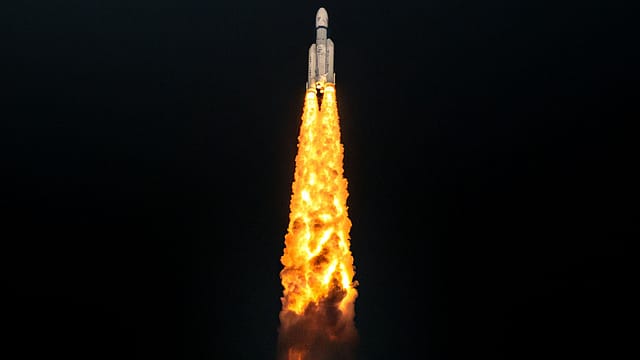
India’s first human spaceflight mission just cleared another checkpoint. The Indian Space Research Organisation has successfully conducted the second Integrated Air Drop Test (IADT-02), a crucial step in preparing for the Gaganyaan mission, expected to take flight next year.
So, what exactly was tested, why does it matter, and how close is India to sending astronauts into space? Here’s a quick breakdown.
What is IADT-02 and why is everyone talking about it?
IADT-02, or the second Integrated Air Drop Test, is a simulation designed to test how the crew module of Gaganyaan will land safely back on Earth.

The Health and Wellness Issue
25 Sep 2026 - Vol 05 | Issue 39
It is essentially a rehearsal for the most critical phase of the mission—bringing astronauts home safely.
The test builds on the first such trial conducted in August 2025 and pushes the system closer to real-world readiness.
What exactly happens in this test?
In this test, a simulated crew module is dropped from a certain altitude and allowed to descend using a carefully designed parachute system.
The objective is to slow the module down, stabilise it mid-air, and ensure it lands safely in the sea. The focus is not on launch or space travel, but entirely on the return journey.
Why is the parachute system such a big deal?
Because this is the phase where precision matters the most. The system uses multiple parachutes that deploy in a strict sequence, each playing a role in gradually reducing speed and controlling descent.
If the timing or deployment fails, the module could hit the water too fast. That is why ISRO is repeatedly testing and validating this system.
What happened in the first test (IADT-01)?
During the first test, a simulated crew module weighing about 4.8 tonnes was dropped from an altitude of around three kilometres using a Chinook helicopter operated by the Indian Air Force.
The parachute system deployed successfully and slowed the module to a safe landing speed of about 8 metres per second.
The test also simulated an emergency abort scenario, where onboard systems automatically triggered the parachute sequence.
So, what does IADT-02 add?
The second test strengthens confidence in the system. It helps validate whether the parachute deployment works consistently across multiple trials and under varying conditions.
In space missions, one successful test is not enough. Systems must prove they can perform reliably every single time.
What is the Gaganyaan mission in simple terms?
Gaganyaan is India’s first human spaceflight programme. The plan is to send a three-member crew into a 400-kilometre orbit for a three-day mission and then bring them safely back to Earth.
The mission will be launched using a human-rated LVM3 rocket.
Who all are involved in making this happen?
This mission is a coordinated effort involving several agencies. Along with ISRO, organisations such as the Defence Research and Development Organisation, the Indian Air Force, the Indian Navy, and the Indian Coast Guard are playing key roles in different stages, from testing to recovery.
What happens next?
More testing lies ahead. ISRO will continue to validate different systems, especially those linked to safety, recovery, and failure scenarios.
When humans are involved, every component must work flawlessly, leaving no room for error.
(With inputs from ANI)