2008 Malegaon Blast Case: The Myth of Hindu Terror
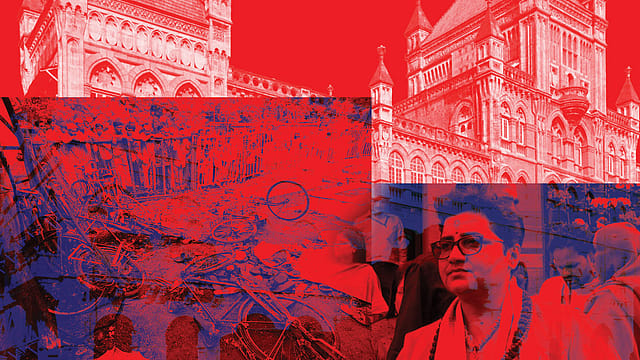
ALMOST 20 YEARS after bomb blasts near a mosque and a cemetery in Malegaon, a crowded town with a 79 per cent Muslim population about two hours from Nashik, killed 31 people and injured hundreds, the Bombay High Court in a crisp, 25-page order discharged four individuals in a case where a set of Muslim suspects was replaced by Hindu accused and investigations by three agencies resulted in no convictions. In candid observations, the high court set out glaring shortcomings of an unreliable confession by a witness held in another case, an identification parade held months after the crime, retraction of confessions by the initial accused, and lack of direct recoveries as reasons to discharge the accused in what came to be sensationally labelled a “Hindu terror” plot.
The last four accused to be discharged in the 2006 case followed the earlier release in July 2025 of high-profile accused Army officer Lt Colonel Shrikant Purohit and former MP Pragya Thakur in the 2008 Malegaon blasts case which had resulted in nine deaths. In both cases, the concluding investigations were carried out by the National Investigation Agency (NIA) during the tenure of the Manmohan Singh government. Purohit has since been reinstated with appropriate rank and salary while Pragya Thakur leads a retired life restricted by severe injuries received when she was in custody. The story began with the registration of two crimes at the Azad Nagar Police Station and the initial investigation by the Maharashtra police which was then taken up by the Anti-Terrorism Squad (ATS). The investigation led to 13 accused, including Noorul Huda Samsuddoha, Shabbir Ahmed Masiullah, Dr Salman Farsi, Abdul Latif Almi, Dr Farogh Iqbal Ahmed Magdumi, and Abrar Ahmed Gulam, being named. But then, in what would be a complete turnaround, the NIA arrested Hindu accused in the same case after it took charge of the probe in 2011 at a time when Congress was in office in Maharashtra and the Centre and Rajya Sabha MP P Chidambaram was home minister.
The ATS investigation had concluded that accused Shaikh Mohammed Ali and Masiullah Alam visited Pakistan separately in February 2003 and later to receive terrorist training. The plot that the ATS probe revealed pointed to a meeting of the accused after the marriage of Samsuddoha in May 2006 which planned bomb blasts in Muslim-populated areas in order to inflame sentiments and cause riots.

The high court order tracks the events, noting the ATS claim that some of the accused procured a staggering 20kg of RDX for making bombs which Masiullah stored in his godown at Malegaon. “It was on the instructions of two Pakistani nationals in 4th week of July 2006 that Muzammil provided guidance to other accused persons for making the bombs,” the court said while examining the initial account. Given the sensitivity of the case and its national security implications, the Central Bureau of Investigation (CBI) was given charge of the case in February 2007 and its investigation proceeded on the path set out by the Maharashtra police and the ATS. CBI filed a supplementary chargesheet in February 2010 against the 13 while Masiullah and other accused who were absconding were arrested.
The reason for the CBI coming into the picture was the transnational terror links of the case as at the time the NIA did not exist. The NIA, with a mandate to investigate incidents of terrorism across the country, came into being after the 26/11 attacks exposed gaping holes in India’s anti-terrorism laws due to the repealing of the Prevention of Terrorism Act (POTA) by the Congress-led United Progressive Alliance (UPA). UPA had scrapped POTA—legislated by the Vajpayee government—with much fanfare, arguing the law had been misused to target Muslims. As the 2006 Malegaon case progressed, investigations into the 2007 Hyderabad Makkah Masjid case opened a new avenue that led to the UPA government handing over the Maharashtra case in April 2011. The CBI investigation into the Makkah Masjid case that led to widespread rioting and deaths in police firing to quell the mob brought into spotlight the figure of Swami Aseemanand or Naba Kumar Sarkar, who claimed to be “overwrought” with guilt at the arrest of Muslims he said were innocent in the Hyderabad case. Aseemanand proved to be a prolific and insistent confessor and spoke about an organisation called Abhinav Bharat controlled by Purohit and the role of its members in the 2008 Malegaon blast and the 2007 attacks on the Samjhauta Express and Dargah Ajmer Sharif. Aseemanand’s rambling accounts became the basis of the “'Hindu terror” formulation that Congress leaders latched on to in order to put BJP and RSS in the dock. It was hardly surprising that Aseemanand, never a very convincing witness and whose account could not be backed up sufficiently by other evidence, sought to withdraw his confession on grounds that it was extracted under duress. The NIA court discharged all accused, including Aseemanand, for lack of evidence in the Makkah Masjid case.
In 2013, then Home Minister Sushil Kumar Shinde claimed RSS and BJP were responsible for running camps to train terrorists he linked to specific terror cases. Faced with a strong protest from BJP, Shinde later distanced himself from his remarks. A WikiLeaks cable of a discussion between Congress leader Rahul Gandhi and a senior US diplomat at an official event in July 2009 reported Gandhi to have said that while Pakistan-based groups like Lashkar-e-Toiba did enjoy some support in India, the growth of radicalised Hindu groups might pose a larger concern. The idea of ‘Hindu terror’ was not incidental. Congress leaders repeatedly levelled such accusations to claim BJP and RSS were promoting extremism and violence. In 2009, the Intelligence Bureau (IB) withdrew its affidavit endorsing a Lashkar plot to target political figures in Gujarat to claim that there was no conclusive evidence of the terror links of four people, including Mumbra teen Ishrat Jahan, who were killed in an encounter. The cynical decision to get the IB to alter its affidavit and then launch a witch hunt against officials who were reluctant to go along with the “extra-judicial killings” claim was intended to damage then Gujarat Chief Minister Narendra Modi whom Congress leaders correctly assessed as a future political threat. The ‘Hindu’ terror campaign was aimed at discrediting BJP’s Hindutva plank and presenting the ideology as divisive and violent.
THE NIA INVESTIGATION from April 2011 followed a predictable path as it based its probe on Aseemanand’s account. However, the high court order did note the sudden shift driven by political considerations and said, “Quite surprisingly, NIA filed a supplementary charge-sheet on 25th May 2013 against Manohar Narwaria, Rajendra Chaudhary, Dhan Singh, Lokesh, Sunil Joshi, Ramchandra Kalsangara, Ramesh Mahalkar and Sandeep Dange bringing the Abhinav Bharat into focus.” Among the accused Sunil Joshi was declared dead and Kalsangara as absconding. Examining the NIA case and the special court’s decision to proceed against the accused, the high court examined Aseemanand’s claims and his alleged disclosure that Sunil Joshi had told him that the Malegaon bomb blasts were the “handiwork of his boys.” According to him, it was proposed at a meeting in June 2006 that Malegaon may be a suitable target as it has a 86 per cent Muslim population. The NIA expediently recorded statements of some accused among the original set who now stated their confessions were recorded by the ATS under coercion.
The NIA argued before the high court that the arrest “panchanama”, discovery and disclosure statements, identification parade evidence, handwriting specimens, fingerprints and forensic reports implicated the four accused seeking discharge. But the court noted the identification parade had been conducted about six years after the occurrence of the crime and had no probative value. The counsel for the accused argued the confession of Aseemanand recorded during the Makkah Masjid blast investigation is inadmissible as evidence. The turnaround in the case made out by the ATS and the one submitted by the NIA was astounding. The ATS had said the first set of accused prepared the bombs along with Pakistani nationals and in an identification parade on December 18, 2006, two of the accused who were present in the godown where the explosives were stored in July 2006 were singled out. Literature of the banned organisation Students’ Islamic Movement of India (SIMI) was recovered and there was more corroborative evidence like voice samples and forensic reports. One of the accused had turned prosecution witness as well. Yet the high court noted that the special judge in an order in April 2016 took note of the NIA’s supplementary chargesheet, retracted the statements of the original accused, and held that the nine individuals had been named as accused by the ATS merely on suspicion because they had criminal antecedents.
The high court honed in on the principal infirmity in the NIA case, stating that it rested solely on the circumstantial evidence of confessional statements by the appellants and Aseemanand and retracted statements of witnesses and the first set of accused. In a telling observation, the court noted the NIA involvement and the U-turn in the case came about on receiving information after Aseemanand’s disclosure statement. The CBI endorsed the ATS on every aspect of the case and relied on the evidence collected by the squad. However, the NIA came to a very different conclusion, saying that on the day of the blast the accused was in Yavatmal, about 400km from the incident site. According to the ATS, the responsibility of purchasing bicycles (on which the bombs were placed) was entrusted to Munnawar Ahmed but the NIA said Rajendra Chaudhary was the one who went to a cycle shop and made a purchase in the name of Badal Yadav. “The NIA further claims that Manohar Narwaria went to another Cycle shop and purchased a Hero Jet cycle in the name of Sumer Thakur. This new story of involvement of the appellants is based on the disclosure statements suffered by the appellants,” the high court said. It cited a previous ruling that information as to “past user or past history” of an object produced would not relate to any discovery of fact. Therefore, the high court concluded that materials collected by the NIA to show that the second set of accused purchased bicycles used in the crime are nothing more than hearsay evidence. The NIA was aware that the bicycles were purchased and used in the crime by the first set of accused.
While Congress has accused BJP of undermining institutions and Rahul Gandhi has made frequent claims that the judiciary and the media are subject to institutional capture by the Sangh, the UPA era saw investigative agencies take cues from the political establishment. “NIA completely ignored the charge-sheet laid by the ATS which gives a vivid narration of the entire planning by A1 to A13 (the original accused). The ATS collected incriminating materials from the place of incident and those materials were sent for forensic examination. This is the report of the Forensic Science Laboratory (FSL) that there were traces of RDX in the soil samples collected from the place of occurrence and the godown of A2 Shabbir Ahmed Masiullah and both the samples were found to be the same. There is another FSL report which confirmed the presence of RDX and ammonium nitrate, charcoal, fuel oil, etc in the samples,” the high court said.
In the end, it is evident that the original ATS-CBI investigation was proceeding in the right direction before the NIA was brought in and subverted the probe with Hindu accused replacing the original suspects. “The diagonally opposite stories in the charge-sheet filed by the ATS and the NIA lead nowhere. The witnesses proposed by the NIA are mostly hearsay witnesses. The materials collected by the NIA regarding purchase of bicycles even if found truthful and admissible, cannot be considered as incriminating material,” the high court said, bringing the curtain down on the sordid tale of a compromised investigation that served to raise claims of “Hindu terror” while letting the real perpetrators get away.