From Living Longer to Living Healthier: Jitendra Singh Says Preventive Healthcare Must Become India's National Priority
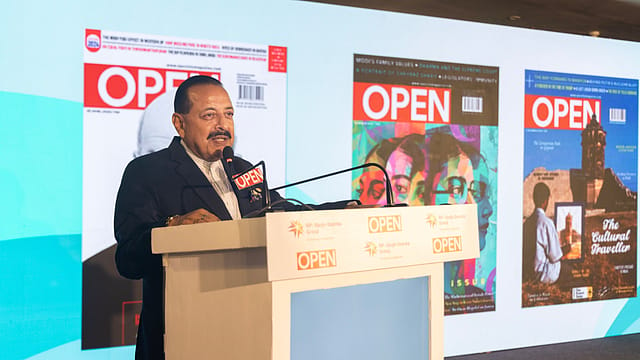
India's healthcare challenge is no longer confined to treating diseases after they appear. As life expectancy rises and the country confronts a growing burden of chronic illnesses alongside persistent infectious diseases, the focus must shift towards preventing illness, preserving health and extending the years people can live well.
That was the central message of Union Minister for Science and Technology and Earth Sciences Jitendra Singh at the OPEN Health & Wellness Summit, where he argued that wellness must be understood as something much broader than the absence of disease.
"The concept of wellness is not new. It is an age-old idea which was known to the ancient healers of medicine. But somehow, it lost track. I am glad that over the last one decade, it has been revived," Singh said.
Drawing on the definition of health attributed to Hippocrates, the ancient Greek physician often regarded as the father of modern medicine, Singh said that being free of disease does not necessarily mean being healthy. Treatment, he argued, is only one part of a larger understanding of wellbeing.

Zeroing In on ECI
09 Oct 2026 - Vol 05 | Issue 41
Constitutional legitimacy versus political opportunism
"Simply getting afflicted by a disease, getting treated and becoming disease-free is not health," he said, emphasising that healthcare must move beyond a system primarily organised around illness and its treatment.
The distinction is significant for India, where longer life expectancy, changing lifestyles and the growing prevalence of non-communicable diseases are reshaping the demands placed on the healthcare system. The country continues to grapple with tuberculosis, malaria and other infectious diseases even as diabetes, cardiovascular conditions, hypertension and metabolic disorders become increasingly prominent.
For Singh, this combination makes preventive healthcare not merely a medical concern but a national priority, particularly for a country seeking to harness the economic and social potential of its young population.
India's Double Burden of Disease
India's healthcare landscape has changed considerably since Independence, when infectious diseases accounted for a substantial share of illness and mortality, and access to effective treatment was limited.
Singh recalled that tuberculosis was once so feared that a diagnosis was often treated as a death sentence. Before effective anti-tuberculosis medicines became widely available, the disease had become deeply embedded in popular culture, including films and literature, where it was sometimes used as a plot device to bring a romantic story to an end.
The expansion of medical treatment and improvements in healthcare have since altered the country's disease profile. As people live longer, illnesses associated with older age have become more visible, while conditions such as heart disease and Type 2 diabetes have emerged as major public health concerns.
Singh described this transition as India's entry into an era of what a medical journal had once called "civilised diseases", referring to the growing prominence of conditions that were historically associated more closely with Western countries.
But the transition has not meant that older health challenges have disappeared.
"Unlike many other countries, we have a huge spectrum of diseases. We have entered into an era of non-communicable diseases. At the same time, we have not been able to get rid of communicable diseases," he said.
Tuberculosis, malaria and dengue continue to coexist with diabetes, hypertension, dyslipidaemia and fatty liver disease. The emergence of HIV and AIDS also demonstrated that infectious diseases could not be considered a problem of the past.
The result is a healthcare burden that requires India to address two sets of challenges simultaneously: controlling infectious diseases while preventing and managing chronic conditions that can affect people over many years.
This is where the concept of wellness becomes particularly relevant. Rather than waiting for diseases to develop and then treating them, preventive healthcare seeks to reduce risks through early intervention, healthier lifestyles, timely screening and greater public awareness.
For a country with a large and relatively young population, the stakes extend beyond hospitals and medical infrastructure to productivity, quality of life and the ability of people to remain healthy through their working years.
From Sanitation to Insurance: The Expanding Meaning of Public Health
Singh argued that preventive healthcare has increasingly become part of India's public policy conversation, pointing to initiatives covering sanitation, vaccination, digital health and access to affordable treatment.
He cited the emphasis on sanitation in schools, particularly the construction of toilets for girls, as an example of how seemingly basic infrastructure can have significant health consequences.
Recalling Prime Minister Narendra Modi's Independence Day address in 2014, Singh said the government had stressed the need for toilets in schools, leading to the construction of four lakh toilets within a year.
"Sanitation may appear to be a good etiquette issue, but it is more than that. It is a health issue," he said.
The absence of adequate sanitation facilities can create particular difficulties for girls, including risks associated with poor hygiene and urinary tract infections. The example, Singh argued, illustrates how public health extends beyond medical treatment to the everyday conditions in which people live, study and work.
He also highlighted Ayushman Bharat, describing it as an important intervention in expanding access to healthcare for eligible beneficiaries, including those with pre-existing conditions, subject to the scheme's provisions.
The broader objective, he said, is to make healthcare more accessible while reducing the financial burden associated with treatment.
Singh also pointed to the Jan Aushadhi initiative, which seeks to make medicines available at lower prices, as part of the effort to improve affordability.
Together, these measures reflect a wider understanding of healthcare in which prevention, access, affordability and treatment are interconnected.
Yet the growing burden of chronic diseases suggests that access to treatment alone cannot address the country's health challenges. The longer-term question is how to prevent avoidable illness before it places pressure on individuals, families and the healthcare system.
Traditional Medicine, Modern Science and India's Healthcare Ambitions
Singh also spoke about the renewed interest in integrated and holistic healthcare, arguing that India has an opportunity to bring traditional systems of medicine into a broader conversation about wellness while continuing to expand its capabilities in modern medical research.
He described the COVID-19 pandemic as a turning point for the healthcare sector, saying it created an opportunity to increase the visibility of traditional systems such as Ayurveda, homoeopathy and naturopathy while demonstrating India's scientific capabilities through vaccine development.
"The same country, the same nation, which was not taken seriously for its healthcare practices, is today being hailed as a leader in preventive healthcare," he said.
Singh pointed to India's vaccine development efforts, including work on vaccines for human papillomavirus (HPV), dengue and tuberculosis, as examples of the country's expanding research ambitions.
He also referred to indigenous medical innovations, including the development of antibiotics and treatments for haemophilia, as evidence of India's efforts to build domestic capabilities in areas that have historically relied on research and products developed elsewhere.
The larger ambition, he suggested, is to move beyond addressing diseases traditionally associated with tropical regions and develop solutions for a wider range of conditions.
That ambition is increasingly linked to biotechnology, genomic research and personalised medicine, which could change how diseases are diagnosed and treated.
Genome India and the Promise of Personalised Medicine
One of the most forward-looking parts of Singh's address concerned the potential of genomic research to transform medical treatment.
He highlighted the Genome India Programme and the country's efforts to build a comprehensive understanding of genetic diversity, arguing that advances in genetic sequencing could eventually make it possible to tailor treatment to individual patients.
The conventional approach of prescribing the same treatment to patients with the same diagnosis may increasingly give way to a more personalised model in which genetic profiles, environmental factors, lifestyle and dietary habits inform medical decisions.
"Tomorrow, we will be in a position where each patient suffering from the same disease will have a different prescription," Singh said.
He cited diabetes as an example, noting that two patients with the same condition may respond differently to treatment.
The broader promise of precision medicine is that a patient's genetic information could help doctors identify potential risks, select more appropriate treatments and develop preventive strategies based on individual characteristics.
Singh said India should aim to expand access to genetic sequencing so that individuals could have a genetic profile from birth that might help identify future health risks.
He compared the idea to a horoscope, but one based on scientific information rather than astrology, suggesting that genetic data could eventually help people understand their predisposition to certain diseases.
Such an approach, however, would require substantial investment in research, healthcare infrastructure and the responsible use of genetic information. The potential of personalised medicine lies not only in identifying risks but also in translating that information into accessible and effective healthcare.
For India, the challenge will be to ensure that advances in genomic research reach beyond specialised institutions and become useful to a wider population.
Why Prevention Must Become a National Priority
Singh argued that the next phase of India's healthcare development will depend on scaling up research and encouraging greater participation from the private sector.
He referred to institutions such as the Biotechnology Industry Research Assistance Council (BIRAC) and the Anusandhan National Research Foundation, as well as the Research, Development and Innovation Fund, which aims to encourage private-sector investment in research and innovation.
Under the funding initiative, the government can contribute 50 per cent of the funding, with the remaining share coming from the private sector.
Greater collaboration between public institutions, research organisations and businesses, Singh suggested, will be necessary to accelerate innovation and expand access to emerging healthcare technologies.
But he returned repeatedly to the need to make prevention the central focus of India's healthcare strategy.
With a large proportion of the population below the age of 40, the country's future depends significantly on whether younger generations can remain healthy and productive through their working lives.
"Preventive healthcare, particularly focusing on the younger population, will be the priority," he said.
The consequences of preventable diseases extend beyond the immediate cost of treatment. Chronic conditions such as diabetes can damage vital organs, including the kidneys, and reduce a person's ability to remain active and productive.
Singh argued that protecting the health of younger people was therefore essential not only for individual wellbeing but also for India's broader development ambitions.
"This is virtually a national priority," he said, adding that the country's aspiration to become a developed nation by 2047 would depend in part on its ability to harness the potential of its people.
His central argument was that wellness cannot remain the responsibility of doctors, hospitals or governments alone. It requires a broader social commitment to prevention, awareness, research and healthier ways of living.
For India, the next stage of healthcare development may therefore be defined not simply by how effectively it treats disease, but by how successfully it prevents illness and enables people to live healthier lives for longer.