Where Breathing Is a Luxury: Brand India Is Gasping for Good Air
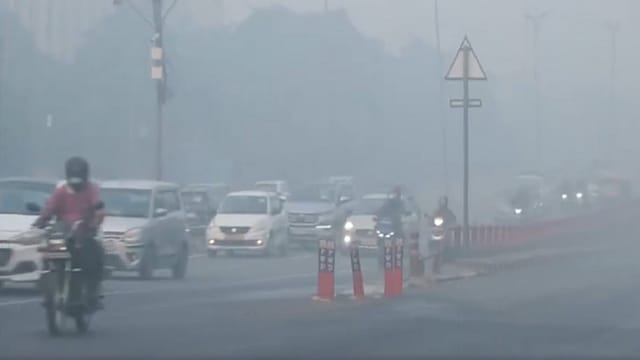
Delhi was once a city one fell in love with. Now one falls ill with it. On Monday November 9, the Air Quality Index (AQI) touched 391, the season’s high. By Tuesday, November 10 morning, it had “slightly improved” to 345, still firmly in the “very poor” category. Improved!
In any other capital, a number like that would empty the streets and bring down a minister. In ours, it is greeted like a hotel concierge announcing a flight delayed by only two hours. The tragedy is not that this happens. The tragedy is that it is scheduled.
The stubble-burning season runs from September 15 to November 30, as predictable as the Budget or the monsoon, yet every year we behave like a nation ambushed by its own calendar.
Nobody is surprised. Everybody is “deeply concerned”. The two are not the same. And then the great Indian blame game begins. Delhi points at Punjab. Punjab points at the Centre. The Centre points at the weather. The weather points at all of us. Meanwhile, the farmer, who is both villain and victim, is handed a fine when what he needs is an alternative. You cannot lecture a man out of burning his field if you have not given him a machine, a market or a margin to do otherwise.
Then comes GRAP, a Graded Response Action Plan. Stage 3 has been invoked. A graded response to an ungraded failure, brought out each winter like the good crockery, and put away the moment the wind obliges us by changing direction. We have mistaken a siren for a strategy.
But let us not be selective in our outrage because the guilt is gloriously democratic. The builder who ignores dust norms. The industrialist who treats a filter as a suggestion. The municipality that has never met a road it could not leave half-dug. The courts that issue admirable orders into the void. And the citizen, dear reader, that is you and I, who will tweet about the smog from an SUV idling outside a restaurant, and who bursts crackers on Deepavali because one cracker never hurt anyone. Multiply one cracker by 22 million and you have November.
Even dissent has been made to feel unwelcome. Protesters at India Gate demanding policies to curb pollution were detained by Delhi Police on November 9. A country that detains those who ask for breathable air has a very curious definition of public order.
Now consider what this does to Brand India. We spend fortunes on campaigns about a rising, confident, inevitable India. We court investors, summits and sovereign funds. And then the visitor lands, steps out of the airport into a grey, acrid soup, and every brochure we have printed is quietly contradicted by his lungs. A brand is a promise, and you cannot promise a century while delivering a cough. Soft power, it turns out, is a very fragile thing when it is wheezing.
And the cruellest part is the inequality of it all. Clean air is fast becoming a status symbol, a purifier in every room of the wealthy home, while the rickshaw-puller, the construction worker and the child at a municipal school inhale the difference.
The cost to citizen health is not a statistic. It is the asthmatic child, the grandfather’s cough that never leaves, the morning walk quietly abandoned. A nation that cannot protect the breath of its people has no business asking the world for its confidence.
What is the way out? Boring answers, I’m afraid: funded alternatives for farmers, enforcement without favours, public transport worth boarding, and accountability that lasts all 12 months, not merely the three when the television cameras are in town. Above all, a political class willing to be judged by the air, not the announcement.
Because in the end, India’s greatest brand is not its GDP or its guest lists. It is its people. And a people cannot rise if they cannot breathe.