From Conflict to Progress: Inside India’s Development Push in Naxal-Hit Regions
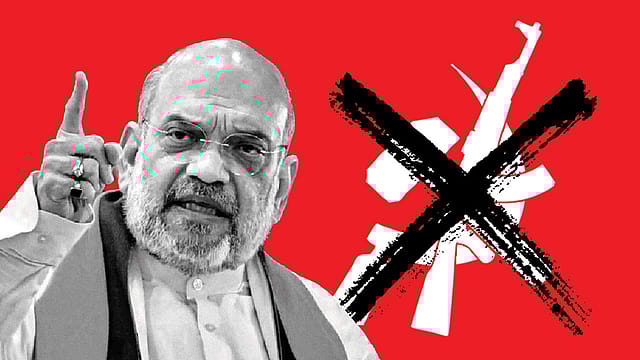
The phrase “Red Corridor” once symbolised regions trapped in violence and chronic underdevelopment. Today, that narrative is steadily transforming into a “Growth Corridor,” driven by improved security and a renewed push for development. Roads, schools, healthcare, and livelihood opportunities are now reaching areas that remained neglected for decades. After the eradication of Naxalism, the Union Government has shifted its focus towards accelerating development in these regions. For decades, these areas suffered from deep deficits in infrastructure, governance and basic amenities. With significantly improved security conditions, a comprehensive development drive is underway to bring historically deprived communities on a par with the rest of the country. Under the leadership of Union Home Minister Amit Shah, this agenda is being pursued with the same determination that once defined the anti-Naxal campaign.
The Union Budget 2026-27 reinforces this commitment. An allocation of ₹3,610.80 crore for Security Related Expenditure and the Special Infrastructure Scheme marks an increase of over 20 per cent from the previous year’s revised estimate of ₹3,006.56 crore. These funds support a range of policies, including assistance to civic action programmes and capacity building of State and Central Agencies. Additionally, the overall allocation for the modernisation of police forces has risen by nearly 24 per cent to ₹4,061.34 crore. While these figures may appear security-oriented at first glance, they in fact underline a deeper philosophy, security infrastructure and development are mutually reinforcing, not mutually exclusive.

Zeroing In on ECI
09 Oct 2026 - Vol 05 | Issue 41
Constitutional legitimacy versus political opportunism
A key dimension of this strategy is the systematic strengthening of State capacity. Over the past decade, the Union Government has significantly increased financial support to LWE-affected States. Under the SRE scheme alone, ₹3,331 crore has been released over the last 11 years, reflecting a 155 per cent increase in funding. The Special Infrastructure Scheme has further enabled the creation and upgrading of Special Forces, Special Intelligence Branches and fortified police stations. Since 2014, a total of 586 fortified police stations have been constructed, an exponential rise compared to just 66 built between 1960 and 2014. These installations are not merely security outposts, they often function as nodes of governance and development.
The developmental transformation is particularly evident in most affected states like Chhattisgarh, where governance and welfare initiatives are reshaping the socio-economic landscape. Under the leadership of Chief Minister Vishnu Deo Sai, the State has operationalised a model that integrates security presence with rapid development in surrounding areas. Schemes such as “Niyad Nella Nar” have brought basic amenities, schools, anganwadis, ration shops and electricity to 403 villages located within a ten-kilometre radius of security camps. This proximity-driven development model has yielded remarkable results, with several villages declaring themselves as “Naxal-Mukt” and actively participating in governance and economic activities.
Infrastructure development has been another important pillar of the anti-Naxal strategy. Between May 2014 and August 2025, the government constructed 12,000 kilometres of roads in LWE-affected areas, with projects covering a total of 17,589 kilometres approved at a cost of ₹20,815 crore. These roads have improved connectivity, enabling not only faster movement of security forces but also access to markets, healthcare and education for local populations.
Equally significant is the focus on education and skill development as tools of long-term transformation. The establishment of Ekalavya Model Residential Schools has expanded educational access in tribal areas, with 95 new schools opened since 2020-21. In parallel, 46 Industrial Training Institutes (ITIs) and 49 skill development centres are now functional, equipping local youth with employable skills. An additional 48 ITIs and 61 skill development centres have been sanctioned with an investment of ₹495 crore. The establishment of 186 modern primary health centres and the expansion of anganwadi networks have improved maternal and child health outcomes in remote regions.
Housing and basic amenities have also emerged as powerful instruments of change. Under the Pradhan Mantri Awas Yojana, thousands of permanent houses have been constructed in remote forest regions. A special project approved by the Centre has sanctioned 15,000 houses for Naxal-affected families and surrendered cadres. Of these, 3,000 houses are already under construction, with significant progress reported even in difficult terrains. Stories such as those of Sodi Hungi in Sukma and Dashari Bai in Kanker, whose homes were completed within three months despite logistical challenges, highlight the transformative impact of targeted welfare delivery. These stories are not merely about infrastructure, they restore dignity, stability and a sense of belonging.
What emerges from this evolving landscape is a clear lesson. Development is not a peripheral element but the central axis of sustainable peace. Roads, schools, healthcare facilities and housing schemes do more than improve living standards. They erode the ideological and logistical foundations of insurgency. At the same time, the emphasis on firm policing ensures that development gains are protected and extremist networks are systematically dismantled.
The Union Government’s approach, anchored in development and reinforced by decisive security measures, represents a pragmatic and forward-looking strategy. By addressing both the symptoms and the structural causes of Naxalism, it offers a pathway to lasting peace and inclusive growth. The experience of the past decade demonstrates that when the State delivers roads instead of isolation, schools instead of neglect and opportunities instead of despair, the appeal of extremism fades. Development, in this sense, is not just a policy choice, it is the most powerful antidote to insurgency.
(The writer is a senior journalist)