‘SIR Constitutional’: Supreme Court Clears ECI’s Electoral Roll Overhaul
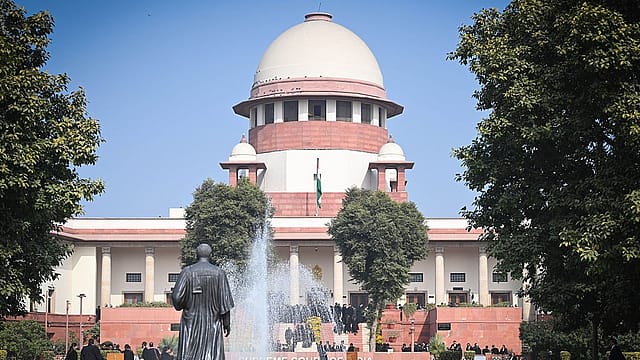
The Supreme Court on Wednesday upheld the Election Commission of India’s Special Intensive Revision (SIR) of electoral rolls, rejecting challenges against the large-scale voter verification exercise first conducted in Bihar.
A bench comprising Justices Surya Kant and Joymalya Bagchi ruled that the exercise is constitutional and legally sustainable even though it differs from the ordinary voter-roll revision process prescribed under existing statutory procedures.
The Court held that the SIR exercise cannot be termed “ultra vires” merely because it follows a process distinct from routine electoral roll revisions.
Terming the exercise a “legitimate and constitutional” one, the bench observed that “the exercise is legally tenable” and intended to restore the accuracy and purity of electoral rolls.

Losing Memory
16 Oct 2026 - Vol 05 | Issue 42
The making of a medical and social emergency
Why Was the SIR Exercise Challenged?
The petitions against the Election Commission argued that the poll body had effectively assumed powers to determine citizenship while deciding inclusion or exclusion from electoral rolls.
Petitioners also questioned the timing and scale of the exercise, contending that scrutinising voting rights of crores of people in a time-bound manner before elections was arbitrary and could disenfranchise genuine voters.
They argued that such an extensive verification drive should have been undertaken after the Bihar Assembly elections through a broader and more comprehensive mechanism.
On these grounds, the petitioners claimed the SIR process was unconstitutional.
What Did the Court Say About Citizenship?
One of the key aspects of the judgment was the Court’s clarification on the Election Commission’s powers regarding citizenship.
The bench categorically stated that the ECI’s role is limited to determining eligibility for inclusion in electoral rolls and does not extend to deciding citizenship status.
The Court held that deletion of a person’s name from the voter list does not strip that individual of citizenship, since citizenship can only be determined by a legally competent authority.
Addressing concerns raised by petitioners, the Court observed that the SIR exercise does not grant the Election Commission any “exclusive or unfettered power” to decide citizenship questions.
Constitutional Backing for the Exercise
The Court further ruled that the Special Intensive Revision is not contrary to the Representation of the People Act.
According to the bench, the exercise derives legitimacy from Article 324 of the Constitution along with the broader statutory framework governing electoral rolls and elections in India.
The verdict effectively strengthens the Election Commission’s authority to undertake special verification drives aimed at improving the accuracy of voter databases.
Aadhaar and Verification Documents
The Supreme Court also examined objections regarding the Election Commission’s list of eleven prescribed documents for identity and eligibility verification.
The bench clarified that these documents are merely indicative and not exhaustive in nature.
Importantly, the Court reiterated that Aadhaar can also be accepted as an additional indicative document during the verification process.
Judicial Review Still Open
While upholding the exercise, the Court emphasised that the entire SIR process remains open to judicial scrutiny.
It stated that any wrongful exclusion, arbitrary deletion or procedural irregularity can still be challenged before appropriate legal forums.
The bench underlined the need to maintain a balance between ensuring “purity and accuracy” of electoral rolls and safeguarding the democratic rights of eligible voters.
Background of the Case
The controversy began after the Election Commission initiated the Special Intensive Revision in Bihar Assembly constituencies.
During hearings spread across several weeks, the Supreme Court had earlier directed the ECI to ensure transparency in the exercise. This included publishing names of included persons at accessible locations so voters could verify their status.
The Court had also allowed Aadhaar to be treated as an additional indicative document but declined to stay the exercise while the case was pending.
Meanwhile, the Election Commission carried out similar voter-roll revision exercises in other poll-bound states, including West Bengal, Tamil Nadu and Kerala.
The bench had reserved its verdict in January after extensive arguments from both the petitioners and the Election Commission.
(With inputs from ANI)