First Suspected Ebola Case in India? Uganda Woman Isolated in Jaipur, Test Results Awaited
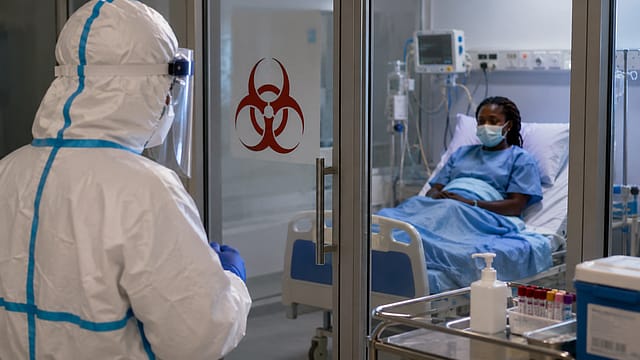
A suspected case of Ebola virus disease has been reported in Rajasthan after a foreign national visiting the State from Uganda exhibited Ebola-like symptoms, prompting health authorities to activate precautionary protocols while awaiting laboratory confirmation.
The woman from Uganda who arrived in Jaipur from Sharjah on Friday morning was flagged during routine airport screening after exhibiting symptoms consistent with Ebola virus disease.
She has since been admitted to RUHS Hospital in Jaipur and placed in strict isolation. Samples from the woman are being sent to a specialised laboratory in Pune for testing.

Greening the Future
23 Jul 2026 - Vol 05 | Issue 30
Securing a sustainable India
The Health Department is on high alert following the detection of symptoms associated with the dangerous virus.
Rajasthan University of Health Sciences (RUHS) Superintendent Anil Gupta stated that the Ebola virus has not yet been confirmed.
The infection can only be confirmed once the report is received. The report is expected by this evening or tomorrow morning.
On Thursday, a Sudanese national who arrived at Hyderabad's Rajiv Gandhi International Airport (RGIA) was isolated and shifted to Gandhi Hospital, Secunderabad, after airport health officials detected fever during thermal screening of international passengers, according to a Gandhi Hospital official.
The samples of the patient have been collected and have been sent to the Centre for Cellular and Molecular Biology (CCMB) for testing.
The Central Government has advised citizens to avoid non-essential travel to Congo, Uganda and South Sudan.
In light of the reported outbreaks of Ebola Disease in Congo and Uganda, the World Health Organization (WHO), under the International Health Regulations (IHR), 2005, on May 17, 2026, determined the situation to be a Public Health Emergency of International Concern (PHEIC).
The Africa Centres for Disease Control and Prevention (Africa CDC) has also officially declared the ongoing outbreak of Bundibugyo strain Ebola Virus Disease affecting the Democratic Republic of the Congo and Uganda as a Public Health Emergency of Continental Security (PHECS).
Further, the WHO IHR Emergency Committee on May 22 issued temporary recommendations to strengthen disease surveillance at Points of Entry to "detect, assess, report and manage travellers with unexplained febrile illness arriving from areas with documented Bundibugyo virus detection" while also "discouraging travel to areas with documented Bundibugyo virus detection".
Countries bordering the Democratic Republic of the Congo and Uganda, including South Sudan, are assessed to be at high risk of disease transmission.
(With inputs from ANI)