FASTag Slow Tracks Speed Money
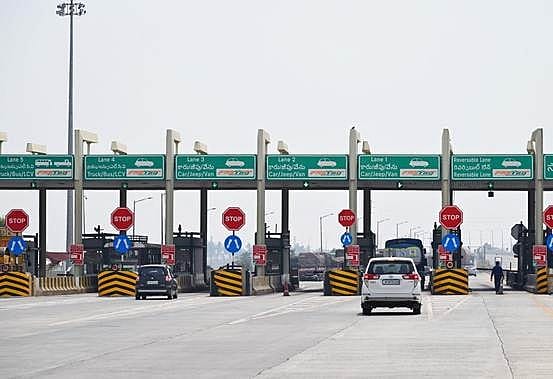
Soon, even that small window to make money “under the table” will close. From April 1, all 1,228 toll plazas in the country will go completely cashless, accepting only FASTag and UPI.
Just look at toll collection numbers over the last three years, after nearly 98% of vehicles began using FASTag. Collections rose from Rs 54,068 crore in FY22–23 to Rs 61,000 crore in FY23–24, and further to Rs 72,500 crore in FY24–25. They are expected to touch the Rs 1 lakh crore mark by FY26–27.
Put differently, monthly collections based on FY24–25 figures work out to around Rs 6,000 crore, or roughly Rs 180–190 crore per day. Now compare this with daily “cash” collections in the pre-FASTag era—you may be surprised to learn they were only about Rs 65–68 crore per day, or around Rs 2,000 crore per month, in 2018–19. In effect, collections have grown nearly threefold today.

Further, if you look at “cash” collection figures in the above table, it stood at Rs 17,071 crore in 2016-17-- the year FASTag was introduced. Over the next six years, these numbers fell sharply to Rs 1,261 crore in 2021–22, by which time FASTag had become mandatory. This is impressive, as it clearly indicates that easy money at toll plazas is now a thing of the past.

India's Action Hero
27 Mar 2026 - Vol 04 | Issue 64
Riding the Dhurandhar Wave
To reiterate, in FY24–25 total toll collections were Rs 72,500 crore, compared with roughly Rs 25,000 crore in the pre-FASTag days. It is safe to assume that leakage levels earlier were significant. Even if one takes an ultra-conservative estimate of Rs 10,000–15,000 crore in annual leakage, the figure is far from trivial. One does not need to be a rocket scientist to understand whose pockets were lined when under-reporting of toll collections was the norm.
Thanks to FASTag and UPI, nearly 99% of toll collections are now fully accounted for. Of course, rising vehicle numbers have also contributed to higher collections. Nevertheless, FASTag has blocked yet another avenue for generating black money.
The Modi government has cited similar success in the case of Direct Benefit Transfers (DBT) across more than 1,200 central government schemes. It has publicly stated that leakages worth between Rs 3.48 lakh crore and Rs 4.31 lakh crore have been plugged by eliminating middlemen. The government has also reported substantial savings in the public distribution system by weeding out 5.87 crore fake ration cards. Likewise, savings have been achieved in LPG subsidies by removing inactive connections.
As a result of these measures, the government claims it has been able to reduce subsidy allocations from 16% to 9% of total expenditure. That is no small achievement.
Most of us remember the 2020–21 farmers’ protests against the three farm laws passed by the Modi government in September 2020. Reacting to the agitation, noted author and columnist Gurcharan Das wrote in The Times of India that “the three farm laws offered three basic freedoms to the farmer—freedom to sell anywhere to anyone, freeing him from having to sell to the monopoly cartel at the APMC mandi.”
Had these laws been implemented, arthiyas or commission agents in Punjab’s APMC mandis would have lost an estimated Rs 1,590 crore annually in brokerage income. Little wonder, then, that these middlemen were up in arms against the reforms, with their protests allegedly strengthened by forces from outside India. Apprehending wider unrest, the Modi government eventually repealed the farm laws in December 2021. The middlemen may have won the battle, but perhaps not the war.
More recently, Congress-ruled states have strongly protested the Modi government’s move to replace MGNREGA with a new scheme—G Ram G, or Viksit Bharat: Guarantee for Rozgar & Ajeevika Mission (Gramin). One key reason for bringing a new scheme is the lack of accountability by states over fund deployment under MGNREGA. The Centre, which had released Rs 85,838 crore as of July 2025, is keen to track the end use of funds and ensure they reach the intended beneficiaries. Leakages at the state level were well known, and the new, more focused and outcome-oriented scheme promises to address this problem.
Another significant reform is the introduction of faceless tax scrutiny, which has made life easier for honest taxpayers while making it harder for some tainted officials to extract easy money. That said, one still hears of taxpayers receiving calls—often through their chartered accountants—seeking information relating to “previous years”. In plain terms, this can sometimes amount to needless harassment aimed at wearing taxpayers down until they loosen their purse strings.
To illustrate where graft money often ends up, consider this example. A friend of mine was scouting for buyers for his 3-BHK flat in Mumbai. His ask was Rs 3 crore. The responses he received surprised him. Most of the interested buyers were policemen or state and central government officials. Almost all were willing to pay 50% or more in cash. Since he was emigrating, he insisted on a 100% cheque payment. Clearly, such ill-gotten wealth routinely finds its way into real estate, bullion, precious stones, film production, restaurants, and similar avenues.
One must, therefore, compliment the current government for the measures it has taken to plug leakages, eliminate corruption, detect fraud, and ensure that funds flow directly into beneficiaries’ bank accounts. These steps are undoubtedly having a salutary effect on the economy. That said, as the saying goes, the criminal mind is always ten steps ahead—and it invariably finds newer ways to game the system.