Economic Survey 2025–26: Integrating Social and Behaviour Change in Welfare Schemes
Hiding in the sea of text of the Economic Survey 2025–26 is a small box item that could be groundbreaking in how future welfare schemes can be designed and assessed in India. It highlights a recent example to advance a compelling policy argument for integrating Social and Behaviour Change (SBC) interventions in cash transfer schemes to ensure financial assistance translates into intended and sustained outcomes rather than one-time consumption – a worry development policy planners are all too familiar with.
SBC interventions refer to a systematic approach that uses targeted and sustained communication, community engagement and social mobilisation, informed by behavioural insights, to shape individual and collective decisions.
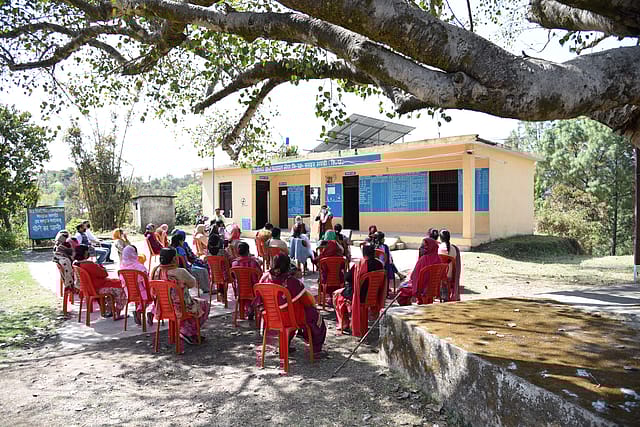
The Survey highlighted the Cash Plus model, implemented by the Rajasthan government in five tribal districts, which embedded a tailored SBC strategy into a combined Central and a State cash transfer scheme to address entrenched socio-cultural norms influencing nutrition and child-feeding practices. The aim was to reach out to more than just the primary beneficiaries - pregnant and lactating women - and to engage their husbands, family members and communities. The multi-channel engagement spanned interpersonal communication, community platforms, mass media, mid-media and digital campaigns. The results showed improved utilisation of cash for nutrition, gains in maternal weight, enhanced dietary diversity, reduced myths and taboos and increased awareness among men.

Losing Memory
16 Oct 2026 - Vol 05 | Issue 42
The making of a medical and social emergency
The Survey uses this intervention as an example to show that cash transfers by themselves are insufficient to achieve intended outcomes unless accompanied by interventions that influence household decision-making and social norms. It recommends integrating SBC as a central, well-resourced component of programme design so that financial assistance translates into sustained behaviour change and offers long-term welfare impact.
India has extensive experience in integrating SBC across social programmes and it runs a wide array of financial assistance schemes at both the Central and State levels, However, evidence indicates that financial benefits under such schemes are not always utilised for their intended purposes, thereby diluting programme effectiveness and undermining the developmental objectives. In the context of cash-based welfare assistance, where outcomes depend less on uptake and more on individual and household-level utilisation decisions, this gap assumes particular significance.

In its analysis of the Rajasthan example, the Survey is unusually candid in acknowledging the men in the family and mothers-in-law as key decision-makers influencing nutrition practices, antenatal care and the use of cash within households, even though the assistance is targeted at pregnant women and lactating mothers. Such social structures where women’s agency over finance, health and nutrition decisions is constrained are well documented globally as barriers to the uptake of government-provided services such as immunisation, maternal health services, and child nutrition programmes. SBC approaches in these programmes, including in India, have therefore consciously integrated a gender lens, engaging family and community influencers alongside women beneficiaries to shift norms and decision-making dynamics.
By recognising and addressing these intra-household power structures, the Survey underscores that improving welfare outcomes requires interventions that go beyond service provision to reshape the social context in which choices are made. The Survey also underlines the importance of addressing gender norms rather than avoiding them as unrelated social concerns.
The Rajasthan success story also draws attention to the selection of media channels as a core element of the SBC strategy. The approach combined interpersonal communication through frontline workers, supported with mass media, mid-media, and digital platforms, recognising that different audiences access and respond to information and messages differently. Importantly, the use of digital media and short-format video content was informed by patterns of smartphone ownership and media consumption among men, while community platforms and interpersonal channels were used to reach women and families.
In the Indian context, such media selection is key to meaningful SBC strategies. Strategies that align messages and sources with audience needs/preferences; using multiple, reinforcing channels, are better placed to shift norms, support informed choices, and translate awareness into sustained action.
Importantly, the Survey, through this articulation, quietly expands the definition of what constitutes a policy instrument. This is a rare instance in India’s economic policy making where SBC is articulated not as a peripheral support function, but as a policy instrument in its own right within larger economic policy design. The appearance of SBC in the Survey suggests that policymakers are beginning to recognise behaviour, intra-household decision-making, and social norms as variables that materially affect the performance of development programmes. This could indicate a move towards designing programmes in future that integrate financial transfers with deliberate investments in strategic communications and community engagement, in order to improve the efficiency and effectiveness of public spending.
System Strengthening is the Key
Translating this emerging policy shift into action is the real challenge. India has a large last-mile workforce engaged in SBC activities across public health, nutrition, sanitation, livelihoods and other social sector programmes. While this institutional capacity is a strength, ensuring consistency and quality of interventions at scale remains a challenge.
Alongside appropriate human resources and skills, stronger learning, monitoring, and feedback mechanisms, as well as a sharper understanding of how different media influence behaviour is a prerequisite for effective SBC implementation. For example, there has been a growing tendency to rely heavily on social media for behaviour change interventions, even in contexts where internet access and usage remain limited among target groups. This is an inherent contradiction that undermines effectiveness.
Contextualised Theoretical Framework is a Challenge
Another challenge lies in effectively adapting communication theories developed in Western contexts, many of which do not work in India. Much of the SBC discourse, promoted by donors and international agencies working in India tend to rely on standardised Western frameworks and for-profit marketing logic, with limited grounding in India’s social hierarchies, cultural diversity, media consumption patterns, levels of internet penetration, and governance structures. Without careful contextualisation, such approaches risk prioritising form over function and scale over relevance. The Rajasthan example reinforces the need for SBC frameworks that are locally rooted, institutionally embedded and responsive to lived realities rather than imported templates.
The right theoretical framework with context-sensitive media choices, combined with appropriate capacities for programme implementation, and sustained learning and feedback mechanisms can over time enable public spending, even the last rupee, to be used in ways that advance long-term wellbeing.