‘ECI Eliminated 15% of India’s Population’: Why Ex-CEC SY Quraishi Is Questioning SIR
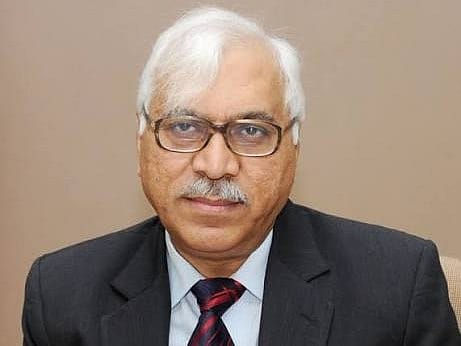
How many illegal immigrants has the Election Commission actually identified through the Special Intensive Revision (SIR) of electoral rolls? And if the exercise is meant to clean up voter lists, why have crores of names disappeared from the rolls?
These are among the questions former Chief Election Commissioner SY Quraishi has raised as the SIR exercise continues across several states.
Taking a swipe at the Election Commission of India (ECI) on Sunday, Quraishi said the exercise had “eliminated” around 14-15 crore people from the electoral rolls and questioned why the number of illegal immigrants allegedly identified during the process had not been made public.
“I would like to compliment the Election Commission for completing a very difficult mission of eliminating about 14–15 crore population of India through this exercise. I don't know how many illegal immigrants they have found, which was the main purpose of this exercise. It's a pity they have not disclosed this figure,” Quraishi told ANI.

Losing Memory
16 Oct 2026 - Vol 05 | Issue 42
The making of a medical and social emergency
The former CEC's remark was a criticism of the scale of exclusions, rather than a literal claim that 14-15 crore Indians had disappeared from the country's population. His central question was about the gap between the stated objectives of SIR and the number of names that have come under scrutiny during the electoral-roll revision.
What is SIR and why is the Election Commission conducting it?
The Special Intensive Revision, or SIR, is an exercise by the Election Commission to review electoral rolls and ensure that they contain eligible voters while removing duplicate, deceased or otherwise ineligible entries.
The ECI has said the exercise is aimed at making voter lists accurate and up to date, while ensuring that no eligible elector is left out.
The nationwide SIR was announced in October 2025 by Chief Election Commissioner Gyanesh Kumar. The Election Commission cited several reasons for the exercise, including migration, voters being registered at multiple locations, names of deceased persons remaining on electoral rolls and the possibility of foreign nationals being included in voter lists.
That last issue, in particular, has made citizenship and illegal immigration central to the political debate around SIR.
The process has now become especially significant in states that are approaching elections, where changes to the electoral rolls can directly affect who is eligible to vote.
Why is SY Quraishi questioning SIR?
Quraishi has questioned whether the Election Commission can justify the scale of the exclusions without also making public the number of illegal immigrants or other ineligible voters identified.
“I would request them to please come out with this figure, so that we know what a great success you have been, and also that you have achieved something that the National Population Commission could not do,” he said.
He also described the scale of the exclusions as a contribution to “population control”, referring to the roughly 15 per cent figure.
Quraishi has previously criticised the SIR process, arguing that the removal of large numbers of names from electoral rolls could affect citizens' ability to participate in elections.
“I think the entire SIR exercise is not well-intentioned. The way it has deleted crores of voters is tinkering with democracy,” he told ANI.
His concern is essentially about the balance between two objectives: removing ineligible names from electoral rolls and ensuring that legitimate voters are not excluded in the process.
What does Article 326 say about voting rights?
Quraishi has also linked the SIR debate to the constitutional basis of voting in India.
“You are a citizen of India. I'm a citizen of India. Voting is our constitutional right. Article 326 says that everyone shall be registered,” he said.
Article 326 provides for elections to the Lok Sabha and state legislative assemblies on the basis of adult suffrage, subject to constitutional and legal provisions.
For Quraishi, therefore, the question is not simply whether electoral rolls should be revised. It is whether the process of identifying and removing ineligible voters can be carried out without inadvertently excluding eligible citizens.
That concern has become particularly relevant in states where the SIR exercise has resulted in significant changes to electoral rolls.
What happened to Maharashtra's voter list?
Maharashtra has emerged as one of the biggest flashpoints in the SIR debate.
The publication of the state's draft electoral roll showed a substantial reduction in the number of electors compared with the previous electoral roll, with opposition parties putting the figure at around two crore voters.
According to data released by the Maharashtra Chief Electoral Officer, the state had 9,78,54,049 electors, while 7,71,65,562 electors had submitted their enumeration forms during the SIR process as of August 17.
However, the difference between the total number of electors and the number of enumeration forms submitted should not automatically be read as confirmed voter deletions. The figures are part of an ongoing enumeration and verification process.
The numbers have nevertheless become a major political issue.
Congress leader Pawan Khera has accused the Bharatiya Janata Party of benefiting from the alleged removal of nearly two crore voters from Maharashtra's electoral rolls, claiming that votes were being “stolen” in real time.
The Election Commission's stated position remains that SIR is intended to improve the accuracy of electoral rolls and identify ineligible, duplicate and erroneous entries.
Why has SIR become such a big political issue?
At the heart of the controversy is a basic democratic question: who gets to vote?
For the Election Commission, electoral rolls need to be periodically checked so that people who are no longer eligible do not remain on them.
For critics, the bigger concern is what happens to eligible voters whose names are left out during the process.
That makes the number of deletions only one part of the story. The reasons for those exclusions, the number of names subsequently restored and the number of ineligible voters actually identified are equally important in assessing the impact of SIR.
Quraishi's latest comments bring that question back to the centre of the debate.
If identifying foreign nationals and other ineligible voters is one of the reasons for conducting SIR, he is asking the Election Commission to show the results.
How many illegal immigrants were actually found?
That is the number Quraishi wants the ECI to disclose as the SIR debate moves from the question of how many names were removed to the more fundamental question of why they were removed.
(With inputs from ANI)