Delhi Winter Pollution Action Plan 2026: No PUC, no fuel, 50% WFH and vehicle curbs explained
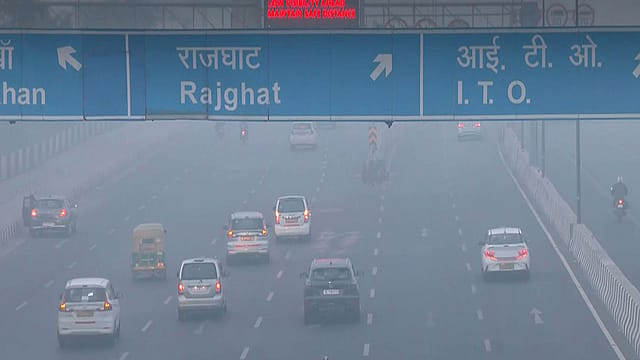
Delhi’s winter pollution season can change everyday life in a matter of days: longer commutes, hazy mornings and restrictions on construction or vehicle movement. This year, the government is trying to get ahead of that disruption with a framework that brings several measures into force before air quality deteriorates.
Chief Minister Rekha Gupta’s government has notified a permanent Winter Pollution Action Plan that operates annually from November 1 to February 28. According to the official government announcement, the measures cover fuel purchases, older vehicles registered outside Delhi, construction activity, office attendance and parking charges. The plan will operate alongside the Graded Response Action Plan (GRAP), which imposes additional restrictions as pollution worsens.

Losing Memory
16 Oct 2026 - Vol 05 | Issue 42
The making of a medical and social emergency
No PUC, no fuel: What Delhi vehicle owners need to know
Under the “No PUCC, No Fuel” rule, vehicles without a valid Pollution Under Control Certificate will not be supplied fuel at Delhi’s petrol pumps and other fuel outlets covered by the notification. Enforcement will use vehicle records and automated number-plate recognition systems at designated stations.
The government has also restricted vehicles registered outside Delhi that do not meet BS-VI emission standards from entering the capital between November 1 and January 31. CNG and electric vehicles, emergency vehicles and other specifically exempted categories are excluded under the notified provisions.
For motorists, the immediate step is to check that their PUC certificate is valid and verify whether their vehicle falls under the entry restriction before travelling into Delhi. The rules are not the same as a blanket ban on every older vehicle registered in the capital.
Will 50% work from home become mandatory in Delhi?
The winter framework provides for 50% of employees in government and private offices to work from home between November 1 and January 31, with staggered office timings intended to reduce peak-hour traffic. Essential services are exempt from the attendance restrictions.
Parking charges at authorised parking facilities are also set to double from November 1 to February 28. Delhi Metro Rail Corporation parking facilities are exempt, preserving an incentive for commuters to combine private transport with the Metro.
For office-goers, these measures could mean changes to attendance schedules, commuting routines and parking costs. Their impact on pollution will depend on how consistently employers and enforcement agencies implement them, and whether fewer individual car journeys translate into lower traffic emissions.
Construction dust faces tighter checks this winter
Dust from construction, demolition and roads is another major pollution source. The framework restricts dust-generating construction and demolition activities from November 1 to January 31, with a stricter period from December 10 to January 20. Essential public infrastructure work is subject to specific provisions and exemptions.
Enforcement has already begun ahead of winter. The New Indian Express reported on October 10 that the Delhi Pollution Control Committee had issued show-cause notices to agencies after inspections found inadequate dust-control measures at sites linked to projects involving the Delhi Jal Board, National Highways Authority of India, Delhi Metro and NBCC.
The government has also inspected pollution hotspots and construction sites, signalling that compliance checks are not limited to privately run projects.
New electric sweepers and IIT Delhi pollution tracking
The Delhi Cabinet has approved 30 electric mechanised road-sweeping machines for narrower roads, covering around 609 kilometres across 854 roads in 250 wards. The initiative aims to address dust on streets that larger sweeping machines cannot easily access.
A five-year collaboration with IIT Delhi will also track and analyse sources of PM2.5 and PM10, including vehicular emissions, road dust and biomass burning. The findings could help authorities identify which sources need more targeted action.
Will Delhi’s winter action plan make the air cleaner?
The framework is designed to reduce emissions before winter smog peaks, rather than relying only on emergency restrictions once air quality becomes severe. But it cannot eliminate pollution from Delhi and the wider National Capital Region on its own.
The real test will be whether vehicle checks, construction controls, road cleaning and public-transport measures are enforced consistently. For residents, checking PUC validity, using public transport where practical and following local restrictions will matter. Cleaner air will ultimately depend on sustained action across transport, construction, industry and neighbouring regions, not just a four-month plan.
(With inputs from ANI)