Green Diwali 2026: What WWF-India’s cracker-free campaign means for you and India’s air quality
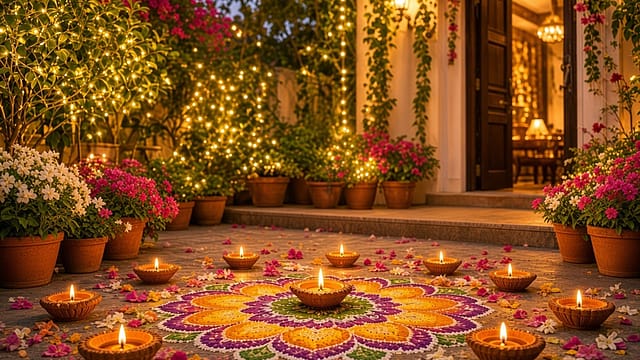
Can Diwali feel festive without the crackle of firecrackers? That is the question behind a new nationwide campaign asking Indians to rethink how they celebrate, and to consider what happens to the air they breathe once the festivities end.
WWF-India’s Environmental Information, Awareness, Capacity Building and Livelihood Programme (EIACP), supported by the Union Ministry of Environment, Forest and Climate Change (MoEFCC), launched its Green Diwali Campaign on October 20. The initiative will run until November 8, encouraging citizens to avoid firecrackers and make environmentally conscious choices under the government’s Mission LiFE, or Lifestyle for Environment.
According to the Ministry’s announcement on the Press Information Bureau (PIB), the campaign will target schools, colleges, resident welfare associations and local communities, with particular attention to the 130 cities covered by the National Clean Air Programme (NCAP).
What is the Green Diwali campaign asking Indians to do?
The campaign goes beyond discouraging firecrackers. It encourages people to use traditional diyas and energy-efficient lights, avoid single-use plastic, segregate household waste and choose locally made products. Schools, colleges, community groups and resident welfare associations are being encouraged to organise pledge drives during assemblies, classes, rallies and community meetings. Participants can also share details of their activities through an online reporting form, including the number of people who took the pledge, photographs with geolocation information and a brief report.

Losing Memory
16 Oct 2026 - Vol 05 | Issue 42
The making of a medical and social emergency
Citizens are also being encouraged to complete WWF-India’s Carbon Footprint Survey. The aim is to help people understand how everyday habits, consumption and lifestyle choices contribute to their environmental footprint.
Why does avoiding firecrackers matter for India’s air quality?
Firecracker emissions can add to the pollution already affecting many Indian cities during the post-monsoon and winter months. The resulting impact depends on how many fireworks are used, local emissions and weather conditions that determine how quickly pollutants disperse.
A study published in Scientific Reports in June 2026 examined air pollution around Diwali across 14 cities in the Indo-Gangetic Basin. It found that PM2.5 and PM10 concentrations exceeded national and World Health Organization 24-hour guideline levels by three to 10 times during the festival period, although the severity varied by city and pollutant.
The researchers also found that low wind speeds and temperature inversions could trap pollutants near the ground, prolonging exposure after the celebrations. Firecrackers are not the only source of India’s air pollution, vehicles, industry, dust and biomass burning also contribute, but reducing avoidable emissions can help limit the additional festive burden.
How could a cracker-free Diwali benefit families and communities?
Less firecracker use can mean fewer emissions and less noise, while reducing disposable decorations and plastic packaging can help limit festive waste. Choosing locally made products may also support small businesses and artisans.
These individual choices cannot solve India’s air pollution problem on their own. Their impact depends on how widely they are adopted alongside effective enforcement, cleaner transport, industrial emission controls and other city-level measures. But community participation can help make environmental concerns part of everyday decisions rather than a conversation limited to pollution emergencies.
What should citizens know before Diwali 2026?
The campaign is an awareness initiative encouraging voluntary changes in how people celebrate; it should not be confused with a blanket legal ban on firecrackers across India. Applicable restrictions can differ by location and must be checked with local authorities.
For households, the practical starting point is simple: take the Green Diwali Pledge, choose lower-waste decorations, use energy-efficient lighting and encourage neighbours to participate. Schools and community groups can organise activities and report their participation through the campaign’s designated form.
The campaign runs through November 8, extending beyond Diwali itself. Its larger test will be whether the message translates into sustained habits, and whether those choices contribute, alongside broader pollution-control measures, to cleaner air beyond the festive season.
(With inputs from ANI)