EAM Jaishankar meets UAE foreign minister amid West Asia crisis; India backs safe flow of trade and energy
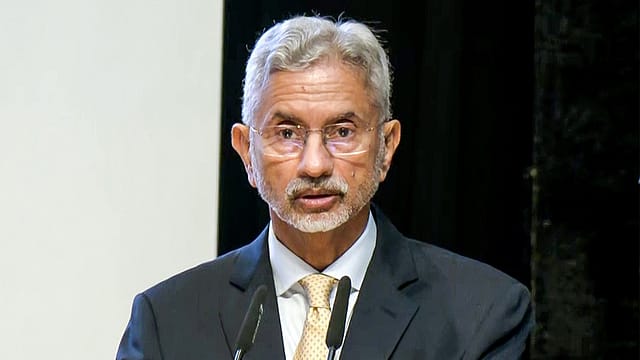
When conflict threatens oil supplies, shipping routes and regional stability, its effects rarely stop at the borders of the countries involved. That is the concern confronting India as tensions escalate across West Asia, and it was central to External Affairs Minister S Jaishankar’s talks with UAE Deputy Prime Minister and Foreign Minister Sheikh Abdullah bin Zayed Al Nahyan in Mumbai on Tuesday, October 20.
“The situation in the Gulf remains a matter of deep concern,” Jaishankar said in his opening remarks, according to ANI. He added that India would support efforts to promote peace through dialogue and diplomacy, while stressing the importance of keeping trade, energy and fertiliser supplies moving safely.
The UAE minister arrived in Mumbai on Monday for a two-day visit, as attacks attributed to Yemen’s Houthi movement added to regional instability.

Losing Memory
16 Oct 2026 - Vol 05 | Issue 42
The making of a medical and social emergency
Why are India and the UAE concerned about West Asia?
For India, instability in the Gulf is not simply a distant geopolitical crisis. The region is central to energy supplies, trade routes and the lives of millions of Indians working in Gulf countries. Jaishankar emphasised the need for the “free, safe and unimpeded flow of trade, energy and fertiliser”. He also thanked the UAE leadership for ensuring the well-being of the Indian community in the country.
The security backdrop has grown more volatile. Reuters reported on October 15 that the Saudi-led coalition had described attempted Houthi attacks on Saudi infrastructure, while fighting between the Houthis and forces aligned with Yemen’s internationally recognised government continued to intensify.
India’s stated position remains focused on diplomacy and regional stability, with the safety of trade routes and Indian nationals among its immediate concerns.
India-UAE trade crosses $100 billion after CEPA
Alongside regional security, economic cooperation was a major focus of the Mumbai talks. Jaishankar said bilateral trade had crossed the $100-billion mark since the two countries signed their Comprehensive Economic Partnership Agreement (CEPA).
The agreement was signed in February 2022 and came into force on May 1 that year. According to the UAE Ministry of Foreign Affairs, bilateral trade reached approximately $101.25 billion in the 2025-26 financial year, up from around $100.05 billion in 2024-25.
The two countries have set a target of $200 billion in bilateral trade by 2032. Investment, energy, defence and technology are also becoming increasingly important to the relationship.
Jaishankar said growing two-way investment reflected business confidence in both economies, while cooperation in defence, energy and technology was taking on a strategic character.
What happened after Jaishankar’s UAE meeting?
The diplomatic engagement broadened later on Tuesday, when Sheikh Abdullah joined Jaishankar and US Secretary of State Marco Rubio for a trilateral meeting in Mumbai.
According to the UAE’s official news agency, WAM, the three sides discussed opportunities to expand cooperation in trade, investment, technology and artificial intelligence, alongside regional and international developments.
The meeting brought together three countries with significant economic and strategic interests in the region. It also provided a platform to discuss shared concerns over security and stability.
What does the meeting mean for India?
The immediate challenge is to navigate regional tensions without disrupting essential supplies, commercial links or the safety of Indian citizens abroad. Over the longer term, the talks underline how closely India’s economic ambitions are tied to stability in West Asia.
The $200-billion trade target gives India and the UAE a shared economic goal. But achieving it will depend not only on agreements and investment, but also on secure shipping routes, reliable energy flows and a regional environment in which businesses can operate with confidence.
For New Delhi, the message from Mumbai was clear: diplomacy and economic cooperation must continue even as the region faces uncertainty.
(With inputs from ANI)