Double Whammy: Delhi’s Fog and Pollution Compound Capital’s Woes
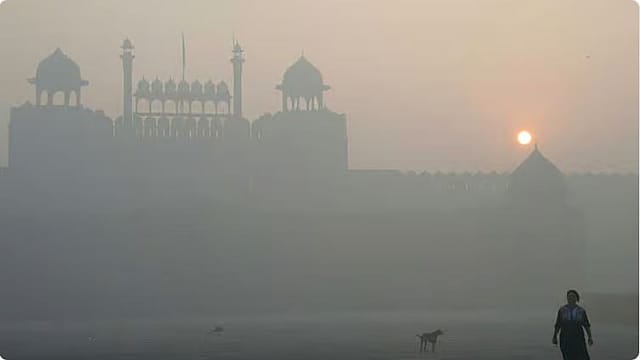
Dense winter fog once again paralysed Delhi on Thursday morning, disrupting air and rail traffic and exposing the city’s recurring vulnerability to seasonal weather shocks compounded by toxic air. At least 40 flights were delayed and over 22 trains ran behind schedule, as visibility plunged across the national capital.
The Indira Gandhi International Airport confirmed that flight operations were being conducted under CAT III conditions, the most stringent low-visibility protocol. While these procedures allow aircraft to land in near-zero visibility, delays and cancellations were unavoidable. In an advisory issued early morning, airport authorities warned passengers of possible disruptions, saying teams were coordinating with airlines to minimise inconvenience.
When Fog Meets Toxic Air
This year’s fog has arrived alongside dangerously polluted air, turning a routine winter phenomenon into a public health emergency. Data from the Central Pollution Control Board (CPCB) showed RK Puram recording an AQI of 374, firmly in the “very poor” category. Areas near Jawaharlal Nehru Stadium hovered close to 360, while Najafgarh stood at 294.
Environmental experts warn that winter fog traps pollutants closer to the ground, intensifying exposure and worsening respiratory risks. The result is a toxic cocktail of poor visibility and hazardous air that disrupts daily life and strains public infrastructure every winter.

Exclusive: To the Heavens and Back
19 Jun 2026 - Vol 04 | Issue 76
Shubhanshu Shukla relives the space odyssey that put India into orbit
In response, the Commission for Air Quality Management (CAQM) has enforced GRAP Stage-IV restrictions across the Delhi-NCR region. However, on-ground enforcement continues to lag behind policy intent.
A road inspection drive conducted on December 12 revealed widespread violations. Of the 136 road stretches inspected under the Delhi Development Authority, 15 showed high dust levels, 38 moderate, and 61 low dust intensity. Alarmingly, 55 stretches were found littered with municipal solid waste, 53 had construction and demolition debris, and six showed evidence of biomass burning—all key contributors to particulate pollution.
Vehicle Curbs Tightened After Supreme Court Nod
Pollution-control measures were further tightened after the Supreme Court allowed the Delhi government to act against vehicles operating below BS-IV emission standards. Transport enforcement teams intensified checks across the city, denying fuel to vehicles without a valid Pollution Under Control Certificate (PUCC). Trucks carrying construction materials into Delhi were also barred to curb dust emissions.
Delhi is not alone. Mumbai, too, is grappling with deteriorating air quality. Early Thursday readings showed Bandra Kurla Complex at an AQI of 148, with Kurla (126), Ghatkopar (161) and Worli (106) also reporting unhealthy levels, underscoring that winter pollution is fast becoming a pan-urban crisis.
(yMedia and ANI are content partners for this story)