Digital Dragnet: Inside India’s First National Organised Crime Database
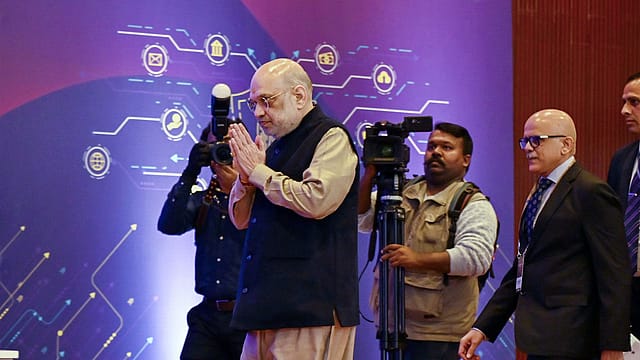
India has taken a decisive step in tightening its grip on organised crime with the launch of its first national-level Organised Crime Network Database (OCND). It’s a centralised, AI-powered platform designed to track criminal syndicates and their links to terror networks.
The database was inaugurated by Union Home Minister Amit Shah at the Anti-Terror Conference 2025, a two-day annual gathering organised by the National Investigation Agency (NIA). Officials described the initiative as a long-overdue response to criminal networks that operate seamlessly across state borders while exploiting gaps in policing and intelligence sharing.
Developed by the NIA in collaboration with state police forces and the National Intelligence Grid (NATGRID), the OCND brings together FIRs, charge sheets, dossiers and other critical intelligence from across the country into a single, real-time repository. Investigating officers can now access consolidated profiles of organised criminals—something no single state police force was previously able to do.

Losing Memory
16 Oct 2026 - Vol 05 | Issue 42
The making of a medical and social emergency
Officials said the lack of a unified database had allowed organised criminals—many of whom operate in multiple states and maintain covert links with terror outfits—to evade law enforcement for years. Information remained fragmented, scattered across jurisdictions, and often inaccessible to agencies outside a particular state. The OCND is designed to close that loophole decisively.
Powered by artificial intelligence, the platform functions as an advanced analytical tool. Apart from detailed criminal profiles, it offers voice-matching capabilities, fingerprint data, and rapid cross-referencing—enabling investigators to retrieve actionable intelligence almost instantly. One official compared its interface to conversational AI tools, allowing officers to query the system and receive structured responses in real time.
With the OCND now operational, the NIA will act as a central facilitator, validating and sharing intelligence with state and central agencies. Officials described the database as a critical force multiplier in India’s campaign against organised crime—one that fuels violence, terror financing and economic disruption—and a cornerstone of the government’s zero-tolerance approach to internal security.
India’s move mirrors a hard lesson the world has already learned: organised crime no longer respects borders, jurisdictions, or silos. From Latin American drug cartels laundering money through European banks, to Balkan crime syndicates funding terror networks, modern criminal enterprises operate like multinational corporations.