Davos 2026: Why Indian States, Not Just India, Are Courting Global Capital
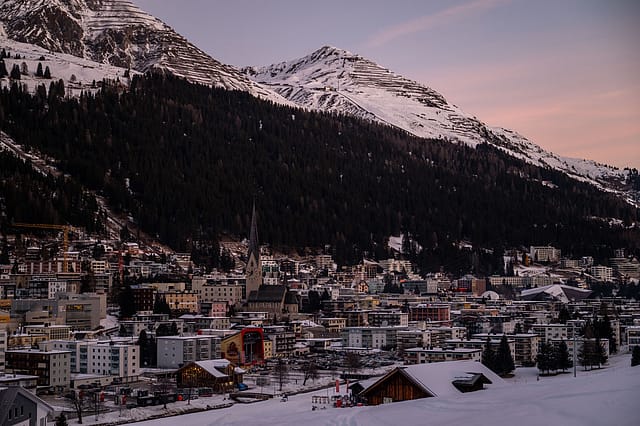
Davos has always been about nations. This year, it’s about Indian states, each arriving with its own ambition, identity and investment pitch, but all chasing the same global capital. Sample this: Uttar Pradesh is selling size and transformation; Maharashtra is selling identity and urban ambition; and Madhya Pradesh is selling readiness and deal flow. Different accents but same destination.
As the World Economic Forum’s 56th annual meeting got underway, a high-level UP delegation led by Finance Minister Suresh Kumar Khanna landed in Switzerland with a clear message: India’s most populous state wants to be a $1 trillion economy. Received by India’s Ambassador to Switzerland, Mridul Kumar, the delegation arrived with a focus on infrastructure-led growth, technology adoption and positioning UP as a serious global investment destination.
UP’s pitch comes at a moment when Davos itself is unusually crowded—nearly 3,000 leaders from more than 130 countries, including around 400 political leaders and 65 heads of state, are converging under the theme “A Spirit of Dialogue”. For UP, the objective is straightforward: use this rare global concentration of power and capital to reframe perceptions and signal scale.
If UP brought size and ambition, Maharashtra brought culture and confidence.
Chief Minister Devendra Fadnavis’ arrival in Davos began not in a closed-door boardroom, but with a warm reception from the Marathi diaspora. The symbolism was deliberate. Speaking at a community event organised by the Bruhan Maharashtra Mandal, Fadnavis stressed that economic progress must be rooted in cultural strength. “Material advancement flows naturally from this cultural foundation,” he said, outlining ambitious plans to transform Mumbai into one of the world’s most advanced urban centres over the next five years.

I.N.D.I.A. Falling
12 Jun 2026 - Vol 04 | Issue 75
The Unravelling of an Alliance
The Maharashtra leg of Davos blended politics, pride and projection. Alongside meetings with global stakeholders, the Chief Minister used the platform to announce the Maha-NRI Forum—an initiative aimed at deepening ties with the global Marathi community—underscoring how diaspora networks are becoming part of states’ investment strategies.
Then came Madhya Pradesh, stepping into the Alpine spotlight with a different but complementary pitch.
As Davos readied itself for five days of intense dialogue and deal-making, Madhya Pradesh positioned itself as one of India’s most future-ready investment destinations. Senior officials arrived ahead of Chief Minister Mohan Yadav, who is expected to lead engagements with multinational corporations and advance proposals across sectors ranging from automotive and new mobility to renewable energy, food processing and tourism.
For MP, Davos is less about symbolism and more about transactions. Multiple MoUs are expected, reinforcing the state’s attempt to convert global attention into concrete commitments.
Taken together, the three state narratives reveal a larger shift at Davos. India is no longer speaking with a single, centralised voice. Instead, its states are competing—and collaborating—on a global stage, each offering a distinct blend of scale, culture and sectoral opportunity.
(yMedia and ANI are the content partners for this story)