Chips, Space and Data Centres: Jefferies Flags India’s Next Industrial Revolution
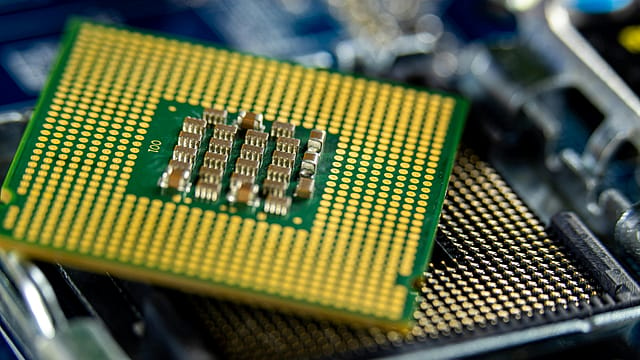
India’s next industrial growth story is taking shape in chip plants, space startups and data centres. According to Jefferies, six sectors—semiconductors, space, aerospace, electronics, solar manufacturing and data centres—are building on the country’s established manufacturing base to create new engines of expansion.
The brokerage calls it “India’s New Industrial Revolution”, driven by a combination of government support, rising private-sector participation and a large domestic market.
“India’s next industrial revolution is being built on an already significant manufacturing base,” Jefferies said in its latest equity strategy report.
India’s scale in steel, cement, automobiles and refining, alongside its growing production of mobile phones and solar modules, provides the foundation. The next challenge is to extend those capabilities into more complex manufacturing and infrastructure.

Zeroing In on ECI
09 Oct 2026 - Vol 05 | Issue 41
Constitutional legitimacy versus political opportunism
Semiconductors move from announcements to execution
India’s semiconductor push is beginning to translate into projects on the ground, with around $20 billion in investments already triggered, according to Jefferies.
A chip fabrication plant is under construction, while several outsourced semiconductor assembly and testing, or OSAT, projects are entering production.
The government has also launched a second phase of its semiconductor incentive programme with an outlay of about $13 billion. Jefferies expects it to support chip design, equipment, materials, advanced packaging, research and development, and talent.
“We believe India is building the foundations of a credible semiconductor ecosystem,” the brokerage said.
It nevertheless flagged challenges involving supply-chain depth, skilled workers and global competition.
Data centres could unlock $45 billion in investment
India’s data-centre colocation capacity has increased five-fold in five years to around 2 gigawatts. Jefferies expects another five-fold expansion over the next five years, taking capacity to nearly 10 GW.
That growth could create a $9 billion revenue opportunity for operators and require $45 billion in investment across power, cooling, construction and network infrastructure.
The projected expansion would therefore extend well beyond data-centre operators, generating demand for the systems and infrastructure needed to run them.
Space targets a five-fold expansion
Private participation has become a central part of India’s space ambitions since the sector was opened up in 2020.
The government is targeting a space economy worth $40–45 billion by 2030, up from around $8.4 billion in 2023. The startup base has also expanded, with more than 400 space startups in 2026, according to the report.
Jefferies identified that growing ecosystem as one of the foundations for the sector’s next phase.
Electronics looks beyond assembly
India’s electronics industry is moving towards greater domestic value addition and component manufacturing, the brokerage said.
Policy schemes including ECMS and MPMS aim to strengthen local supply chains and reduce import dependence. The focus is on producing more of the components that go into finished devices, deepening India’s role in electronics manufacturing.
Solar manufacturing pushes for localisation. India has become the world’s second-largest solar photovoltaic manufacturer, according to Jefferies, with around 35 GW of operational solar cell capacity and another 100 GW under construction.
The brokerage expects about 90 per cent of the solar manufacturing value chain to be localised by 2030.
That would broaden domestic capabilities across the production chain as the industry adds capacity.
Aerospace gains from global supply shortages
Global aerospace supply constraints are creating an opening for Indian manufacturers, Jefferies said. It pointed to the country’s competitive costs and engineering talent as advantages in attracting sourcing work.
Boeing and Airbus already source $1.4–1.6 billion annually from India, according to the report.
“India is emerging as a beneficiary of the global demand-supply imbalance in aerospace,” the brokerage said.
Across the six sectors, Jefferies sees a common set of drivers: stronger local supply chains, domestic demand, policy backing and expanding private participation. Together, it argues, they could shape India’s next industrial growth cycle.
With inputs from ANI